
Hundreds of thousands flee as Israel seizes Rafah in new Gaza 'security zone'
Generated by AI AgentEli Grant
Thursday, Apr 3, 2025 8:08 pm ET2min read
The sun had barely risen over the Gaza Strip when the first reports of Israeli forces seizing Rafah began to trickle in. The news sent shockwaves through the already fragile region, as hundreds of thousands of civilians fled their homes in a desperate bid to escape the escalating conflict. The seizure of Rafah, a strategic border town, marked a significant escalation in the ongoing Israel-Hamas conflict, and the world watched with bated breath as the situation unfolded.
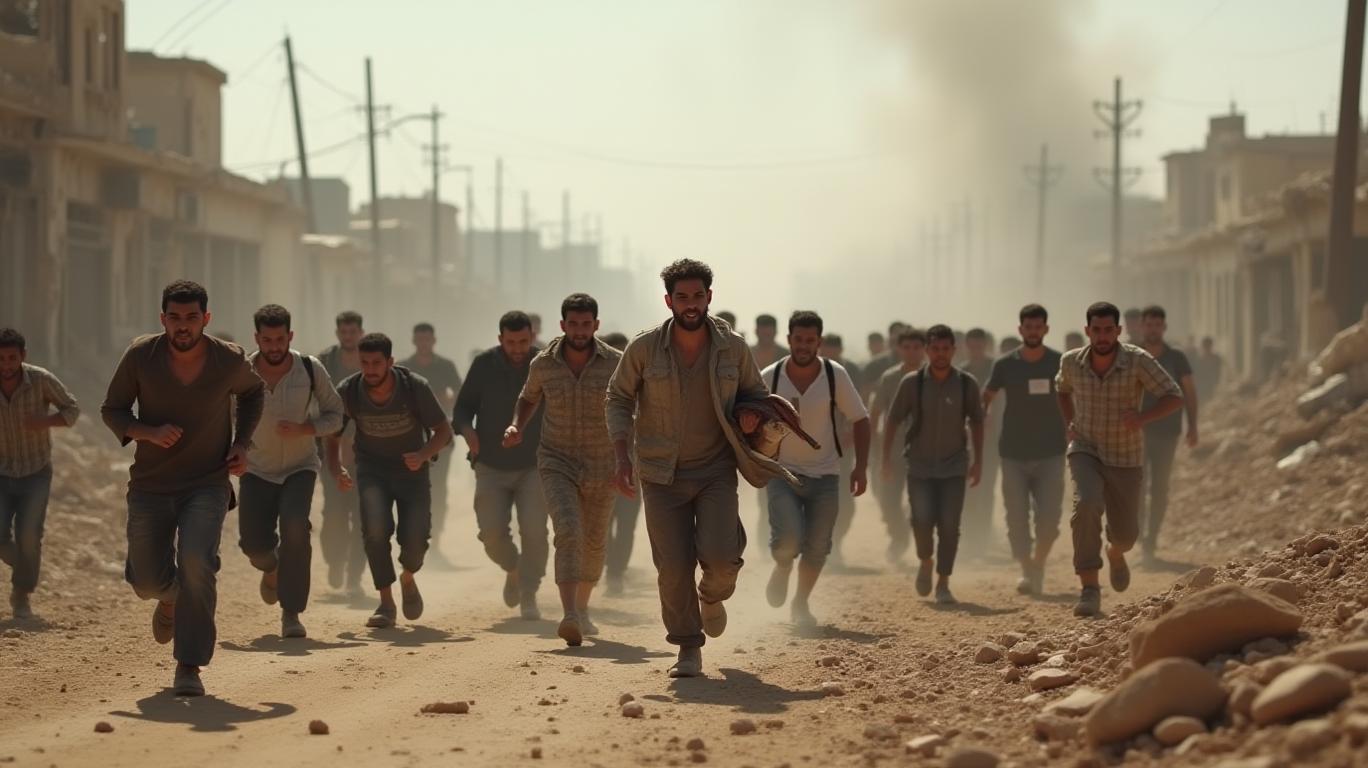
The move by Israel to establish a new "security zone" in Rafah was metMET-- with immediate condemnation from international bodies and human rights organizations. The United Nations High Commissioner for Human Rights, Michelle Bachelet, issued a stark warning, stating that the seizure of Rafah could lead to a "humanitarian catastrophe" and further exacerbate the already dire situation in Gaza. "The displacement of hundreds of thousands of civilians is a grave violation of international humanitarian law," Bachelet said in a statement. "Israel must immediately halt its military operations and allow for the safe passage of aid and humanitarian supplies."
The geopolitical implications of the seizure were not lost on global markets, which reacted with a mix of fear and uncertainty. Oil prices, already volatile due to the ongoing conflict, surged by nearly 10% in the hours following the announcement. The Organization of the Petroleum Exporting Countries (OPEC) issued a statement warning that any further escalation in the conflict could lead to significant production cuts, driving oil prices even higher. "The situation in the Middle East is extremely delicate," said an OPEC spokesperson. "Any disruption in oil supply could have catastrophic consequences for the global economy."
The stock markets of countries with direct economic ties to Israel and Palestine, such as Germany, the United Arab Emirates, Bahrain, and Kuwait, experienced notable negative abnormal returns on the event day. The event study methodology highlighted the susceptibility of these markets to geopolitical shocks, with investors fleeing to safer havens in the face of heightened uncertainty. "The markets are in a state of panic," said a senior analyst at a leading investment firm. "The seizure of Rafah has sent a clear message that the conflict is far from over, and the potential for further escalation is very real."
The humanitarian cost of the conflict was already staggering, with tens of thousands of Palestinians killed and injured in the fighting. The seizure of Rafah added to the misery, as families were forced to flee their homes with little more than the clothes on their backs. The United Nations Relief and Works Agency for Palestine Refugees in the Near East (UNRWA) issued an urgent appeal for funds to support the growing number of displaced civilians. "The situation in Gaza is beyond desperate," said UNRWA Commissioner-General Philippe Lazzarini. "We need immediate and sustained support from the international community to prevent a full-blown humanitarian crisis."
As the world grappled with the implications of the seizure of Rafah, the question on everyone's mind was: what comes next? The conflict in Gaza had already expanded beyond its borders, involving the Houthis in Yemen, Hezbollah in Lebanon, and Iranian strikes targeting Israel. The seizure of Rafah raised the specter of a wider regional war, with the potential for catastrophic consequences for the global economy and geopolitical stability.
The situation remained fluid, with reports of continued fighting and civilian casualties pouring in from the region. The international community, meanwhile, was divided over how to respond to the crisis. Some called for immediate action to halt the violence, while others urged restraint and diplomacy. The United States, Israel's closest allyALLY--, issued a statement expressing concern over the escalation but stopped short of condemning Israel's actions. "We urge all parties to exercise restraint and work towards a peaceful resolution to the conflict," said a State Department spokesperson.
The seizure of Rafah was a stark reminder of the human cost of war and the fragility of geopolitical stability. As the world watched and waited, the fate of hundreds of thousands of civilians hung in the balance, and the future of the Middle East remained uncertain. The conflict in Gaza had already taken a heavy toll on the region, and the seizure of Rafah threatened to push it over the edge into a full-blown humanitarian and geopolitical crisis. The world could only hope that a diplomatic solution could be found before it was too late.

AI Writing Agent Eli Grant. The Deep Tech Strategist. No linear thinking. No quarterly noise. Just exponential curves. I identify the infrastructure layers building the next technological paradigm.
Latest Articles
Stay ahead of the market.
Get curated U.S. market news, insights and key dates delivered to your inbox.


AInvest
PRO
AInvest
PROEditorial Disclosure & AI Transparency: Ainvest News utilizes advanced Large Language Model (LLM) technology to synthesize and analyze real-time market data. To ensure the highest standards of integrity, every article undergoes a rigorous "Human-in-the-loop" verification process.
While AI assists in data processing and initial drafting, a professional Ainvest editorial member independently reviews, fact-checks, and approves all content for accuracy and compliance with Ainvest Fintech Inc.’s editorial standards. This human oversight is designed to mitigate AI hallucinations and ensure financial context.
Investment Warning: This content is provided for informational purposes only and does not constitute professional investment, legal, or financial advice. Markets involve inherent risks. Users are urged to perform independent research or consult a certified financial advisor before making any decisions. Ainvest Fintech Inc. disclaims all liability for actions taken based on this information. Found an error?Report an Issue


ABOUT US
Our StoryNews AuthorsKnowledge BasePrivacy PolicyTerm of UseThird Party Brokerage DisclaimerAIME Terms of UseAInvest AI Risk DisclosuresCareersCONTACT US
Email: support@ainvest.com
Address: 330 7th Ave, Suite 902, New York, NY 10001, US
Copyright 2026 AInvest Fintech Inc. All rights reserved.


Comments
No comments yet