
HumidiFi (WET): Navigating Market Sentiment and Sector Positioning in the Post-Pandemic Hydration and Wellness Boom
 Aime Summary
Market Positioning: A Dual-Edged Strategy
HumidiFi's dual identity-as both a DeFi platform and a physical wellness product-highlights its unique approach to the hydration and wellness market. On the blockchain side, WET has captured 35% of Solana's spot trading volume and 51% of SOL-stablecoin trading activity, establishing itself as the leading Prop AMM on the chain. This dominance is bolstered by partnerships with major exchanges like Bybit, OKX, and Binance Alpha, which provide access to over 40 million users and institutional-grade infrastructure. These integrations align with the broader trend of decentralized finance (DeFi) adoption, where liquidity and interoperability are critical to success.
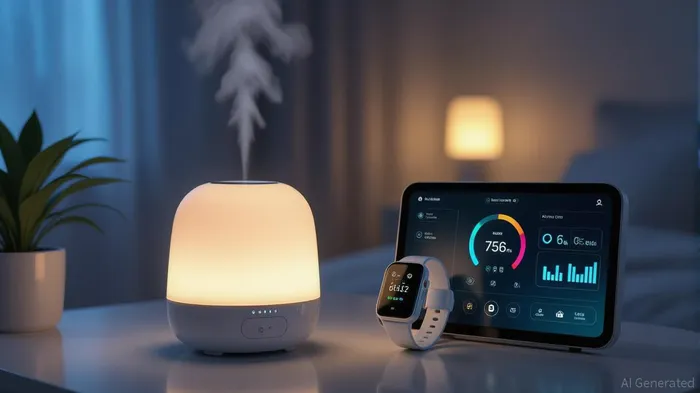
Simultaneously, HumidiFi's physical product-a smart humidifier-targets the wellness industry's growing emphasis on environmental health. The U.S. health of the home market, for instance, reveals that 52% of consumers prioritize respiratory health and 47% invest in air purification solutions. Smart humidifiers, which integrate with biometric data and IoT systems, are projected to grow at a 15% CAGR, driven by demand for personalized wellness solutions. By leveraging smart home technologies, HumidiFi aligns with the sector's shift toward data-driven, preventative care.
Investor Sentiment: Bullish Potential vs. Bearish Risks
Investor sentiment toward WET remains mixed. On the bullish side, the token's Solana-based infrastructure and exchange partnerships position it to benefit from the blockchain's scalability and low transaction costs. Additionally, the projected $11 trillion valuation of the health and wellness market by 2034 suggests long-term tailwinds for companies addressing hydration and environmental wellness.
 However, bearish concerns persist. A sybil attack during WET's initial presale saw 70% of tokens captured by bot wallets, prompting a token reset and the implementation of anti-bot measures. While the team has taken steps to audit the new contract and enforce wallet caps, these incidents have eroded trust. Furthermore, the 40% foundation allocation of tokens raises questions about centralization, a red flag for DeFi purists who prioritize decentralized governance.
Sector Synergies and Competitive Challenges
HumidiFi's positioning in the wellness sector is further strengthened by its alignment with high-growth subsegments. The IV hydration therapy market, for example, is projected to grow at 8.9% CAGR through 2030, reflecting a broader consumer shift toward immunity optimization and preventive healthcare. While WET's blockchain focus differs from IV therapy, both cater to the same underlying demand for health-conscious solutions.
Yet, competition is intensifying. The global humidifier market, valued at $4.43 billion in 2023, is expected to reach $7.40 billion by 2030, with traditional players like Honeywell and Dyson dominating the smart appliance space. For HumidiFi to stand out, it must leverage its blockchain ecosystem to create unique value propositions, such as tokenized loyalty programs or decentralized governance models that incentivize user participation.
Future Outlook: Governance and Ecosystem Expansion
WET's roadmap includes a transition to decentralized governance in Q1 2026, with 40% of tokens allocated to the Foundation for governance, partnerships, and development. This shift could address centralization concerns and align with the DeFi ethos of community-driven innovation. Additionally, ecosystem incentives in 2026-such as liquidity mining and developer grants-aim to boost adoption and liquidity.
However, success hinges on execution. The token must maintain its Solana DEX dominance while addressing distribution issues and fostering trust. Partnerships with wearable tech companies and wellness platforms could further integrate WET into the broader health ecosystem, but these efforts require strategic clarity and resource allocation.
Conclusion: A High-Risk, High-Reward Proposition
HumidiFi (WET) occupies a compelling intersection of blockchain innovation and wellness demand. Its dual focus on DeFi and physical wellness products positions it to capitalize on the $6.8 trillion global wellness economy. Yet, the token's recent challenges-sybil attacks, tokenomics risks, and centralization concerns-highlight the volatility of this space. For investors, WET represents a high-risk, high-reward opportunity, contingent on its ability to execute its governance roadmap, secure sustainable partnerships, and navigate the competitive landscape. As the wellness sector continues to evolve, HumidiFi's success will ultimately depend on its capacity to adapt to both technological and consumer trends.

Stay ahead of the market.
Get curated U.S. market news, insights and key dates delivered to your inbox.


AInvest
PRO
AInvest
PRO



Comments
No comments yet