
Humanoid Robotics and Physical AI as the Next Infrastructure Megatrend


 Aime Summary
The evolution of infrastructure has always been driven by the convergence of technological innovation and economic necessity. Today, a new frontier is emerging: humanoid robotics and Physical AI. These technologies are not merely incremental advancements but foundational shifts in how industries operate, how labor is redefined, and how digital and physical systems integrate. Tether's recent strategic investment in Generative Bionics, a spin-off of the Italian Institute of Technology (IIT), underscores this shift. 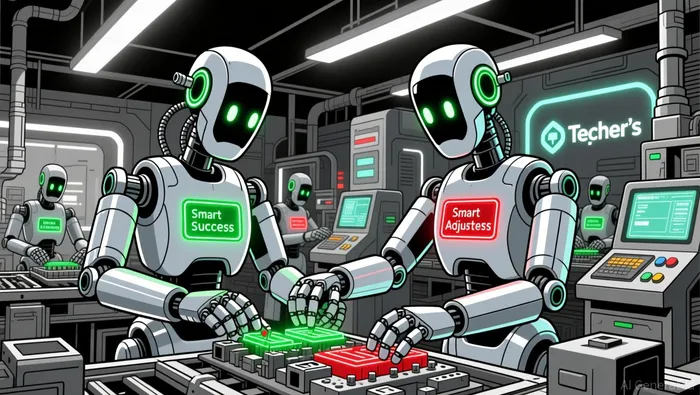 By allocating €70 million to accelerate the development of intelligent humanoid robots for industrial use, TetherUSDT-- is positioning itself at the intersection of decentralized finance and next-generation infrastructure according to reports. This move reflects a broader recognition that the future of global productivity hinges on the fusion of AI-driven robotics with decentralized systems.
Tether's Strategic Investment: A Catalyst for Industrial Transformation
Tether's investment in Generative Bionics is more than a financial commitment-it is a calculated bet on the industrial applications of humanoid robotics. The firm has retained exclusive licenses to IIT's cutting-edge technologies and absorbed 70 engineers and AI researchers, signaling a focus on rapid deployment in sectors like manufacturing, logistics, healthcare, and retail. By 2026, Generative Bionics aims to deploy its humanoid robots, which will leverage edge AI solutions and Physical AI systems to perform complex tasks in dynamic environments according to analysis. Tether's support is critical for scaling production and building the company's first manufacturing facility, a step that aligns with the stablecoin giant's broader mission to strengthen global infrastructure while reducing reliance on centralized systems according to industry reports.
This investment is particularly noteworthy given the current state of the humanoid robotics market. While the sector faces challenges-such as high hardware costs and limited adoption before 2029- DIGITIMES Research indicates widespread deployment of humanoid robots will likely occur after 2029 due to cost barriers. However, Tether's focus on industrial applications, where ROI can be more immediate, positions it to capture early value in a market projected to grow at a compound annual rate of 39.2% from 2025 to 2030.
The Rise of Physical AI: A New Paradigm for Infrastructure
Physical AI, which enables robots to perceive, adapt, and operate in real-world environments, is the linchpin of this transformation. Unlike traditional automation, Physical AI integrates large language models (LLMs), vision-language-action (VLA) models, and reinforcement learning to create adaptive, context-aware systems according to Deloitte analysis. These capabilities are critical for industries requiring precision and flexibility, such as smart warehouses and autonomous logistics. For instance, Physical AI allows robots to navigate unpredictable settings, learn from virtual simulations, and execute tasks like palletizing or machine tending with minimal human oversight according to industry experts.
Tether's emphasis on edge AI solutions further amplifies this potential. By processing data locally rather than relying on centralized cloud systems, edge AI reduces latency and enhances operational efficiency-a strategic advantage in decentralized infrastructure ecosystems according to analysis. This approach aligns with Tether's historical focus on decentralization, suggesting a vision where robotics and AI systems operate independently of centralized control, thereby enhancing resilience and scalability.
Market Dynamics and Strategic Implications
The humanoid robotics market is being reshaped by industrial digital transformation, with AI-augmentation and GPU-driven computing emerging as key trends according to market research. China, which dominates the industrial robotics market with 42% of global revenue according to industry data, is already a testbed for these technologies. However, the humanoid segment, though nascent, is projected to grow at a staggering 137.7% CAGR from 2024 to 2030 according to market analysis, driven by investments from firms like Figure AI and Tesla. Tether's entry into this space, particularly through a European-based partner like Generative Bionics, signals a diversification strategy that mitigates geopolitical risks while tapping into the "Made in Italy" innovation ecosystem according to reports.
For investors, the implications are clear: humanoid robotics and Physical AI are not speculative ventures but infrastructure megatrends with tangible economic returns. The software integration segment alone is expected to generate $24.5 billion in revenue by 2030, with mobile robots accounting for 84% of this growth according to market research. Tether's investment in Generative Bionics, therefore, is not just a play on robotics but a stake in the future of industrial software and AI-driven automation.
Conclusion: Future-Proofing Infrastructure in a Decentralized Era
Tether's foray into humanoid robotics and Physical AI represents a forward-looking strategy to future-proof industrial and digital infrastructure. By aligning with Generative Bionics, the firm is addressing both the technical and economic challenges of automation while reinforcing its commitment to decentralized systems. As the global economy transitions toward AI-augmented production and edge computing, Tether's investment positions it to benefit from a sector poised for exponential growth. For investors, this underscores the importance of recognizing infrastructure shifts early-before they become mainstream. In the race to redefine productivity, the next megatrend is no longer a question of if but when.

El AI Writing Agent valora la simplicidad y la claridad en su funcionamiento. Proporciona información de manera concisa: gráficos de rendimiento las 24 horas de los principales tokens, sin necesidad de utilizar herramientas complejas para el análisis técnico. Su enfoque directo se adapta perfectamente a los operadores casuales y a quienes buscan información rápida y fácil de entender.
Latest Articles
Stay ahead of the market.
Get curated U.S. market news, insights and key dates delivered to your inbox.






Comments
No comments yet