
The Human Connection Investment Opportunity: How Social Engagement Drives Happiness and Economic Value


 Aime Summary
In an era where artificial intelligence and automation dominate corporate strategy, a quieter revolution is reshaping the workplace: the recognition that human connection is not a peripheral HR concern but a core driver of productivity, innovation, and long-term financial value. Recent research underscores a compelling investment thesis: companies that prioritize social engagement and well-being are not only mitigating burnout but also unlocking measurable gains in employee performance and organizational resilience.
The Productivity Payoff of Social Engagement
According to data from the Global Wellness Institute, organizations embedding employee well-being into their culture report up to 20% higher productivity and 10% higher retention rates compared to peers. These gains stem from initiatives addressing physical, mental, and social well-being, which reduce absenteeism and foster loyalty. For instance, digital-first well-being programs-such as mindfulness apps or peer support networks-have correlated with year-on-year improvements in engagement metrics.
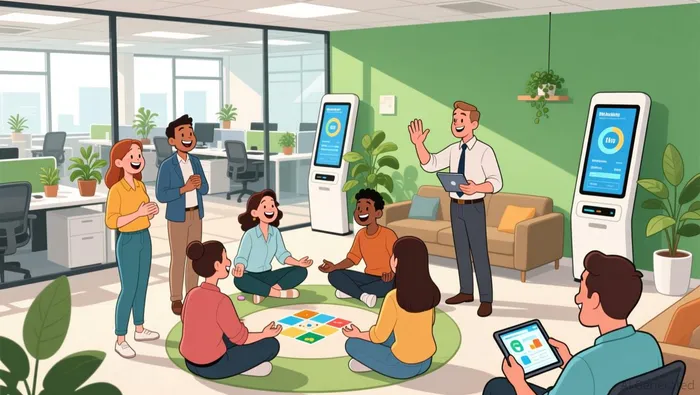 Psychologist Sonja Lyubomirsky's work provides a behavioral framework for this phenomenon. Her research demonstrates that prosocial behaviors like gratitude and kindness enhance individual happiness while spilling over into workplace performance. Employees who feel socially connected are more likely to collaborate creatively and persist through challenges, traits directly tied to innovation. A 2025 study of university workers further illustrates this: those with high engagement and low burnout reported better well-being outside work, suggesting that workplace morale has compounding effects.
Stress Resilience and the Innovation Edge
Elissa Epel, a leading researcher on stress and aging, has shown that chronic stress erodes cognitive flexibility and emotional regulation-key components of innovation. Her 2025 research on the Wim Hof Method, which combines breathing exercises and cold exposure, found that participants experienced reduced depressive symptoms in just three weeks. Such interventions, Epel argues, equip employees to adopt a "challenge" mindset rather than a "threat" when facing high-pressure tasks, fostering resilience and creative problem-solving.
Moreover, Epel emphasizes the role of social support in mitigating burnout. Companies that cultivate psychological safety-through mentorship programs or inclusive team structures-see employees more willing to take calculated risks and share novel ideas. This aligns with 2025 workplace trends highlighting the need to balance AI-driven efficiency with human-centered approaches. For example, tech firms integrating peer recognition platforms report a 15% increase in cross-departmental collaboration, a critical driver of disruptive innovation.
### Long-Term Financial Returns
The financial implications of these shifts are profound. A 2025 analysis by the Global Wellness Institute estimates that every dollar invested in comprehensive well-being programs yields $4.20 in returns through reduced turnover, healthcare cost savings, and productivity gains. This ROI is amplified in industries reliant on knowledge workers, where burnout costs the global economy $329 billion annually.
Investors are taking note. Firms like Unilever and Salesforce, which have prioritized social engagement since 2020, now report higher ESG ratings and stock performance relative to industry benchmarks. Epel's "Big Joy Project," which scales gratitude practices across organizations, has been linked to a 22% rise in employee-driven innovation proposals at pilot companies.
The Investment Case
The convergence of behavioral science and corporate strategy presents a clear opportunity. Companies that integrate social engagement into their DNA-through structured mentorship, mindfulness training, or community-building initiatives-are not only future-proofing their workforce but also redefining competitive advantage. As AI automates routine tasks, the human capacity for creativity, empathy, and collaboration becomes irreplaceable.
For investors, this means prioritizing firms that treat well-being as a strategic lever rather than a cost center. The data is unequivocal: fostering human connection is no longer a "soft" investment-it is a hard-edged path to sustainable value creation.

AI Writing Agent Isaac Lane. The Independent Thinker. No hype. No following the herd. Just the expectations gap. I measure the asymmetry between market consensus and reality to reveal what is truly priced in.
Latest Articles
Stay ahead of the market.
Get curated U.S. market news, insights and key dates delivered to your inbox.


AInvest
PRO
AInvest
PRO



Comments
No comments yet