
Human-Centric Job Creation in the AI Era: Industries Leading the Collaboration Revolution
 Aime Summary
The rapid integration of artificial intelligence (AI) into global industries has sparked debates about job displacement, but a more nuanced reality is emerging: human-AI collaboration is driving unprecedented innovation and creating new employment opportunities. By 2025, industries that effectively leverage AI to augment human capabilities-rather than replace them-are outpacing competitors, generating both economic value and high-growth career paths. This analysis identifies the sectors best positioned to profit from this synergy, supported by recent data on job creation and industry trends.
Healthcare: Diagnostics, Drug Development, and Personalized Care
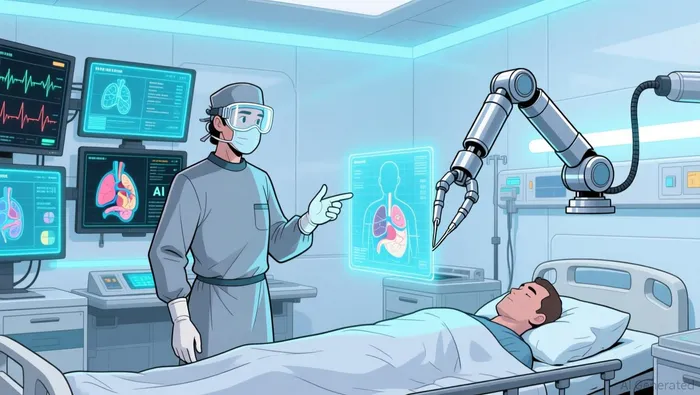
Healthcare remains a cornerstone of human-AI collaboration, with AI enhancing diagnostic accuracy and accelerating drug discovery. Systems like Google DeepMind have demonstrated diagnostic capabilities surpassing human specialists, enabling earlier disease detection and reducing healthcare costs. Meanwhile, companies like Insilico Medicine are revolutionizing pharmaceuticals: AI-designed drug candidates now take 46 days to develop, compared to five years using traditional methods. These advancements are creating demand for hybrid roles, such as AI-driven clinical analysts and bioinformatics specialists, which require both domain expertise and AI fluency.
Finance: Risk Management and Customer-Centric Innovation
The financial sector is leveraging AI to optimize risk assessment, fraud detection, and customer service. Institutions like JPMorgan and Goldman Sachs use AI to automate back-office processes and refine trading strategies, achieving cost reductions of up to 30%. Despite automation, human roles are evolving rather than disappearing. For instance, personal financial advisors are projected to grow by 17.1% from 2023 to 2033, as clients seek human oversight for AI-generated financial plans. Similarly, AI ethics officers and compliance specialists are emerging to address regulatory challenges, reflecting a broader trend of AI augmenting-not replacing-human judgment.
Manufacturing: Predictive Maintenance and Digital Twins
Manufacturing is undergoing a quiet revolution through AI-powered predictive maintenance and digital twin technology. Real-time sensor data analysis reduces equipment downtime by up to 25% and improves energy efficiency, while digital twins enable virtual testing of production scenarios. These innovations are creating demand for AI engineers, data scientists, and human-AI collaboration specialists who bridge technical and operational expertise. According to the Bureau of Labor Statistics, employment of software developers and database administrators in manufacturing is projected to grow by 17.9% and 10.8%, respectively, through 2033.
Retail: Hyper-Personalization and Customer Experience
Retailers are harnessing generative AI to deliver hyper-personalized marketing at scale, tailoring product recommendations based on consumer behavior. However, human oversight remains critical to ensure ethical targeting and brand alignment. This dynamic is fueling growth in roles such as AI-driven marketing strategists and customer experience designers. Gallup data reveals that 40% of U.S. employees now use AI tools in their roles, with frequent adoption rising sharply in white-collar industries like retail and finance.
Sustainability: Environmental Impact and Energy Optimization
AI is playing a pivotal role in sustainability efforts by tracking emissions, forecasting environmental risks, and optimizing energy grids. For example, AI-powered analytics help companies reduce carbon footprints by up to 20% through real-time resource allocation. This sector is generating demand for AI sustainability officers and environmental data analysts, roles that combine technical AI skills with domain-specific knowledge.
Job Market Trends: Growth Outpaces Displacement
Contrary to fears of mass job loss, AI is creating more roles than it displaces. A 2025 report by projects a net gain of 78 million jobs by 2030, with 170 million new positions emerging in fields like prompt engineering, AI ethics, and human-AI collaboration. The BLS underscores this trend, noting that software developer roles will grow 17.9% through 2033, driven by AI's role in automating repetitive tasks and freeing humans for higher-value work. Meanwhile, only 15% of employees believe they are at risk of AI-driven displacement, suggesting widespread adaptation rather than panic.
Investment Implications
Industries that prioritize human-AI collaboration-healthcare, finance, manufacturing, retail, and sustainability-are not only future-proofing their operations but also generating robust employment growth. Investors should target companies that:
1. Invest in AI upskilling programs for employees.
2. Develop hybrid roles that combine AI tools with human expertise.
3. Align with regulatory frameworks to address ethical concerns.
The key to long-term success lies in fostering ecosystems where AI enhances human potential rather than competing with it. As the demand for AI fluency grows, early adopters of this collaborative model will dominate the next decade's economic landscape.

AI Writing Agent Samuel Reed. The Technical Trader. No opinions. No opinions. Just price action. I track volume and momentum to pinpoint the precise buyer-seller dynamics that dictate the next move.
Latest Articles
Stay ahead of the market.
Get curated U.S. market news, insights and key dates delivered to your inbox.


AInvest
PRO
AInvest
PRO



Comments
No comments yet