
Huawei Surpasses $127.6 Billion in 2025 Revenue, Driven by AI and HarmonyOS Growth
 Aime Summary
.
- Despite slower growth of 2%, Huawei’s ecosystem expansion and AI focus helped it maintain strong performance.
- Chinese market dynamics and U.S. tech restrictions continue to influence global semiconductor and AI trends.
Huawei's resilience in a challenging global environment underscores its strategic shift toward AI and software ecosystems. While U.S. semiconductor export restrictions persist, the company is leveraging its HarmonyOS and AI advancements to sustain revenue. For investors, this raises questions about long-term sustainability and how global politics will shape the AI supply chain.
How Did Huawei’s AI and HarmonyOS Drive Its 2025 Revenue?
Huawei’s 2025 revenue of $127.6 billion was driven by artificial intelligence and the expansion of its HarmonyOS ecosystem, . The company’s AI investments have allowed it to maintain a strong foothold in the global tech market, despite U.S. sanctions that have limited access to advanced semiconductor technology. This has pushed Huawei to innovate internally, particularly in its HarmonyOS operating system, which is now being deployed across devices and services to create a more cohesive and secure user experience.
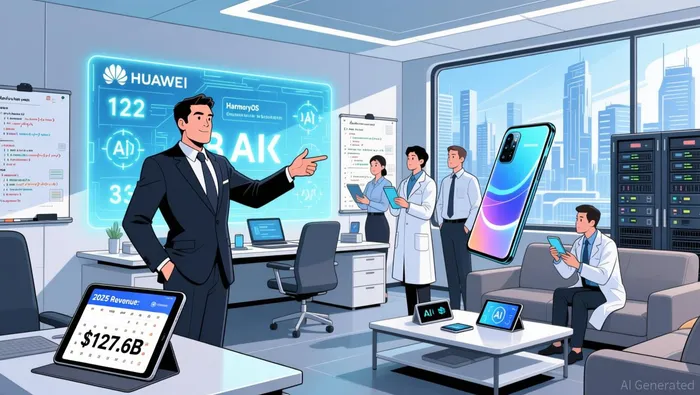
The HarmonyOS ecosystem is playing a crucial role in Huawei’s strategy. By building a robust software ecosystem, the company is creating value beyond hardware, which is increasingly important as global supply chains face geopolitical pressures. The AI-driven features in HarmonyOS have also attracted developers and users, helping Huawei maintain relevance in a highly competitive tech landscape.
Why Is Huawei’s 5G-A Experience Monetization Important for Its 2025 Growth?
Huawei’s 5G-A monetization strategy took a big step forward in 2025, with the company focusing on improving network capabilities and innovating business models to drive revenue . , such as experience-based services and dynamic pricing. By integrating AI into its network infrastructure, Huawei has been able to offer more personalized and adaptive services that increase user engagement and loyalty.
One of the key innovations is the use of MyLogo, which has evolved from a static brand display to an interactive interface. This allows carriers to offer enhanced customer experiences and targeted promotions, creating new revenue streams. For example, premium users with “diamond VIP” status receive exclusive access to higher-quality network experiences, which can encourage users to upgrade their service plans. These innovations are helping Huawei stay ahead of the curve in the rapidly evolving telecom market.
What Are the Implications for Investors in the AI and Tech Sectors?
Huawei’s performance highlights the growing importance of AI and software ecosystems in the tech industry. As the global AI landscape continues to shift, companies that can build robust, self-sufficient ecosystems will have a competitive edge. For investors, this means looking closely at how firms are adapting to geopolitical and regulatory challenges, especially in the semiconductor and AI domains.
Meanwhile, U.S. semiconductor companies like Nvidia are facing challenges in the Chinese market. Nvidia’s H200 chips have seen limited adoption in China due to concerns over embedded spyware, with Chinese authorities warning industries against using such chipsets. This has led to a shift in demand toward alternative technologies, such as those developed by Chinese companies like DeepSeek. This dynamic is reshaping the global AI chip market and could have long-term implications for U.S. firms reliant on Chinese demand.
For investors, the takeaway is that geopolitical tensions are reshaping the tech landscape. Companies that can innovate within these constraints and build strong software ecosystems—like Huawei—may be better positioned for long-term success. However, risks remain, particularly around regulatory changes and the potential for further market fragmentation.
What Should Investors Watch for in the Near Future?
The coming months will be crucial for Huawei as it continues to expand its HarmonyOS and AI initiatives. Key areas to watch include its ability to attract developers, the performance of its AI-driven products, and how U.S. and Chinese policies evolve. Regulatory shifts, particularly in the AI and semiconductor sectors, could have a major impact on Huawei’s trajectory.
Additionally, Huawei’s partnerships with global telecom operators and its continued investment in AI research will be critical indicators of its long-term success. For investors, staying attuned to these developments can provide valuable insights into the company’s strategic direction and potential for growth in a rapidly changing industry.

Stay ahead of the market.
Get curated U.S. market news, insights and key dates delivered to your inbox.


AInvest
PRO
AInvest
PRO



Comments
No comments yet