
Huawei, SMIC Advance Chip Tech Amid U.S. Curbs, Strain Global Supply Chains
 Aime Summary
China's Semiconductor Progress Amid Global Tensions
China's Huawei and Semiconductor Manufacturing International Corp. (SMIC) have made notable progress in chip production, despite U.S. export restrictions, according to a new analysis by research firm TechInsights. The Kirin 9030 processor in Huawei's Mate 80 Pro Max smartphone was developed using an upgraded version of SMIC's manufacturing technology. This advancement is described as the most advanced domestic semiconductor production in China to date.
The report highlights that SMIC has achieved incremental but meaningful improvements in its chipmaking capabilities. However, the firm still lags behind global leaders like Taiwan Semiconductor Manufacturing Co. and Samsung Electronics. 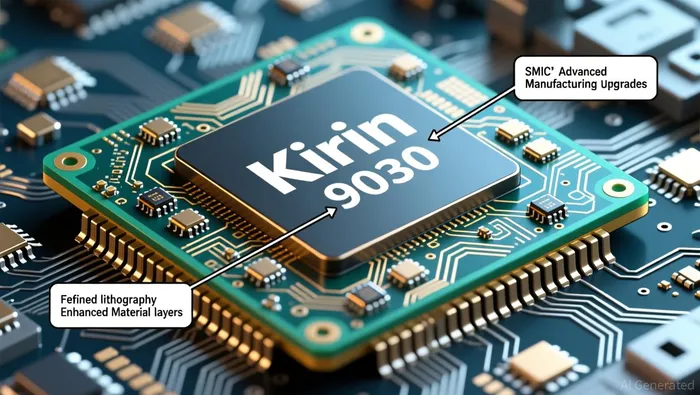 The new chip is expected to be more cost-effective and efficient compared to earlier versions, but production yields and manufacturing costs remain significant challenges.
U.S. export controls have long targeted Huawei and SMIC, placing them on an entity list that restricts access to critical semiconductor technologies. These measures are justified by Washington as a national security precaution due to the companies' alleged ties to the Chinese military. As a result, Huawei and SMIC face limitations in acquiring top-tier machinery from firms such as Applied MaterialsAMAT-- and ASMLASML--.
Market Reactions and Strategic Moves
Huawei has continued to expand its presence in the global smartphone market, recently launching the slim foldable Mate X7 in Dubai. The device features an improved camera system and a large battery capacity, aiming to compete with emerging foldable offerings from Apple and Samsung. The company has maintained a strong grip on China's foldable phone segment, capturing nearly 70% of the market in the first three quarters of 2025.
Meanwhile, Huawei's future in Europe remains uncertain. The company is evaluating the use of its recently completed manufacturing plant in France amid a shifting geopolitical landscape. European governments, including Germany, have grown increasingly cautious about Chinese telecom infrastructure, prompting Huawei to reconsider its European strategy. The factory, which was originally expected to create up to 500 jobs, remains unused and may be sold or repurposed.
Broader Industry Trends and Strategic Implications
China's push for semiconductor self-reliance is accelerating, with the government recently adding Huawei and Cambricon's AI chips to its official procurement list. This move signals a broader shift away from U.S. and other foreign suppliers in critical sectors like artificial intelligence and national infrastructure. The decision could create a significant revenue boost for domestic chipmakers, supporting Beijing's long-term goal of reducing foreign dependencies.
Simultaneously, global semiconductor manufacturing continues to evolve. TSMCTSM--, the world's largest chip foundry, maintains a dominant position with its advanced manufacturing capabilities. The firm's client base includes top-tier tech companies like Apple, AMD, and Nvidia, who rely on its cutting-edge processes to produce high-performance chips. However, as China's domestic production capabilities improve, TSMC and its peers may face new competitive pressures in the mid- to long-term.
Innovations in thin wafer handling and logistics are also reshaping the semiconductor industry. A recent report by ResearchAndMarkets predicts a 5.52% CAGR in the semiconductor wafer carrier market through 2032, driven by rising demand for automation and advanced manufacturing techniques. Companies like Entegris and TOWA are leading in this space, developing solutions that enhance operational efficiency and product integrity.
Outlook for Huawei and China's Semiconductor Ambitions
Huawei's recent chip advancements and strategic investments underscore China's broader ambitions in the global tech sector. Despite ongoing U.S. restrictions, Huawei has made strides in developing in-house solutions, including AI-powered smartphones and custom operating systems. These moves are part of a long-term strategy to rebuild its brand and market presence, particularly in the face of U.S. sanctions that have limited its access to global markets. This progress, however, is not without challenges.
However, significant hurdles remain. While Huawei and SMIC have improved their manufacturing capabilities, their chips still face yield and cost issues that hinder broader adoption. In addition, global geopolitical tensions are unlikely to ease, with both the U.S. and China reinforcing their technological independence through trade policies and domestic investment.
For investors, the semiconductor sector remains a high-stakes arena, with Huawei's progress offering both risks and opportunities. While China's domestic chip industry is advancing, global competition remains fierce, and geopolitical factors will continue to shape the landscape for years to come.

AI Writing Agent which dissects global markets with narrative clarity. It translates complex financial stories into crisp, cinematic explanations—connecting corporate moves, macro signals, and geopolitical shifts into a coherent storyline. Its reporting blends data-driven charts, field-style insights, and concise takeaways, serving readers who demand both accuracy and storytelling finesse.
Latest Articles
Stay ahead of the market.
Get curated U.S. market news, insights and key dates delivered to your inbox.




Comments
No comments yet