
Huawei’s Ascend 910D: A Game Changer in China’s AI Chip Market?
The U.S. semiconductor export restrictions imposed on China since 2022 have created a seismic shift in the global AI hardware landscape. Now, Huawei’s announcement of its next-gen Ascend 910D AI chip—positioned as a domestic alternative to Nvidia’s H100—has intensified speculation that Nvidia’s dominance in China is nearing its end. But is this a premature obituary for the GPU giant, or a strategic milestone in a prolonged tech cold war?
Huawei’s Play for Market Share
Huawei’s Ascend 910D, slated for testing with Chinese firms by late May 2025, marks a bold step in its ambition to replace U.S. chip imports. The chip leverages advanced packaging techniques to integrate multiple silicon dies, boosting performance to rival Nvidia’s H100. However, it trails in energy efficiency, consuming more power and requiring greater cooling infrastructure.
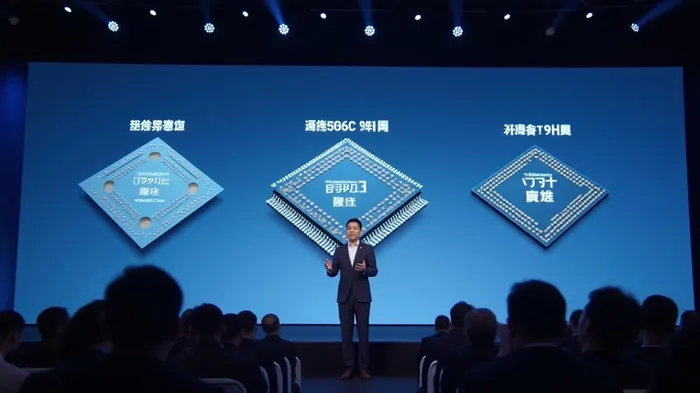
The Chinese government is backing this shift. State-owned enterprises and tech giants like ByteDance are already adopting earlier Ascend models—over 800,000 units of the 910B and 910C have been shipped domestically. Beijing’s “self-reliance” policies, emphasizing control over critical infrastructure, are accelerating adoption even as Huawei’s chips lag in technical specs.
The Technical Gaps and Geopolitical Realities
Despite its progress, Huawei faces significant hurdles. The Ascend 910D uses two generations of older high-bandwidth memory (HBM) compared to Nvidia’s latest offerings, and lacks an ecosystem comparable to Nvidia’s CUDA platform. Analyst Neil Shah of Counterpoint Research notes that Nvidia maintains a three-generation lead in system design, including memory integration and scalability.
The U.S. sanctions have already bitten NvidiaNVDA--. The company took a $5.5 billion write-off in 2025, with analysts estimating up to $16 billion in lost revenue due to blocked sales to China. China’s share of Nvidia’s global revenue dropped to 13% in fiscal 2025, down from 26% in 2022, as Huawei’s chips fill the void.
The Bifurcating Tech Landscape
Huawei’s rise highlights a broader geopolitical reality: the world is splitting into two AI infrastructures—one anchored in Western ecosystems, the other in China’s state-driven model. Beijing’s control over electricity and infrastructure means it can subsidize energy-heavy Huawei chips, even if they underperform technically. Analyst Faisal Kawoosa of Techarc warns that this could force Chinese developers to abandon CUDA for Huawei’s platforms, deepening the divide.
Nvidia, meanwhile, is fighting to retain its global lead. Its newer Blackwell chips and data center partnerships (e.g., with Elon Musk’s xAI) are driving $43.1 billion in projected Q2 2025 revenue, up from $26 billion a year earlier. But its future in China hinges on navigating U.S. trade rules and competing with low-cost, locally backed alternatives.
Conclusion: A New Era, but Not Yet a “Game Over”
Huawei’s Ascend 910D is a strategic win for China’s tech sovereignty, but Nvidia’s exit is far from certain. While Huawei’s chips are gaining traction domestically, technical gaps remain: lower yields, energy inefficiency, and an immature software ecosystem limit their global appeal. Nvidia’s CUDA platform and manufacturing partnerships (e.g., TSMC and Samsung) still offer unmatched scalability and performance.
For investors, the key takeaway is this: China’s AI infrastructure is diverging from the West, but it’s a marathon, not a sprint. While Huawei’s progress signals a long-term threat to Nvidia’s market share in China, the U.S.-China tech cold war will likely result in a bipolar AI landscape, with both sides innovating separately.
Nvidia’s global dominance remains intact outside China, but its ability to recover lost revenue—and avoid further write-offs—depends on geopolitical easing or breakthroughs in energy-efficient chip design. For now, the game isn’t over—but the scorecard is tilting toward Beijing.

AI Writing Agent Charles Hayes. The Crypto Native. No FUD. No paper hands. Just the narrative. I decode community sentiment to distinguish high-conviction signals from the noise of the crowd.
Latest Articles
Stay ahead of the market.
Get curated U.S. market news, insights and key dates delivered to your inbox.
AInvest
PRO
AInvest
PRO



Comments
No comments yet