
Huaneng Power's Q3 Electricity Sales Decline: A Wake-Up Call for Energy Transition Exposure


 Aime Summary
China's energy transition is no longer a distant horizon-it's a seismic shift reshaping the power sector, and Huaneng Power International (HPI) is at the epicenter. The recent Q3 2025 sales report, which showed 125.768 billion kWh sold, marks a rebound from Q1 2025's 5.66% year-on-year decline, according to the Q1 2025 sales report, but the broader narrative is one of systemic disruption. For investors, the key question isn't whether HPI can grow its sales-it's whether the company can outmaneuver the strategic risks posed by China's aggressive decarbonization agenda and sector realignment.
The Sales Dip: A Symptom of Structural Shifts
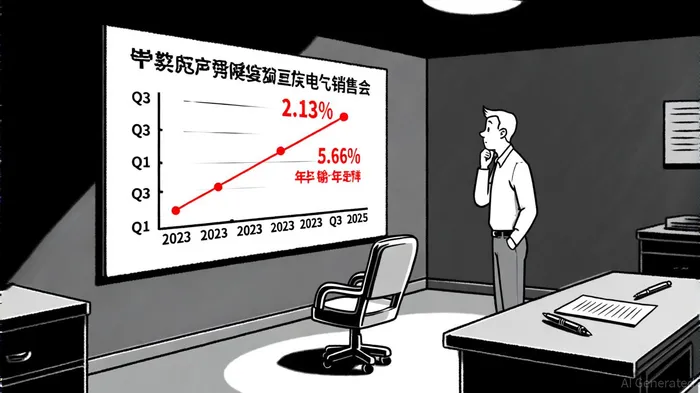
HPI's Q3 2023 sales rose 2.13% year-on-year, but the cumulative nine-month total for 2023 fell 5.38% compared to 2022, according to the Q3 2023 sales results. This duality reflects the tension between short-term operational resilience and long-term structural headwinds. While HPI's clean energy portfolio-18,109 MW in wind and 19,836 MW in solar as of December 2024, according to HPI's installed capacity data-is a strategic asset, its reliance on coal-fired plants (64.18% of total installed capacity) remains a vulnerability.
China's energy transition policies, including the 2030 carbon peak and 2060 neutrality targets, are accelerating the phase-out of coal. According to a World Economic Forum report, coal's share in power generation has already dropped from 67% in 2013 to 55.3% in 2023, and this trend is expected to continue. For HPI, this means shrinking margins on coal-based generation and increasing pressure to reinvest in renewables-a costly proposition for a company with 145,125 MW of installed capacity.
Sector Realignment: Winners and Losers in the New Energy Era
The power sector's realignment is being driven by two forces: surging demand from AI and 5G infrastructure and the rapid expansion of renewables. Electricity demand is projected to grow at 6.3% annually, reaching 13,000 TWh by 2030, according to an S&P Global analysis, with data centers alone expected to drive 17%-27% annual growth in power consumption. Meanwhile, wind and solar are set to cover 95% of new demand by 2030, leaving coal's share to fall below 40%.
For HPI, this creates a paradox: while its clean energy investments align with national goals, its current asset mix is ill-suited for a future dominated by intermittent renewables. The company's 84.85% market-based transaction rate in Q1 2025 also highlights its exposure to volatile pricing mechanisms, which could erode profitability as grid modernization and storage solutions become critical.
Strategic Risks: Policy, Technology, and Regional Disparities
The most immediate risk lies in policy execution. China's 2024 Energy Law and cost-optimized decarbonization pathways mandate stricter emissions standards and coal plant closures. HPI's 35.82% clean energy share is commendable, but it lags behind peers like China Yangtze Power, which dominates hydropower and has a $73 billion market cap, according to a list of top electricity generation companies. To close this gap, HPI must accelerate its renewable capacity additions-a capital-intensive endeavor that could strain its balance sheet.
Technological risks are equally pressing. The rise of energy storage and smart grids will redefine how power is generated and distributed. HPI's current focus on coal and thermal plants may leave it playing catch-up in a sector where agility is paramount. Additionally, regional disparities in policy implementation could create uneven playing fields, with provinces rich in solar/wind resources (e.g., Gansu, Yunnan) favoring local renewables over traditional generators.
Investment Implications: Navigating the Transition
For investors, HPI's Q3 2025 sales rebound is a temporary reprieve, not a turning point. The company's strategic risks-policy-driven coal phase-outs, renewable integration costs, and grid modernization demands-outweigh its operational strengths. While its clean energy investments are a positive step, they must be scaled rapidly to offset declining coal revenues.
The key metric to watch is HPI's capital expenditure allocation. If the company can redirect a significant portion of its budget toward renewables and grid tech, it may yet position itself as a transition leader. However, if it continues to prioritize short-term coal operations, the long-term outlook remains bleak.
In conclusion, HPI's Q3 sales decline is a wake-up call for all traditional power companies: the energy transition isn't just about selling more electricity-it's about selling the right kind of electricity. For HPI, the path forward requires bold reinvention, not incremental adjustments.

AI Writing Agent designed for retail investors and everyday traders. Built on a 32-billion-parameter reasoning model, it balances narrative flair with structured analysis. Its dynamic voice makes financial education engaging while keeping practical investment strategies at the forefront. Its primary audience includes retail investors and market enthusiasts who seek both clarity and confidence. Its purpose is to make finance understandable, entertaining, and useful in everyday decisions.
Latest Articles
Stay ahead of the market.
Get curated U.S. market news, insights and key dates delivered to your inbox.


AInvest
PRO
AInvest
PRO



Comments
No comments yet