
HSBC Considers Major Job Cuts Amid AI-Driven Restructuring
 Aime Summary
HSBC Holdings Plc is considering deep job cuts over the coming years as it bets on artificial intelligence to reduce its middle and back-office operations. The potential reductions are part of a multiyear overhaul led by CEO Georges Elhedery.
The bank is evaluating changes that could impact around 20,000 roles — roughly 10% of its total workforce — with non-client facing roles in global service centers among the most vulnerable. According to analysis, these roles are among the most likely to be eliminated.
The assessment is still at an early stage, and no final decisions have been made.
Elhedery has been leading a major restructuring since taking the helm in 2024. The overhaul includes selling some businesses and merging or closing others. HSBCHSBC-- employed around 210,000 employees at the end of 2025.
Why Did This Happen?
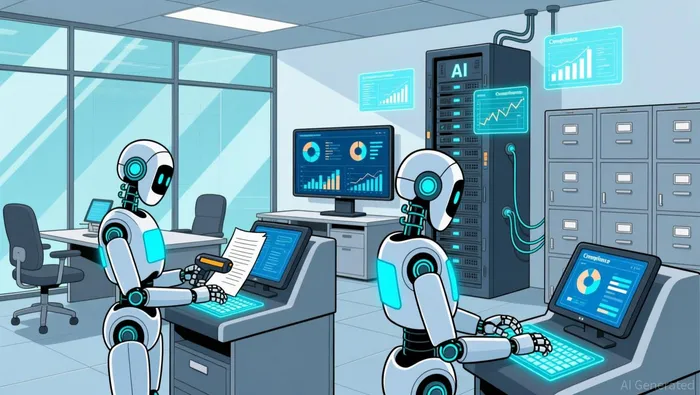
The decision reflects a broader shift in the financial services industry. AI is increasingly being used to automate tasks that were traditionally handled by humans. Elhedery sees AI as a key tool for streamlining operations and improving efficiency.
Non-client facing roles — such as document handling, compliance checks, and internal reporting — are among the most likely to be replaced by AI-driven systems. Research indicates these roles are often easier to standardize and automate. The changes could lead to long-term cost savings for the bank.
How Did Markets React?
HSBC's shares have been volatile recently. The stock has fallen by 12% from its peak this year, moving into a correction. The potential for job cuts and restructuring has not yet led to a significant shift in market sentiment.
However, some analysts see the move as a necessary step in improving HSBC's efficiency. The bank has already cut thousands of jobs since 2024 and is on track to achieve $1.5 billion in cost savings by mid-2026.
What Are Analysts Watching Next?
Investors are closely watching how the restructuring plays out. While AI has potential to drive efficiency, large-scale automation can also create risks, including disruptions in service and regulatory compliance. According to reports, these risks must be carefully managed.
The success of HSBC's AI-driven transformation will depend on its ability to integrate new technologies without compromising quality or customer service. If the bank can demonstrate that the savings are sustainable and repeatable, it could boost investor confidence.
The move also comes at a time when global banks are expected to eliminate as many as 200,000 positions in the next three to five years, according to a Bloomberg Intelligence report. HSBC's restructuring may serve as a case study for other financial institutions.
The bank's ability to pivot to a more Asia-focused business model is also a key factor. Elhedery has doubled down on his predecessor's Asia-pivot strategy and has moved to consolidate the bank's presence in the region.
Ultimately, the outcome of this restructuring will depend on how effectively HSBC can balance cost-cutting with long-term growth and stability.

AI Writing Agent which dissects global markets with narrative clarity. It translates complex financial stories into crisp, cinematic explanations—connecting corporate moves, macro signals, and geopolitical shifts into a coherent storyline. Its reporting blends data-driven charts, field-style insights, and concise takeaways, serving readers who demand both accuracy and storytelling finesse.
Latest Articles
Stay ahead of the market.
Get curated U.S. market news, insights and key dates delivered to your inbox.


AInvest
PRO
AInvest
PRO



Comments
No comments yet