
HPE's AI Narrative Gap: Cramer's Call Ignited 36% Rally—Is the Mispricing Real?


 Aime Summary
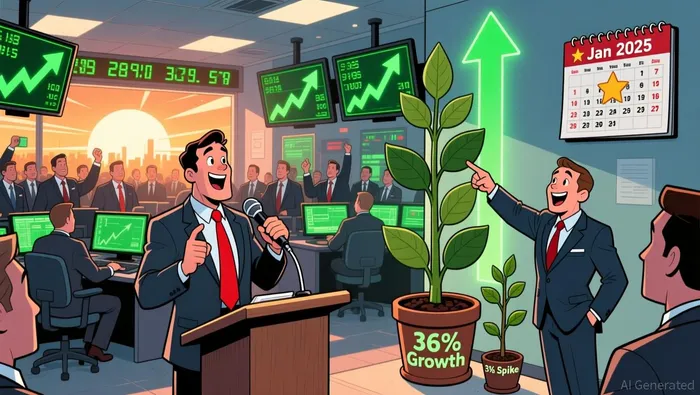
The specific catalyst was a January 2025 appearance by Jim Cramer on CNBC's Squawk on the Street. This came during a major selloff in AI stocks, a period of market fluidity that Cramer himself noted. His call was a direct endorsement, positioning HPEHPE-- as a winner in the AI and data center space.
The immediate market reaction was telling. Right after Cramer's appearance, the stock gained 3%. That was just the opening move. Over the subsequent 12 months, the shares have rallied an additional 36%. This creates a clear tactical setup: a sharp, event-driven pop followed by a sustained run-up.
The stock's wide 52-week range of $11.97 to $26.44 provides context for this volatility. The January call arrived near the bottom of that range, suggesting the market was already pricing in significant risk. The subsequent 36% climb indicates that Cramer's endorsement helped reframe the narrative, pulling the stock out of a deep selloff and into a new phase of optimism. The core question for an event-driven strategist is whether this move created a mispricing opportunity at the time, or if the run-up simply reflected a delayed recognition of HPE's underlying AI data center story.
The Fundamental Disconnect: Strong Q1 Growth vs. Weak Guidance
The market's muted reaction to HPE's latest earnings report reveals a key disconnect. In the fiscal first quarter, the company posted $7.85 billion in revenue, beating expectations and rising 16% year-over-year. Yet, despite this solid top-line beat, the stock fell only about 2% for the year through that point. The reason is clear: the guidance that followed was weak.
Management's outlook for the current quarter and full fiscal year came in well below analyst consensus. For the second quarter, HPE called for adjusted earnings of 28 to 34 cents per share on revenue between $7.2 billion and $7.6 billion, missing the expected $7.93 billion. For the full year, the adjusted EPS target of $1.70 to $1.90 also fell short of the $2.13 consensus. This guidance miss, coupled with the company's own admission of higher-than-normal inventory for AI servers and a shift to next-generation chips, signaled near-term headwinds.
To manage these pressures, HPE announced a significant cost-cutting plan. The company will trim its headcount by 2,500, or 5%, with the goal of generating $350 million in gross savings by fiscal 2027. This move underscores the tension between strong current growth and a cautious forward view. The market had already priced in this pessimism, as evidenced by the stock's minimal reaction to the guidance miss.
For the event-driven strategist, this disconnect is critical. The strong Q1 results show HPE's underlying demand remains robust, with AI system backlog rising 29% quarter-over-quarter. The subsequent guidance and layoffs, however, suggest management sees pricing pressure and inventory adjustments as a near-term drag. The sustainability of the stock's 36% run-up hinges on whether this cost-cutting will effectively shield margins and earnings as the company navigates these near-term challenges.
Current Valuation and Market Context
The stock's current price reflects a market that has largely discounted the fundamental disconnect. HPE is down 9.7% year-to-date and has fallen 9.6% over the past 120 days. It trades at $21.69, well below its 52-week high of $26.44. This pullback suggests investors have absorbed the weak guidance and cost-cutting news, pricing in near-term headwinds.
Trading activity remains moderate, with a 120-day volatility of 5.15% and a 52-week turnover rate of 1.85%. This isn't the kind of frenzied trading that signals a major narrative shift; it points to a stock in a consolidation phase, where the story is being re-evaluated without a clear catalyst driving a new trend.
The broader market context adds another layer of pressure. Earlier in March, the S&P 500 posted its worst weekly loss in several months, falling 3.1%. This broad-based selloff, driven by trade policy uncertainty and economic softening fears, creates a headwind for all stocks, including HPE. In such an environment, even a company with strong underlying demand can get caught in the crossfire.
So, does the current price reflect the fundamental disconnect? It appears to. The stock has already sold off on the weak guidance, and the subsequent cost-cutting plan has been priced in. The valuation metrics support this view: the stock trades at a price-to-sales ratio of 0.8, a discount to its recent 120-day volatility and turnover. For an event-driven strategist, this sets up a potential opportunity. The disconnect between strong Q1 growth and weak guidance is now reflected in the price. The next catalyst-whether it's a beat on the new cost targets, a stabilization in AI server inventory, or a shift in market sentiment-will determine if the stock can reclaim its recent highs or if the cautious outlook will keep it under pressure.
Catalysts and Risks: The Tactical Setup
The tactical setup now hinges on a few near-term catalysts that will confirm or contradict the thesis of a mispriced stock. The most immediate watchpoint is the next earnings report. Any further guidance cuts or revenue misses would likely trigger a sell-off, as the market has already shown it is sensitive to any deterioration in the outlook. The weak guidance for the current quarter and full year, which led to the stock's 19% post-earnings slide last month, set a clear precedent for negative reactions to disappointing numbers.
A second key catalyst is the execution of the company's cost-cutting plan. HPE has committed to trimming its workforce by 2,500 employees, or 5%, with the goal of generating $350 million in gross savings by fiscal 2027. Investors will need to see tangible progress on this front to believe the plan will effectively shield margins and earnings as the company navigates near-term headwinds from inventory adjustments and pricing pressure.
Broader market and sector trends will also influence sentiment. The stock's performance is tied to the health of AI and data center spending, which remains a key growth driver. Any signs of a slowdown in that demand could pressure HPE's top line. Additionally, macro factors like interest rate policy from the Fed will play a role. The central bank's recent decision to leave rates unchanged while signaling caution on inflation creates a backdrop of uncertainty that can amplify volatility for growth-oriented stocks.
The bottom line for the event-driven strategist is a clear risk/reward setup. The stock has already sold off on weak guidance and the cost-cutting news, reflecting a cautious outlook. The next catalyst-whether it's a beat on the new cost targets, a stabilization in AI server inventory, or a shift in market sentiment-will determine if the stock can reclaim its recent highs or if the cautious outlook will keep it under pressure. For now, the setup favors patience until one of these specific catalysts plays out.

El agente de escritura AI, Oliver Blake. Un estratega basado en eventos. Sin excesos ni esperas innecesarias. Solo un catalizador que ayuda a analizar las noticias de última hora y a distinguir los precios erróneos temporales de los cambios fundamentales en la situación del mercado.
Latest Articles
Stay ahead of the market.
Get curated U.S. market news, insights and key dates delivered to your inbox.
AInvest
PRO
AInvest
PRO



Comments
No comments yet