
Howard Miller's Decline: A Mirror for Legacy Industries and Opportunities in Adaptive Manufacturing
The recent announcement of Howard Miller's closure—marking the end of a century-old furniture and clockmaking legacy—serves as a stark reminder of the vulnerabilities faced by traditional industries in a rapidly evolving economic landscape. The company's struggles, driven by declining sales, tariff-induced cost pressures, and shifting consumer preferences, are not isolated but part of a broader sector-wide reckoning. For investors, this moment offers a critical lens to assess strategic opportunities in industries grappling with obsolescence, particularly in manufacturing sectors where adaptability is the new currency of survival.
The Howard Miller Case: A Microcosm of Industry Challenges
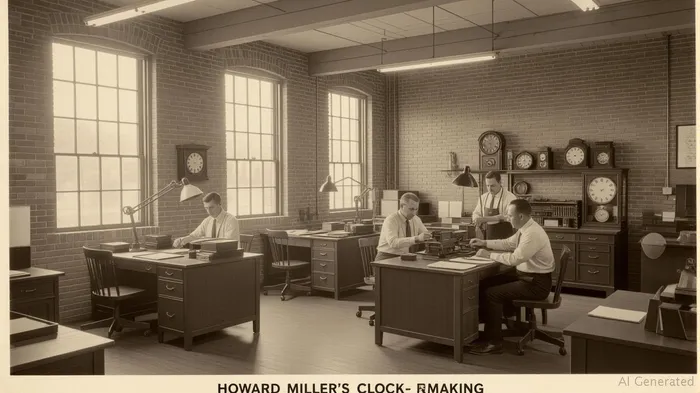
Howard Miller's closure, set for late 2025, is emblematic of the pressures facing U.S. furniture manufacturers. Once a symbol of craftsmanship, the firm succumbed to a confluence of factors:
- Demand Shifts: A weakening housing market and post-pandemic normalization of furniture purchases reduced sales.
- Cost Inflation: Tariffs on Chinese imports, rising interest rates, and supply chain disruptions (e.g., lost suppliers) eroded margins.
- Structural Decline: Legacy operational models, reliant on brick-and-mortar distribution and traditional manufacturing, struggled to compete with agile competitors leveraging digital tools and globalized supply chains.
The ripple effects are already visible. Over 1,600 jobs have been lost across the sector since mid-2024, with companies like Dorel Industries and Serta Simmons Bedding shuttering plants to cut costs.
Sector-Wide Trends: The Perfect Storm
The furniture industry's decline is not merely cyclical but structural. Key trends exacerbating this shift include:
1. Consumer Preferences: Buyers prioritize affordability and convenience, favoring e-commerce platforms and modular furniture over high-end, custom designs.
2. Technological Disruption: Automation, AI-driven design, and 3D printing are lowering costs for competitors while legacy firms lag in digital integration.
3. Supply Chain Fragmentation: Tariffs and geopolitical tensions have fragmented supply chains, favoring companies with diversified sourcing and leaner operations.
Dorel's share price decline (down ~25% YTD 2025) underscores the sector's struggles, though its recent restructuring efforts—including winding down North American manufacturing—highlight a path toward cost discipline.
Investment Themes: Navigating the Decline, Seizing the Upside
The Howard Miller saga offers a blueprint for identifying firms capable of thriving amid industry contraction. Three themes stand out:
1. Digital-First Operations
Companies investing in e-commerce infrastructure, AI-driven personalization, and direct-to-consumer (DTC) models are better positioned to capture shifting demand. For example, Wayfair (W) and Bed Bath & Beyond (BBBY), despite their own challenges, have scaled digital sales, while IKEA's push into online customization tools reflects this trend.
2. Niche, High-Margin Segments
Legacy brands may falter, but specialized players in luxury, eco-friendly, or modular furniture can command premium pricing. Ekornes (EKORNES), owner of the Relax line, has thrived by focusing on ergonomic recliners, while Herman Miller (MLHR) leverages its design heritage in high-end office furniture.
3. Supply Chain Agility
Firms with globalized, vertically integrated supply chains—like Ashley Furniture (ASHF), which shifted production to Vietnam—can offset U.S. cost pressures. Additionally, companies like Leggett & Platt (LEG), which diversified into automotive and industrial markets, reduce reliance on cyclical furniture demand.
Actionable Strategies for Investors
- Short the Unprepared: Avoid legacy firms without clear digital or operational transformation plans. Howard Miller's lack of a buyer despite efforts signals investor skepticism about its model's viability.
- Go Long on Adaptability: Target companies like Ekornes, MLHR, or IKEA (via its parent Ingka Group) that blend innovation with enduring brand equity.
- Monitor Cost Cuts and M&A: Restructuring plays like Dorel's could offer value if operational efficiencies materialize. Watch for M&A in the sector, as distressed assets may attract buyers with deeper pockets.
Conclusion: The New Rules of Manufacturing
Howard Miller's end underscores a harsh truth: industries built on nostalgia and static models are obsolete. For investors, the path forward lies in backing firms that marry technological innovation with strategic focus on niches or geographies insulated from macroeconomic headwinds. The furniture sector's decline is not an endpoint but a catalyst—a chance to profit from the industry's evolution toward agility, digitalization, and resilience.
In this landscape, the winners will be those who, unlike Howard Miller, recognize that survival demands more than craftsmanship—it requires reinvention.
Note: Howard Miller was privately held, so this visual would compare its parent company or relevant indices.

Stay ahead of the market.
Get curated U.S. market news, insights and key dates delivered to your inbox.
AInvest
PRO
AInvest
PRO



Comments
No comments yet