
Housing Slump Signals Shift in Market Dynamics: Navigating Sector Rotation Opportunities
The U.S. housing market's sharp downturn in May 得罪 2025, with new home sales plummeting 13.7% month-over-month to an annualized rate of 623,000 units—far below the 695,000 expected—has exposed vulnerabilities that demand a strategic reassessment of sector allocations. This decline, the largest since the 2008 crisis, underscores a critical inflection pointIPCX-- for investors. With mortgage rates near 7%, inventory surging to a 9.8-month supply, and builder confidence at a two-year low, the sector's struggles now ripple across industries, creating both risks and opportunities. Here's how to navigate this shifting landscape.
The Perfect Storm for Housing
The May data miss was no fluke. 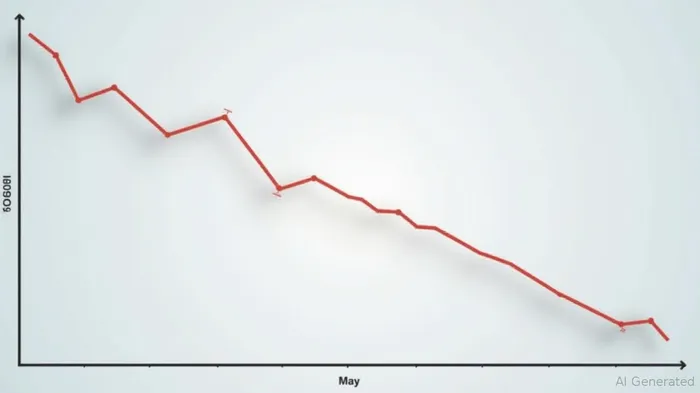 reveals a housing market buckling under multiple pressures. Mortgage rates, averaging 6.95% in May, remain elevated despite Federal Reserve hints of easing, while median home prices have soared 52% since 2019—far outpacing wage growth of 30%. This affordability gap has stifled demand: first-time buyers now account for just 30% of purchases, down from 40%, and pending home sales have fallen 6.3% year-over-year.
Meanwhile, inventory has swelled to record levels, with active listings up 31.5% annually. This oversupply is most acute in the South and West, where price reductions hit 19.1% of listings in May—the highest since tracking began in 2016. Builder sentiment, as measured by the NAHB Index, has collapsed to 23, its lowest in two years, as tariffs and material costs add $10,900 per home. The result is a market stuck in a “holding pattern,” with buyers and sellers paralyzed by uncertainty.
Sectoral Fallout and Opportunities
The housing downturn's ripple effects are already visible across industries.
Homebuilders: Ground Zero
Companies like LennarLEN-- (LEN) and KB HomeKBH-- (KBH) are reeling. shows their shares down 25-30% year-to-date, underperforming the broader market. Investors should consider trimming exposure to these names unless they pivot to affordable housing or urban infill projects.Materials and Lumber: Collateral Damage
The housing slowdown has slashed demand for building materials. Lumber prices have dropped 40% since early 2023, and companies like WeyerhaeuserWY-- (WY) face prolonged weakness. Defensive postures or short positions may be warranted here.Defensive Sectors: Steadier Ground
With consumer confidence at a near-record low (University of Michigan's April survey fell 10.9% month-over-month), sectors insulated from housing volatility are gaining traction. Utilities (e.g., NextEra Energy (NEE)) and healthcare (e.g., UnitedHealth GroupUNH-- (UNH)) offer stable cash flows and dividends. highlights their resilience during housing downturns. Historically, when the Federal Reserve has cut rates—a potential near-term catalyst—utilities have shown further resilience. Over the past six years, the Utilities ETF (XLU) averaged a 6.35% gain over 60 days following such announcements.Technology and Innovation: Long-Term Plays
While tech stocks (e.g., MicrosoftMSFT-- (MSFT), AppleAAPL-- (AAPL)) face macroeconomic headwinds, their secular growth trajectories—driven by AI, cybersecurity, and enterprise software—are less tied to cyclical housing trends. Their low correlation with housing metrics like the NAHB Index makes them attractive for diversification. Indeed, when the Fed has signaled monetary easing, technology has often surged. The Technology ETF (XLK) averaged a 19.52% return over 60 days following rate cuts between 2020-2025, outperforming other sectors during these periods.
Sector Rotation Strategies
Investors should adopt a two-pronged approach:
- Rotate Out of Housing-Exposed Sectors: Reduce allocations to homebuilders, construction materials, and regional banks with heavy mortgage exposure (e.g., Zions Bancorp (ZION)).
- Rotate Into Resilient Sectors:
- Utilities and Infrastructure: Benefit from long-term decarbonization trends and stable demand. Utilities (XLU) have historically responded well to Fed rate cuts, averaging a 6.35% gain over 60 days in such scenarios, making them a prudent defensive play.
- Healthcare: Insulated by aging populations and rising healthcare spending.
- Technology: Focus on companies with recurring revenue models. Technology (XLK) has shown strong post-rate-cut performance, averaging 19.52% over 60 days, reflecting its growth resilience and reduced sensitivity to housing cycles.
A Word of Caution
While the Fed's potential rate cuts later in 2025 could stabilize housing, mortgage rates are likely to remain above 6%, keeping affordability challenges alive. History suggests these cuts could also provide a tailwind for tech and utilities. When the Fed has cut rates in the past, the XLK and XLU have seen average gains of 19.52% and 6.35%, respectively, over the following two months. Investors must also monitor regional disparities—Northeast and Midwest markets, where price growth remains stronger, may offer pockets of resilience. Meanwhile, the South's oversupply could prolong pain for homebuilders there.
Conclusion
The housing slump is no short-term blip but a structural shift demanding strategic rebalancing. By rotating capital toward sectors unburdened by mortgage-rate sensitivity and housing cycles, investors can mitigate risk and capitalize on emerging opportunities. The next phase of market leadership will belong to those who adapt to this new reality.

Stay ahead of the market.
Get curated U.S. market news, insights and key dates delivered to your inbox.




Comments
No comments yet