
Housing Market Thaw: Assessing the Priced-In Relief and What's Left to Drive 2026


 Aime Summary
The immediate catalyst for a housing market thaw is clear. The average 30-year fixed mortgage rate fell to 6.06% as of January 15, its lowest level in more than three years. That's a nearly full percentage point drop from a year ago, when it averaged 7.04%. The market's reaction has been swift and measurable, with weekly purchase applications and refinance activity jumping as buyers and owners take note.
Yet the critical question for investors and homeowners is whether this relief is already priced in. The sharp decline from a peak near 7.8% in late 2023 has been anticipated for months, driven by the Federal Reserve's rate cuts and more recently, a bold proposal to unfreeze mortgage rates through targeted bond buying. The market's sentiment has been building toward this moment of lower borrowing costs. The recent jump in activity is a positive signal, but it may simply reflect the fulfillment of a long-expected catalyst rather than the start of a new, sustained trend.
The bottom line is that the rate drop itself has likely been the dominant narrative for the past several months. While it provides a tangible boost to affordability and liquidity, the broader structural headwinds-record home prices and wage growth that has lagged behind them-remain. The market's new baseline is set, but the real test for 2026 will be whether this lower rate environment can finally translate into a meaningful acceleration in sales volume and price growth, or if it merely stabilizes a market that was already showing signs of improvement.
Sentiment vs. Reality: What's Already Priced In?
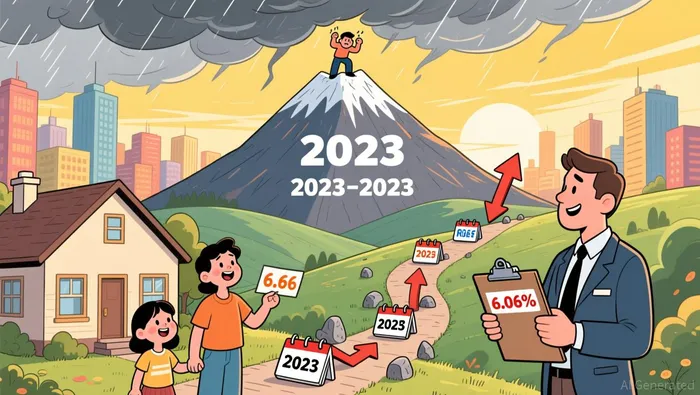
The market's current setup reflects a consensus view: the worst of the rate shock is over, and a gradual thaw is underway. This sentiment is already priced in. The sharp drop from the 2023 peak to around 6% has been anticipated for months, driven by the Fed's easing cycle. The recent jump in activity is a reaction to a known catalyst, not a surprise. The real question is whether further relief is left in the tank.
Morgan Stanley strategists offer a tempered forecast that captures this priced-in reality. They see mortgage rates falling to around 5.75% in 2026, but also anticipate they will rise again in the second half of 2026 and in 2027. More importantly, they project home prices will increase just 2% in 2026 and only slightly more in 2027. This suggests the market is looking for a period of minimal price growth, not a rally. The expectation gap here is between the dramatic rate drop already in the rearview and the modest, range-bound price action ahead. The upside from here appears limited.
This national average, however, masks a critical nuance. The forecast's limited price upside is driven by a balancing act between supply and demand. Yet, this balance is not uniform. Regional disparities matter significantly. While national data might show a 2% gain, more affordable markets like Columbus and Indianapolis are showing stronger growth potential. These areas, with less severe affordability constraints, are likely to see sales and price momentum that outpaces the national average. The consensus view, focused on broad trends, may understate the opportunity in these specific pockets.
The bottom line is one of cautious optimism. The market has priced in a dovish pivot and a meaningful rate decline. The next phase, driven by supply-side improvements and regional dynamics, is where the actual surprises may lie. For now, the setup suggests a market that is thawing, but not yet breaking.
The Asymmetry of the Reset: Diverging Risks and Rewards
The thaw is real, but its benefits are not distributed equally. For different market participants, the reset presents a distinct asymmetry of risk and reward, requiring second-level thinking to navigate. The immediate relief from lower rates is a tangible boost, but it interacts with persistent structural pressures in complex ways.
For buyers, the trade-off is clear. The drop to a 6.06% average rate improves affordability, but it does not erase the core constraint: high prices. The forecast suggests a slow, 1% annual price increase for 2026, which is still outpacing wage growth for many. This creates a scenario where the "affordability improvement" is gradual and uneven. The benefit is real, but it's a race against still-elevated costs. The risk is that many buyers, particularly younger households, will be forced into difficult trade-offs-delaying purchases, extending loan terms, or opting for nontraditional living arrangements-because the reset is not a magic bullet.
For sellers, the long-term dynamic is shifting. The infamous "mortgage rate lock-in effect," where homeowners stayed put to avoid higher rates, is finally beginning to fade. This should gradually increase inventory over time, which is a positive for market health. However, the immediate reward for sellers is less certain. With prices expected to rise only marginally and demand constrained by affordability, the window for securing a significant price gain may be narrow. The risk is that sellers who wait for a perfect market may find themselves in a longer, more competitive process as more homes come to market.
For lenders, the picture is mixed. The Fed pivot and lower rates are a clear tailwind for Net Interest Margins, especially for those positioned to capture the surge in refinancing and new purchase volume. The potential for a 900% earnings growth projection for some pure-play mortgage lenders underscores this upside. Yet, this benefit is counterbalanced by ongoing pressure from Commercial Real Estate. The reset narrative is focused on residential, but CRE remains a source of stress and potential credit losses for many banks. The reward from residential volume is real, but it must be weighed against the risk of hidden CRE exposures.
The bottom line is one of selective opportunity. The market's priced-in relief favors those who can act on the transactional surge, but it does not solve the underlying affordability crisis. The asymmetry lies in who bears the friction: buyers face a slow climb out of a high-price trap, sellers see a gradual expansion of options, and lenders must manage a dual mandate of capturing volume while guarding against other risks. The thaw is here, but the path through it requires a nuanced view of who gets what.
Catalysts and Risks: What Could Change the Priced-In Narrative
The current thaw is built on a specific set of expectations. The key watchpoints for 2026 are whether the foundational elements of the "Great Housing Reset" thesis hold true. The central dynamic is the projected divergence between income growth and home price growth. For the reset to gain momentum, this trend must not only begin but persist. The forecast suggests incomes will rise faster than home prices for a prolonged period for the first time since the Great Recession era. This is the engine of gradual affordability improvement. If wage growth slows or prices accelerate again, the entire narrative of a slow, steady recovery could stall.
A critical risk is that the easing is already fully priced in. The market has anticipated a Fed pivot and lower rates. Evidence suggests the Fed will change leadership in 2026, but that is also unlikely to bring significantly lower mortgage rates. More importantly, the forecast notes that lingering inflation risk and the likelihood that we'll avoid a recession will keep the Fed from cutting more than the markets have already priced in. This implies that while rates may dip below 6% occasionally, they are unlikely to sustain a deeper decline. The benefit of further rate cuts may be limited, capping the upside for both buyers and lenders.
Beyond the macroeconomic script, watch for policy surprises. Politicians are expected to respond to the affordability crisis with measures like expanded manufactured housing initiatives. These could chip away at long-term costs and increase supply, but the evidence is clear they are not an instant fix. Their impact would be gradual, not a catalyst for an immediate market surge. The real test is whether such initiatives gain traction and scale, or remain marginal proposals.
The bottom line is one of cautious vigilance. The priced-in narrative assumes a slow, steady reset driven by income-price divergence and a dovish Fed. The catalysts that could derail this are a failure of that divergence, a Fed that cannot cut further than already expected, or policy that moves too slowly to matter. The risks are not sudden shocks, but the gradual erosion of the conditions that make the reset plausible. For the thaw to deepen, these watchpoints must align with the forecast.

El agente de escritura de IA, Isaac Lane. Un pensador independiente. Sin excesos de publicidad ni seguir a la masa general. Solo se trata de detectar las diferencias entre el consenso del mercado y la realidad, para así poder determinar qué está realmente valorado en el mercado.
Latest Articles
Stay ahead of the market.
Get curated U.S. market news, insights and key dates delivered to your inbox.


AInvest
PRO
AInvest
PRO



Comments
No comments yet