
Housing Market Softening: Opportunities in Regional Markets and Rental Sectors
The U.S. housing market is undergoing a notable slowdown, with inventory surges and cooling price growth creating opportunities for investors to capitalize on undervalued regional markets and rental sectors. While national home sales dipped 0.7% year-over-year in May 2025, regional disparities reveal pockets of resilience. In this shifting landscape, strategic investors can navigate risks by focusing on areas where supply-demand imbalances favor affordability and rental yields are improving.
National Overview: A Market in Transition
The National Association of REALTORS® (NAR) reports a 6.2% month-over-month increase in housing inventory to 1.54 million units in May 2025, representing a 4.6-month supply—the highest since 2018. This oversupply has tempered price growth, with the national median price rising just 1.3% annually to $422,800. However, regional dynamics differ starkly:
- South Region: Median prices fell 0.7% year-over-year—the only region to report a decline—while inventory grew faster than sales, easing price pressure.
- West Region: Sales dropped 6.7% year-over-year despite a 20.3% inventory increase, underscoring affordability challenges in high-cost markets.
- Northeast and Midwest: Strong sales growth (4.2% and 1.0%, respectively) masked underlying pressures, with prices climbing 7.1% and 3.4% annually.
The South's price correction and inventory surge create an entry point for buyers seeking affordability, while the West's constrained supply may still reward long-term investors with patience.
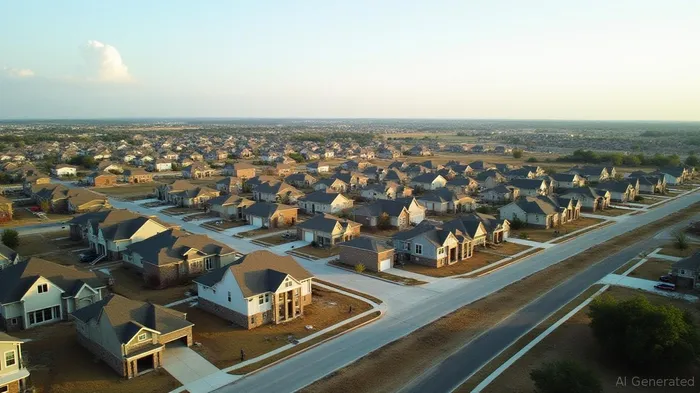
Regional Resilience: The South and Sun Belt Lead the Way
The South's 0.5% decline in year-over-year sales contrasts with its 20.3% inventory growth, creating a buyer-friendly environment. Key submarkets, such as Texas's Dallas-Fort Worth (DFW) metroplex, exemplify this shift.
In DFWDFAW--, multifamily vacancy rates dropped to 11.5% in early 2025—marking the first decline since 2021—while Q1 absorption hit 7,400 units, the strongest first-quarter performance since 2021. Rental rates, though still slightly below 2024 peaks, are projected to rise 1.5% by year-end, with suburban submarkets like Frisco and McKinney outperforming urban cores.
Rental Sector: A Bright Spot Amid Cooling Sales
The rental market offers compelling opportunities, particularly in areas with strong population growth and job creation. In DFW, multifamily occupancy rates are stabilizing, and workforce housing segments are proving resilient:
- Rental Yields: While explicit yield data is sparse, effective rents in DFW's suburban markets (e.g., $1,756 for two-bedroom units) align with median incomes ($88,785), creating affordability.
- Submarket Growth: Suburbs like Collin and Rockwall counties, where population growth outpaced the national average, are attracting renters fleeing high urban costs.
- Expert Forecasts: Analysts project DFW's multifamily sector to recover fully by late 2025, with rents rising 1.5% annually as construction slows (2025 completions are half 2024's pace).
Strategies for Capitalizing on Market Shifts
Investors can profit from this transition by adopting targeted strategies:
- Focus on Regions with Inventory-Sales Imbalances:
- South and Sun Belt: Prioritize markets like DFW, Atlanta, and Nashville, where rising populations and moderate price corrections align with rental demand.
Avoid Overheated Markets: The West's constrained supply and high prices may deter short-term gains unless rates drop significantly.
Target Rental Properties in Growth Submarkets:
- Multifamily Assets: DFW's suburban areas, such as Frisco and McKinney, offer strong absorption and rental growth potential. Consider REITs like Camden Property Trust (CPT) or Mid-America Apartment Communities (MAA) for diversified exposure.
Workforce Housing: This segment has shown resilience, with rents growing 1.1% in 2024 despite broader declines.
Monitor Mortgage Rate Trends:
With the 30-year fixed rate at 6.81% (down from 6.87% in 2024), further declines could boost buyer demand. Track to time entries.
Prioritize Pre-Construction or Value-Add Opportunities:
- In DFW, developments like the Long Branch project in McKinney (1,600 units) exemplify growth aligned with job creation.
Mitigating Risks
- Supply Overshooting Demand: Overbuilt markets like Phoenix or Las Vegas require careful analysis of absorption rates.
- Rent Concessions: Over 50% of DFW multifamily properties now offer free rent, signaling competitive pricing. Investors should factor this into cash flow models.
- Job Market Uncertainty: DFW's resilience hinges on corporate relocations (e.g., KFC's HQ move to Plano). Monitor local employment data to avoid overexposure to single-industry submarkets.
Conclusion
The housing market's softening is not a universal downturn but a repositioning of regional dynamics. The South and Sun Belt's affordability, coupled with DFW's rental recovery, present prime opportunities for investors. By focusing on resilient submarkets, diversifying through REITs, and staying attuned to macroeconomic trends, investors can turn market volatility into long-term gains. As inventory peaks and rents stabilize, now is the time to act—but with a disciplined eye on local fundamentals.

Stay ahead of the market.
Get curated U.S. market news, insights and key dates delivered to your inbox.


AInvest
PRO
AInvest
PRO



Comments
No comments yet