
U.S. Housing Market Slowdown and Sector Rotation: Strategic Reallocation in a Divergent Landscape
 Aime Summary
The U.S. housing market in 2025 has entered a phase of recalibration, marked by a nuanced mix of resilience and fragility. While existing home sales rose to a seasonally adjusted annual rate of 4.35 million in December 2025—the strongest in nearly three years—this growth has been uneven across regions and sectors. The National Association of REALTORS® (NAR) data reveals a 1.9% year-over-year increase in the Northeast and a 3.6% rise in the South, but flat performance in the Midwest and West. Meanwhile, median home prices edged up 1.7% nationally, masking divergent regional trends, such as the West's 1.4% price decline. These dynamics are reshaping investment strategies, as sectors tied to housing demand—construction, engineering, and real estate—face divergent pressures, while others, like automotive and healthcare equipment, grapple with affordability headwinds.
Construction and Engineering: The New Growth Engine
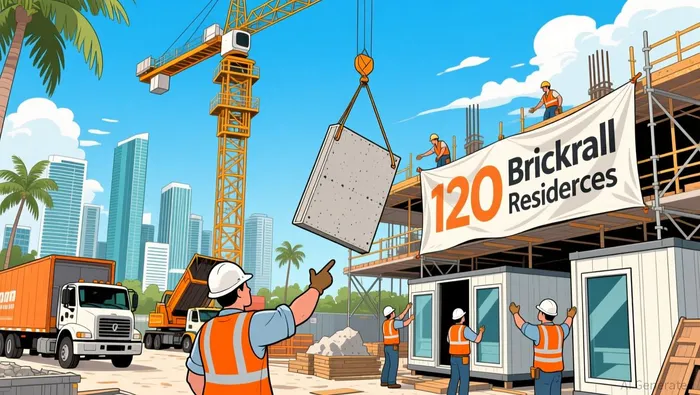
The housing slowdown has accelerated a structural shift toward nonresidential construction and infrastructure. With multifamily housing starts up 10% year-to-date and urban development projects like Honolulu's Kuilei Place and Miami's 120 Brickell Residences gaining traction, construction firms specializing in modular and prefabricated solutions are outperforming traditional residential builders. Engineering giants like AECOMACM-- (ACM) and JacobsJ-- (J) are expanding into infrastructure and energy projects, insulated from housing market volatility.
Investors are increasingly favoring construction ETFs like the Invesco Dynamic Building & Construction ETF (PKB), which has outperformed the SPDR S&P Homebuilders ETF (XHB) by 15% year-to-date. This reflects a strategic pivot toward sectors benefiting from government-funded initiatives, such as the CHIPS Act and data center expansion, which are projected to grow by 20% in 2026.
Automotive and Healthcare Equipment: Navigating Affordability Challenges
The automotive sector, once a bellwether of economic health, is now a mixed bag. While November 2025 saw a 1.0% rebound in motor vehicle sales, this growth is driven by high-income households, not broad-based demand. Elevated mortgage rates (6.19% in December 2025) and affordability constraints have pushed buyers toward leasing or used vehicles, with Personal Contract Purchase (PCP) models rising in popularity. This trend has hurt pure-play automakers but created opportunities for suppliers like Magna International (MGA), which provides cost-effective leasing solutions.
The healthcare equipment sector faces similar challenges. Hospitals and clinics are delaying investments in advanced diagnostic tools and surgical equipment due to high borrowing costs. However, companies with diversified portfolios, such as Medtronic (MDT) and Becton Dickinson (BDX), remain resilient.
Defensive Sectors: Balancing the Portfolio
As the housing market evolves, defensive sectors like utilities and consumer staples are gaining attention. These sectors offer stability amid economic uncertainty, with utilities benefiting from long-term infrastructure spending and consumer staples maintaining steady demand. The S&P 500 Utilities Index has outperformed the broader market by 8% in 2025, reflecting its appeal as a hedge against volatility.
Strategic Reallocation: A Path Forward
The housing slowdown underscores the need for a nuanced approach to sector rotation. Investors should:
1. Overweight construction and engineering firms with exposure to infrastructure and urban development.
2. Hedge automotive and healthcare equipment exposure by focusing on suppliers and diversified players.
3. Balance growth with defensive sectors like utilities and consumer staples.
The housing market's gradual realignment—marked by tighter inventory, moderating prices, and shifting demand—will likely persist into 2026. By aligning portfolios with these structural shifts, investors can navigate the divergent impacts of the housing slowdown while positioning for long-term resilience.


Stay ahead of the market.
Get curated U.S. market news, insights and key dates delivered to your inbox.
AInvest
PRO
AInvest
PRO



Comments
No comments yet