
The Housing Market's Descent and the Energy Sector's Crossroads
 Aime Summary
The U.S. housing market is in a state of quiet collapse. The National Association of Home Builders (NAHB) Housing Market Index (HMI) fell to 32 in August 2025, missing forecasts of 34 and marking the lowest reading since December 2022. This decline reflects a sector grappling with elevated interest rates, affordability crises, and a lack of policy clarity. The ripple effects are now cascading into the energy equipment and services industry, reshaping investment opportunities and risks. For investors, the challenge lies in identifying which segments of this sector can weather—or even benefit from—the housing market's malaise.
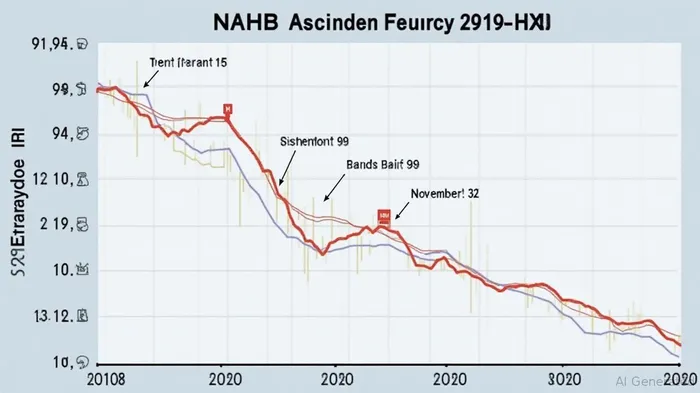
The Housing Market's Weakness: A Catalyst for Energy Sector Reassessment
The housing market's decline is not merely a statistical anomaly but a structural shift. High mortgage rates have locked in homeowners, reducing turnover and stifling demand for new construction. This has directly impacted residential energy equipment, particularly solar installations, HVAC systems, and insulation. The Solar Energy Industries Association (SEIA) reported a 13% year-over-year drop in residential solar installations in Q1 2025, with California—the nation's largest solar market—installing just 255 MWdc, its lowest quarterly output since 2020.
The problem extends beyond solar. HVAC and insulation manufacturers are also seeing weaker demand as homeowners delay renovations. Builders, meanwhile, are increasingly reliant on price cuts and incentives to stimulate sales, signaling a prolonged period of affordability stress. This dynamic creates a paradox: while the housing market's freeze suppresses demand for energy equipment tied to new construction, it also forces a reevaluation of where growth can be found.
Resilient Sub-Sectors: Utility-Scale Solar and Commercial Retrofits
Amid the gloom, two sub-sectors stand out for their resilience: utility-scale solar and commercial retrofits. The former, which accounts for 69% of new electricity-generating capacity in Q1 2025, is driven by corporate demand and policy tailwinds. Tech giants like MetaMETA--, AmazonAMZN--, and GoogleGOOGL-- are procuring solar and storage at record levels to meet sustainability goals, while the Inflation Reduction Act (IRA) provides long-term certainty for developers.
Commercial retrofits, meanwhile, are gaining traction as businesses seek to reduce energy costs and comply with ESG mandates. Federal tax credits for direct pay and adder credits are incentivizing non-profits, governments, and corporations to invest in on-site solar systems. This segment is less sensitive to housing market fluctuations and more aligned with corporate capital expenditure cycles.
Strategic Positioning: Navigating Policy and Trade Uncertainties
Investors must also contend with evolving policy and trade dynamics. The One Big Beautiful Bill Act (OBBBA) and its potential removal of residential solar tax credits have created uncertainty, while new tariffs on solar components from Canada, Mexico, and Southeast Asia are increasing costs. These headwinds disproportionately affect residential solar but offer opportunities for utility-scale and commercial players, which can leverage domestic manufacturing and long-term power purchase agreements.
Energy storage systems (ESS) and smart grid technologies represent another avenue for strategic positioning. As renewable energy integration accelerates, ESS becomes critical for grid stability, while smart grids enhance efficiency and resilience. These technologies are less tied to housing cycles and more aligned with broader energy transition trends.
Investment Advice: Prioritize Resilience Over Short-Term Volatility
For investors, the key is to prioritize sectors and companies that align with long-term structural trends rather than short-term housing market volatility. Here are three strategic recommendations:
Utility-Scale Solar and Storage Developers: Firms like NextEra Energy and Brookfield RenewableBEP-- Partners are well-positioned to capitalize on corporate demand and IRA-driven growth. Their exposure to long-term contracts and economies of scale insulate them from housing market fluctuations.
Commercial Retrofit Providers: Companies such as SunPower and SunrunRUN--, which focus on commercial and community solar, benefit from policy-driven incentives and corporate ESG commitments. These segments are less reliant on residential demand and more aligned with institutional capital flows.
Energy Storage and Smart Grid Innovators: Tesla's Megapack and Siemens' smart grid solutions are gaining traction as grid operators seek to manage renewable integration and enhance resilience. These technologies are critical for the energy transition and offer growth potential independent of housing cycles.

Conclusion: A Market in Transition
The U.S. housing market's decline is a wake-up call for the energy sector. While residential energy equipment faces headwinds, the shift toward utility-scale solar, commercial retrofits, and grid modernization presents a roadmap for resilience. Investors who focus on these areas can navigate the current downturn while positioning for the energy transition's long-term potential. The housing market may be in freefall, but the energy sector's future lies in sectors that transcend its cyclical struggles.

Stay ahead of the market.
Get curated U.S. market news, insights and key dates delivered to your inbox.
AInvest
PRO
AInvest
PRO



Comments
No comments yet