
House Passes Three Crypto Bills, Regulating Stablecoins and Clarifying Jurisdictions
 Aime Summary
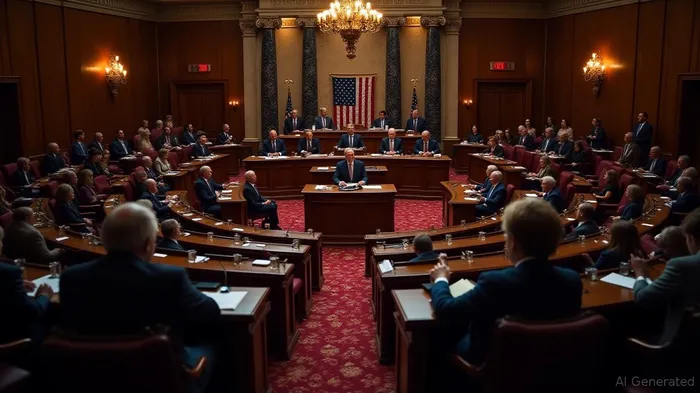
The United States House of Representatives has passed three significant bills this week, marking a pivotal moment in the regulation of the crypto industry. The passage of these laws comes after intense political negotiations and debates, highlighting the growing importance of digital currencies in the nation's financial landscape.
The first bill, the GENIUS Act, focuses on regulating dollar-denominated stablecoins. With a vote of 308 in favor and 122 against, this legislation mandates reserves and consumer protections for stablecoins, providing a much-needed regulatory framework for this segment of the crypto market. The CLARITY Act, the second bill, addresses the long-standing jurisdictional dispute between the Securities and Exchange Commission (SEC) and the Commodity Futures Trading Commission (CFTC) by clarifying their respective roles in overseeing the crypto market. The third bill, the Anti-CBDC Surveillance State Act, prohibits the Federal Reserve from issuing a centralized digital currency, a move that has been welcomed by privacy advocates.
David Sacks, known as the “Crypto Czar” of the White House, hailed the adoption of these bills as a significant step forward, emphasizing that the United States is reinforcing its position as a leader in digital innovation. Brad Garlinghouse, CEO of Ripple, described the impact of these laws as fundamental, noting that the last major financial legislation was enacted in 2008 in response to the financial crisis. He highlighted that the GENIUS Act places the United States at the forefront of innovative financial technologies, particularly stablecoins, and expressed anticipation for the transformative effects of this legislation.
The passage of these bills was not without challenges. On Wednesday, a nine-hour debate was required to overcome a procedural hurdle, with some Republicans demanding the inclusion of an anti-CBDC clause in the defense bill. President Trump had to intervene, rallying skeptics to support the legislation. Despite the eventual alignment of the majority, Democrats remained critical. Maxine Waters, a prominent opposition figure, criticized the bills for creating loopholes in financial laws under the guise of innovation. She also raised concerns about the growing ties between Donald Trump and certain crypto projects, such as the $TRUMP stablecoin and World Liberty Financial, suggesting that crypto is becoming a political battleground.
The crypto community has welcomed these regulatory developments but remains cautious. The industry hopes that this legal foundation will attract institutional investments by reassuring regulators and users. The CLARITY Act received 294 votes, despite partisan tensions, while the Anti-CBDC Act passed with a close vote of 219 to 210. More than 100 Democrats voted in favor of the GENIUS Act, demonstrating bipartisan support. Brian Armstrong, CEO of Coinbase, praised the legislation as a major advancement, stating that clear rules are essential for the growth of crypto in the United States.
As the United States refines its crypto regulations, other regions are also taking steps to regulate the industry. While specific details about other regions' regulatory frameworks are not provided, it is clear that the global crypto landscape is evolving rapidly, with various jurisdictions working to balance innovation with regulatory oversight. The passage of these three bills in the United States represents a significant milestone in the ongoing effort to integrate digital currencies into the mainstream financial system, setting a precedent for other regions to follow.

Stay ahead of the market.
Get curated U.S. market news, insights and key dates delivered to your inbox.






Comments
No comments yet