
House Bids to Block Fed’s Digital Dollar in Must-Pass Defense Bill
 Aime Summary
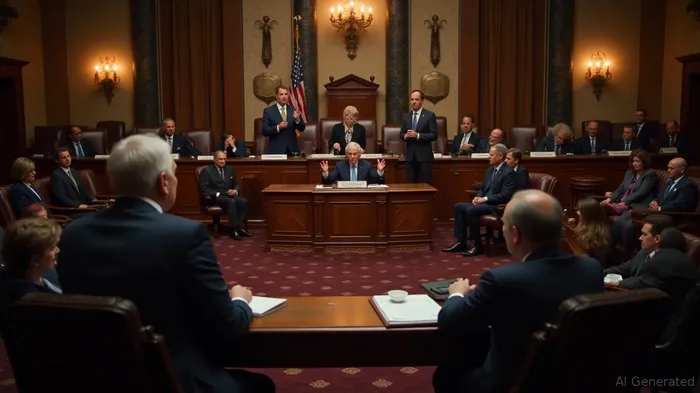
The U.S. House of Representatives has inserted a provision prohibiting the Federal Reserve from developing or issuing a central bank digital currency (CBDC) into the National Defense Authorization Act for Fiscal Year 2026. The provision was added to the defense policy bill, which is over 1,300 pages in length, as part of a broader strategy to attach non-defense-related measures to “must-pass” legislation. The revised version of H.R. 3838, which implements the NDAA, now includes sweeping language that restricts the Federal Reserve from conducting research, testing, or implementing digital currency projects. This addition comes after House Republicans, including a coalition of conservative hardliners, delayed debate on several crypto-related bills for over nine hours in July until a CBDC ban was secured in the defense bill [1].
The provision prohibits the Fed from issuing any digital currency or asset and bars it from offering financial products or services directly to individuals. It also restricts the central bank from testing, studying, or developing a digital currency, with the exception of stablecoins. The bill explicitly allows for the development of dollar-denominated currencies that are described as open, permissionless, and private, suggesting a focus on preserving financial privacy and decentralization [1].
This move is not entirely new, as House Republicans have previously attempted to pass a CBDC ban. In early 2023, a similar bill, the CBDC Anti-Surveillance State Act, was introduced by Rep. Tom Emmer but failed to progress before the end of the previous Congress. Emmer reintroduced the bill in the current session, and it has received support from House leaders who argue that it aligns with President Donald Trump’s executive order in January 2024, which effectively prohibited the development of CBDCs [1]. The House passed the standalone CBDC ban bill in July by a narrow margin of 219–210, but its future in the Senate remains uncertain.
The inclusion of the CBDC ban in the defense bill reflects a broader political tactic used by lawmakers to advance contentious policies through high-priority legislation. The NDAA and related appropriation bills are essential for setting military funding and priorities, making them prime vehicles for attaching measures that might struggle to pass independently. In this case, the CBDC ban was secured after a compromise between House leadership and conservative lawmakers, who had refused to move forward with three other crypto-related bills unless the CBDC restriction was guaranteed [1].
The implications of this provision could be significant for the U.S. central banking system and the broader financial landscape. By limiting the Federal Reserve’s ability to explore digital currency, the provision reflects growing political concerns over surveillance, privacy, and the centralization of financial systems. It remains to be seen whether the Senate will incorporate the same language in its version of the NDAA, but the House’s actions underscore the increasing influence of crypto policy in legislative debates [1].
Source:
[1] US House adds CBDC ban to massive defense policy bill (https://cointelegraph.com/news/us-house-adds-cbdc-ban-defense-policy-bill)

Stay ahead of the market.
Get curated U.S. market news, insights and key dates delivered to your inbox.


AInvest
PRO
AInvest
PRO



Comments
No comments yet