
House Approves GENIUS Act 308-122 Regulating Stablecoins
 Aime Summary
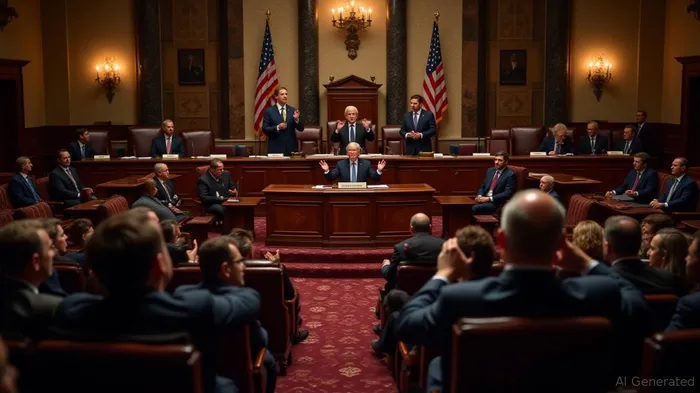
The U.S. House of Representatives has approved the GENIUS Act on July 18, 2025, marking a significant step forward in the regulation of stablecoins. This bipartisan legislation, officially known as the Guiding and Establishing National Innovation for US Stablecoins Act, passed with a vote of 308 to 122. The bill establishes a regulatory framework for issuers of stablecoins, which are cryptocurrencies tied to the value of an asset like the U.S. dollar. The legislation requires issuers to hold reserves of enough U.S. dollars or similar assets to support the value of the stablecoins they issue, ensuring the stability and reliability of these digital assets.
The GENIUS Act is a pivotal development in the regulatory landscape for stablecoins. It clarifies U.S. leadership in digital dollar infrastructure and increases regulatory certainty for stablecoins like USDC under new guidelines. This move is expected to bolster confidence among stablecoin issuers and investors, providing a structured approach to secure and transparent digital transactions within the financial system. The act's passage reflects intensive bipartisan negotiations, spearheaded by House Speaker Mike Johnson and President Donald Trump, and is seen as a positive evolution for the stablecoin landscape.
The approval of the GENIUS Act positions the U.S. prominently on the global stage, reinforcing its regulatory leadership in the cryptocurrency space. The bill's passage was not without challenges, as a dozen conservatives initially stalled a procedural vote to advance the legislation. However, after negotiations and a meeting with President Trump, the holdouts agreed to support the bill. The drama unfolded as some holdouts initially voted against moving forward before dropping their opposition, which was short-lived. The next procedural vote to set up debate on the spate of bills was held open for nearly 10 hours as the holdouts sought to merge a broader market structure bill with legislation to ban a central bank digital currency.
House Republicans had originally wanted the GENIUS Act to be married with the CLARITY Act, a broader bill that would set rules for when a digital asset is considered a commodity or security. Combining the crypto bills would have sent the legislation back to the Senate and slowed the process. President Trump had pressed Congress to quickly pass the GENIUS Act as a standalone bill, saying it would make the U.S. a leader in digital assets. The Senate approved the bipartisan stablecoin bill last month after experiencing hiccups caused by a Democratic revolt over concerns about the Trump family's business ventures involving crypto and the potential that they could make the president vulnerable to foreign influence.
The GENIUS Act creates a comprehensive U.S. regulatory framework for “payment stablecoins”— digital assets that are designed to be used as a means of payment or store of value. This move is expected to unlock programmable money for banks, fintechs, and Fortune 500s, providing a new level of stability and reliability in the digital asset market. The legislation is seen as a positive step towards ensuring the stability and reliability of stablecoins, which are increasingly being used as a means of payment. The passage of the GENIUS Act is a significant milestone in the regulation of stablecoins and is expected to have a positive impact on the digital asset market.

Stay ahead of the market.
Get curated U.S. market news, insights and key dates delivered to your inbox.






Comments
No comments yet