
House Approves $9.4 Billion Federal Spending Cut Package
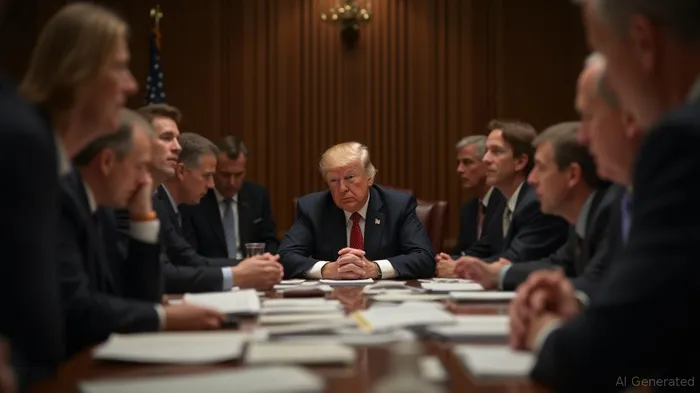
The House of Representatives has advanced a $9.4 billion federal spending cut package proposed by President Trump, moving the controversial plan closer to becoming law. The package, based on proposals from the Department of Government Efficiency (DOGE), aims to allow the White House to refuse to spend money that Congress has already approved. The bill targets various agencies, including the U.S. Agency for International Development (USAID) and the Corporation for Public Broadcasting, which distributes grants to PBS and NPR.
Wednesday’s vote passed along party lines, but the final vote scheduled for Thursday may face challenges. Some Republican lawmakers are concerned about the cuts, particularly those aimed at programs that remain popular among voters. Speaker Mike Johnson can only afford to lose a few votes if he wants to pass the bill without Democratic support, and he is actively working to secure the necessary votes from his own party. Earlier this week, Johnson stated, “I’m working on getting the votes we need to get this through.”
The bill was originally part of the GOP’s self-described “big, beautiful bill,” which required edits to survive the Senate reconciliation process. This process allows the Senate to approve budget bills with a simple majority, bypassing the usual 60-vote rule. The Senate parliamentarian, who reviews bills to ensure they follow the chamber’s rules, flagged several pieces of the proposal as invalid under reconciliation rules. Those sections were removed before Wednesday’s vote.
Despite the necessary changes, some Republicans remain uncomfortable with the content of the bill. The proposed cuts to PBS, NPR, and USAIDUSAI-- are drawing criticism from both sides of the aisle. Even with reconciliation in place, the bill faces a challenging pathPATH-- through the Senate, especially if more Republicans break ranks.
In addition to slashing funds, DOGE has been conducting mass layoffs. Federal offices across the U.S. have been significantly reduced in size since Trump returned to office and granted DOGE broad authority to cut staff. Some agencies have lost entire teams, leading to disruptions in basic functions such as weather forecasting and drug approvals. The administration is now attempting to mitigate some of the damage caused by these layoffs.
DOGE’s mass firings have led to court orders and hiring chaos. Thousands of probationary federal workers—those with under two years of service—were fired on Valentine’s Day. However, in April, a federal judge ordered Trump to reinstate workers fired from 20 different agencies. Days later, in a separate case, the Supreme Court blocked another judge’s order to reinstate a different group. This has left agencies in a state of confusion, caught between conflicting court rulings and executive chaos.
Many of the fired workers, especially those near retirement or those who moved to the private sector, do not want to return to their jobs. Some who were offered their old positions declined, while others ignored emails and calls. The White House is now asking remaining employees to take on multiple roles, work extra hours, or even volunteer to fill gaps. Interviews with federal workers across various agencies and internal messages reveal that the situation is worsening.
Departments such as the FDA, IRS, State Department, and Housing and Urban Development are attempting to rebuild operations through makeshift hiring. A review of USAJobs, the federal employment site, shows that the government is now reposting jobs that are nearly identical to those it recently eliminated.

Stay ahead of the market.
Get curated U.S. market news, insights and key dates delivered to your inbox.






Comments
No comments yet