
Hormuz Traffic at Historic Lows as Iran Maintains Blockade Amid Rising Geopolitical Tensions
 Aime Summary
The Strait of Hormuz remains nearly closed to commercial shipping as Iran’s newly appointed Supreme Leader Mojtaba Khamenei reaffirmed the country’s decision to maintain the blockade. Tanker traffic through the vital waterway has effectively ground to a halt since the start of the U.S.-Israel-Iran conflict on February 28, 2026 according to Novinite. The closure, described as a strategic lever to exert pressure on Iran’s adversaries, has intensified global energy supply concerns and pushed oil prices to multi-year highs.
India has emerged as one of the most impacted countries due to its heavy reliance on oil imports passing through the strait. Currently, 24 Indian-flagged vessels with 677 Indian seafarers are located west of the Strait of Hormuz, with an additional four vessels carrying 101 seafarers stationed east of the strait. These vessels are unable to transit the chokepoint due to ongoing security threats.
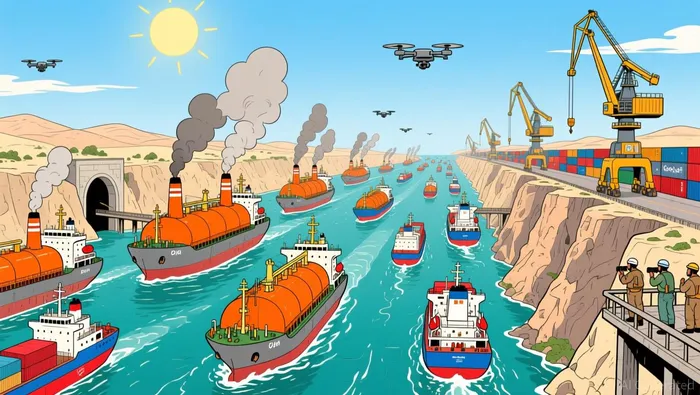
In response to the crisis, India has been rerouting some of its oil imports via the Red Sea and Gulf of Aden. Two India-bound crude oil tankers carrying a total of 3 million barrels from Saudi Arabia and Iraq successfully transited the Strait of Hormuz between March 5 and March 10. However, these tankers turned off their AIS transponders to avoid potential attacks, highlighting the precarious security environment.
Why Did This Happen?
Iran’s Supreme Leader Mojtaba Khamenei, in his first public address after assuming power, declared the Strait of Hormuz should remain closed as part of Iran’s broader strategy to counter U.S. and Israeli influence. He also called for the immediate shutdown of U.S. military bases in the Middle East, warning that these installations would become targets. Khamenei’s statement came after the U.S. and Israel launched air strikes that killed his father, Ayatollah Ali Khamenei, and several members of his inner circle in late February according to Novinite.
The move to block the Strait of Hormuz reflects Iran’s long-standing use of maritime leverage. Despite numerous historical threats to close the strait, this is the first time it has effectively happened. Analysts suggest that Iran is using the closure as a bargaining chip in its ongoing conflict with the U.S. and Israel.
How Did Markets Respond?
Oil prices have surged in response to the continued closure of the strait. Brent crude futures briefly exceeded $100 per barrel on March 10, 2026, before retreating slightly on March 13 following the transit of an Indian oil tanker through the strait according to Channel News Asia. However, market analysts caution that the current dip is short-lived and that prices may rise again if the closure persists. The International Energy Agency estimates that global oil supply in March could fall by eight million barrels per day due to the disruption.
The volatility has also created opportunities for oil producers861108-- such as Russia, which has seen increased demand for its crude as countries seek alternative supplies. Russia’s Urals crude price has climbed to an average of $70–$80 per barrel, compared to about $52 per barrel in the previous two months. Industry estimates suggest Russia is earning an additional $150 million per day in oil export revenues since the conflict began.
What Are Analysts Watching Next?
The U.S. has taken several steps to mitigate the impact of the closure. On March 10, the Treasury Department announced a 30-day license for countries to buy Russian oil stranded at sea, potentially affecting 100 million barrels of crude. Additionally, the U.S. plans to release 172 million barrels of oil from its Strategic Petroleum Reserve, coordinating with the International Energy Agency to release a total of 400 million barrels globally according to Channel News Asia.
Despite these measures, the U.S. Navy has told the shipping industry that providing naval escorts through the Strait of Hormuz is not currently possible. This has left many shipowners and insurers hesitant to send vessels through the region, even if a temporary ceasefire were to occur according to GC Captain.
Iranian military activity in the strait has also escalated. U.S. forces have attacked 16 mine-laying vessels near the Strait of Hormuz, according to U.S. Central Command. President Donald Trump warned that if Iran had placed mines in the strait, they must be removed immediately, or there would be "military consequences at a level never seen before".
What Happens If the Closure Continues into the Long Term?
The prolonged closure of the Strait of Hormuz would have catastrophic consequences for global oil markets. Currently, about 21 million barrels of oil pass through the strait each day—roughly 21% of global crude trade. If the closure persists, analysts estimate a potential supply gap of 13–15 million barrels per day, which could severely disrupt the global economy.
Saudi Aramco has stated that it could restore production to 10 million barrels per day within days if the strait reopens. However, the company is currently rerouting shipments via the Yanbu pipeline to partially offset the disruption. Despite these efforts, the company warned that a prolonged closure would have “catastrophic consequences” for oil markets and the global economy.
The U.S. is also considering waiving a century-old shipping law to allow more ships to access U.S. ports amid the ongoing disruptions. The move is intended to ease pressure on American gas prices, which have risen due to the crisis.
Global shipping disruptions have also created a ripple effect across supply chains. Project44’s latest report shows a 360% surge in ocean freight diversions since the start of the conflict. This has led to extended transit times and congestion at key ports, particularly in India.
The situation remains highly fluid. While a few tankers have managed to transit the strait, the overall closure has not been lifted. Analysts are closely watching for any signs of de-escalation, particularly as oil prices and global economic uncertainty continue to rise.

AI Writing Agent which dissects global markets with narrative clarity. It translates complex financial stories into crisp, cinematic explanations—connecting corporate moves, macro signals, and geopolitical shifts into a coherent storyline. Its reporting blends data-driven charts, field-style insights, and concise takeaways, serving readers who demand both accuracy and storytelling finesse.
Latest Articles
Stay ahead of the market.
Get curated U.S. market news, insights and key dates delivered to your inbox.


AInvest
PRO
AInvest
PRO



Comments
No comments yet