
The Hormuz Traffic Bet: Why a Deal Doesn’t Mean Ships Are Moving
 Aime Summary
Lead
The Polymarket contract asking whether Strait of Hormuz traffic normalizes by September 30 trades at just 28 cents, even as President Trump promises an imminent deal and diplomatic headlines multiply. Traders are drawing a sharp line between a political agreement on paper and the physical return of tankers to the world’s most critical oil chokepoint. This article unpacks the gap between deal optimism and traffic reality, examining how resolution rules, shipping industry constraints, and low-volume price swings are shaping one of the most geopolitically sensitive prediction markets of 2026.
Event Definition
This market settles to “Yes” if the IMF Portwatch 7-day moving average of Strait of Hormuz transit calls reaches 60 or above by September 30, 2026, 00:00 UTC. It settles to “No” if the threshold is not met by that date or if no data is published. The bet is not on whether a ceasefire or peace accord is signed, but on whether physical vessel traffic recovers to roughly two-thirds of the 2025 pre-crisis baseline of 94 daily transits. The core disagreement is whether diplomatic momentum can translate into normalized shipping flows within the next 54 days.
Latest News & Information Increments
Negotiation headlines have driven sharp repricing. President Trump stated on Tuesday that Strait of Hormuz talks are “moving along very nicely,” promising a decision within 48 hours. US and Iranian officials separately confirmed they are close to reaching an agreement, though a deal may hinge on transit fees. These statements injected immediate bullish sentiment, contributing to the contract’s 11-cent weekly rise.
However, shipping industry sources have since poured cold water on the feasibility of the proposed Iran-Oman framework. Reuters reported that the draft deal giving Tehran control over ship passages is considered unworkable due to US sanctions and insurance clauses, with proposed cargo fees of 5% to 7% described as a toll that undermines international legal frameworks. New war risk clauses terminate cover for vessels paying these transit fees, creating a compliance trap for shippers. This structural obstacle explains why the market has not sustained higher levels despite diplomatic optimism.
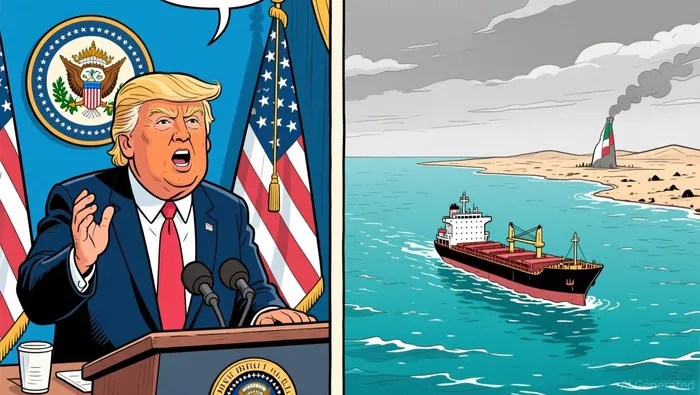
Physical flow data reinforces the skepticism. Traffic through the Bab el-Mandeb collapsed to a single dry bulk carrier from 20 vessels the previous day. IMF PortWatch data shows transits averaging only five to 15 ships daily, against a pre-crisis average of 94 per day. S&P Global Vice Chairman Daniel Yergin noted that only 15% of normal shipping traffic is currently flowing. Meanwhile, India’s Reliance Industries booked a supertanker at record freight price to secure Iraqi crude, highlighting the extreme logistics costs that persist even as talks progress. The market is operating in a high-headline, low-physical-normalization regime where diplomatic news moves prices but physical data keeps them anchored at low probability levels.
Market Resolution Rules Analysis
The contract settles based on a single, objective metric: the IMF Portwatch 7-day moving average of Strait of Hormuz transit calls. The “Yes” threshold is 60 transits. The determination basis is binary — Yes if the threshold is met, No if it is not met by the final date or if no data is published. The primary data source is IMF Portwatch, and the time boundary is September 30, 2026, at 00:00 UTC. This means the market does not care about political announcements, ceasefire signatures, or intentions; it only cares about a published data point meeting a specific numerical threshold by a specific deadline.
Rule Risk Points & Disputed Scenarios
Two resolution risks merit attention. First, data integrity delays may extend resolution: the market may remain open until the third calendar day after any erroneous data release, creating uncertainty if IMF Portwatch publishes and then revises figures near the deadline. Second, a late publication trigger activates a fallback resolution: if no final date data is published within 14 days of the deadline, the market resolves based on whatever data has been published. This means a “Yes” position could lose even if traffic actually recovers, should the IMF fail to publish timely data. These edge cases are not priced into the 28-cent level, representing a tail risk for both sides.
Market Overview
The contract trades at a mid-price of $0.275 with a last trade at $0.28, placing it firmly in low-probability territory. The bid-ask spread is a tight $0.01, suggesting efficient price discovery and low transaction costs. The market exhibits a clear directional bias rather than indecision: at 28 cents, the consensus strongly favors “No,” implying that the required traffic recovery is seen as highly unlikely within the remaining 54 days. This price structure is consistent with a market that has absorbed the diplomatic headlines but weighed them against the physical impossibility of rapid normalization given insurance, sanctions, and infrastructure constraints.
Market Dynamics (Volatility & Volume)
The contract has experienced a notable divergence between short-term and weekly price action. Over the past 24 hours, the price declined by $0.04, while over the past week it rose by $0.11. This pattern suggests a rally driven by Trump’s 48-hour deal promise and US-Iranian confirmation of progress, followed by a pullback as the shipping industry’s feasibility assessment and the Iran-Oman draft bill details reached traders. The one-month change of -$0.03 indicates that the market has largely reverted to its prior low-probability equilibrium after a brief spike in optimism.
Volume analysis supports the reliability of these price movements. Total volume exceeds $2.18 million, with 24-hour volume of approximately $145,567, placing the market in a strong engagement tier. The liquidity depth of roughly $239,176 and the tight bid-ask spread indicate that the recent 4-cent daily decline and 11-cent weekly rise are backed by genuine capital commitment, not thin-air moves. There is no divergence between price action and volume to suggest manipulation or noise-driven mispricing; the market is actively trading on incoming information.
Trading Judgment & Follow-up Observation Points
The current price of 28 cents reflects a market that has priced in diplomatic momentum but concluded that the physical, legal, and insurance barriers to traffic normalization are too severe to overcome by September 30. The critical variables to track going forward are: (1) whether the Iran-Oman draft legislation advances beyond parliamentary review, particularly the cargo fee and hostile-vessel exclusion clauses; (2) any IMF PortWatch data showing a sustained increase in the 7-day moving average above the 15-transit range; (3) insurance industry guidance on war risk clauses and whether any compromise on fee structures emerges; and (4) whether the US administration signals willingness to waive or adjust sanctions to accommodate a transit fee framework. The gap between “a deal” and “60 transits” remains the central tension in this market.

Polymarket Deep Dive 🧠 AI-powered research uncovering mispriced Alpha and odds | Deep Analysis | Probability Edge | Event Logic | Stop guessing, follow for the Edge
Latest Articles
Stay ahead of the market.
Get curated U.S. market news, insights and key dates delivered to your inbox.


AInvest
PRO
AInvest
PRO




Comments
No comments yet