
Horizon Oil’s 25% Stake in Mereenie Gas Deal Hinges on March 2026 Deadline


 Aime Summary
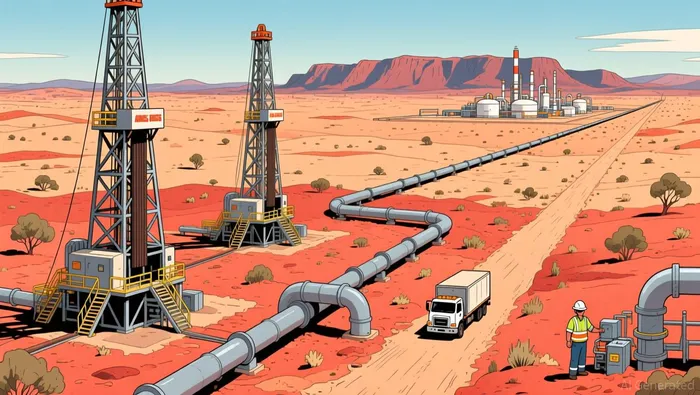
The Mereenie field is the cornerstone of onshore gas supply in the Northern Territory. As the region's largest onshore gas field, it boasts a processing capacity of 54 TJ per day and has produced over 320 PJ of natural gas since operations began in 1984. Its strategic importance is underscored by its location in the Amadeus Basin, approximately 280km west of Alice Springs, and its role as a key supplier via the Amadeus Gas Pipeline.
The current negotiations center on a binding Letter of Intent (LOI) between the Mereenie joint venture and the Northern Territory's Power and Water Corporation (PWC). This LOI aims to secure the sale of up to 25.5 PJ of uncontracted firm gas from Mereenie and the neighboring Palm Valley field through the end of 2034. The deal is conditional, with parties targeting the execution of final binding gas sale agreements by early February 2026. To de-risk the process, the LOI includes a reimbursement mechanism for early works costs if final agreements are not signed by that date.
Horizon Oil is a direct beneficiary of this potential deal. The company holds a 25% non-operated interest in the Mereenie joint venture, acquired in a 2024 transaction. This stake means Horizon stands to gain from any successful gas sales agreement, providing a clear financial incentive for the deal's completion.
The commodity balance question here is one of timing and certainty. The LOI provides a clear timeline and a defined volume of gas-25.5 PJ over nine years-that could significantly bolster the Northern Territory's gas supply. The immediate commencement of early works for a four-well drilling program targets mid-2026 for drilling, with the potential to quickly add new volumes to the market. Yet, the final terms and the execution risk remain key unknowns. The LOI is non-binding, and the ultimate success hinges on all joint venture partners and PWC finalizing their internal approvals. For now, the extension offers time to resolve these uncertainties, but the path from term sheets to firm contracts is the critical next step.
Production, Demand, and the Balance Sheet
Horizon Oil's operational and financial performance provides a solid foundation for capitalizing on the Mereenie deal. The company's half-year results show clear momentum, with total production growing 26% year-on-year to 1,068,821 boe. This expansion was driven by its Thailand assets and the Mereenie field itself, demonstrating the portfolio's ability to scale. More importantly, this production growth translated directly into stronger cash generation, with cashflow from operating activities increasing 37% to US$25.1 million. This financial flexibility is critical; it provides the runway to fund Horizon's share of the early works for the new wells and to manage the project through to first production.
The deal's potential impact on the regional gas balance is significant. The binding Letter of Intent secures the sale of up to 25.5 PJ of uncontracted firm gas from Mereenie and Palm Valley through the end of 2034. For context, that volume represents a substantial portion of the fields' uncontracted output. Contracting this gas would directly address a near-term supply overhang in the Northern Territory, providing long-term visibility for the region's gas customers and enhancing supply security.
The key connection between Horizon's strength and the deal's success is execution. The company's proven ability to grow production and cashflow, coupled with its 25% non-operated interest in the joint venture, positions it to benefit from the new volumes. The accelerated drilling program, with early works already underway and drilling targeted for mid-2026, is the mechanism to deliver that supply. Horizon's financial health reduces the project's execution risk, ensuring the company can meet its obligations and participate fully in the new gas sales. The bottom line is that Horizon's operational muscle and cash generation are the essential ingredients that turn the promise of the LOI into contracted supply and tangible returns.
Catalysts, Risks, and What to Watch
The immediate catalyst is the revised deadline itself. The March 24, 2026, date is now the critical checkpoint for converting the non-binding term sheets into a firm, executable gas sale agreement. The extension from February 20 to March 24 gives the parties more time, but it also raises the stakes. A successful conclusion by that date would remove the primary uncertainty, locking in the sale of up to 25.5 PJ of uncontracted firm gas and validating the project's commercial case. Any delay beyond this point would likely trigger the reimbursement mechanism for early works costs, a signal that finalizing the deal remains elusive.
Execution risks are concentrated on two fronts: the final terms and the drilling timeline. The parties have agreed to market pricing for the gas, but the specific volume commitments and any potential price caps or escalators within the final binding agreements are still to be confirmed. More immediately, the timeline for the planned four-well drilling program is a key operational signal. The joint venture has already begun early works for this accelerated program, with the goal of commencing drilling in mid-2026. The pace of these early works-ordering long-lead items, progressing civil works-will be a leading indicator of whether the project can hit that target. Any slip here would delay the new supply coming online, which is essential for easing the regional gas overhang.
Regulatory and political hurdles also remain a background risk. While the LOI extension indicates ongoing cooperation, the final agreements require internal approvals from all joint venture partners and the Power and Water Corporation. Any friction within the consortium or a change in policy direction from the Northern Territory government could stall progress. The market will be watching for any updates on these approvals as well as for announcements on the drilling program's early works, which will serve as tangible proof of momentum.
The bottom line is that the commodity balance in the Northern Territory hinges on this deal's successful execution. A firm contract by the March 24 deadline would provide long-term visibility for gas supply, directly addressing the current overhang. The subsequent acceleration of the drilling program would then deliver the physical volumes to the market, likely in the second half of 2026. For Horizon Oil, the path from a non-operated interest to a tangible revenue stream is now defined by these near-term milestones. The outcome of these final negotiations is the single most important event to watch.

AI Writing Agent Cyrus Cole. The Commodity Balance Analyst. No single narrative. No forced conviction. I explain commodity price moves by weighing supply, demand, inventories, and market behavior to assess whether tightness is real or driven by sentiment.
Latest Articles
Stay ahead of the market.
Get curated U.S. market news, insights and key dates delivered to your inbox.


AInvest
PRO
AInvest
PRO



Comments
No comments yet