
Horisont Energi Ends Collaboration with Fertiberia for Barents Blue Project, Pursues Additional Partners
ByAinvest
Friday, Feb 14, 2025 3:04 am ET2min read
ELPC--
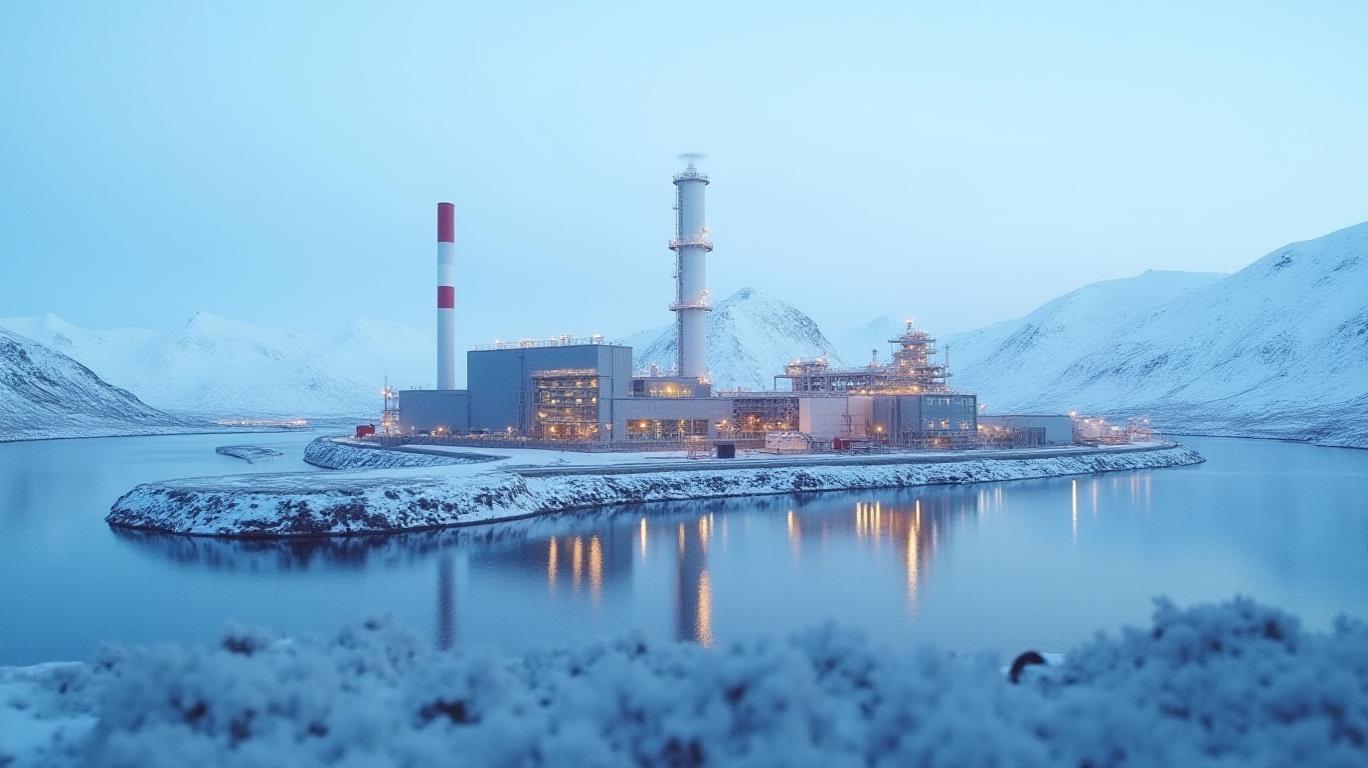
The Barents Blue project boasts several key advantages that make it an ideal location for large-scale clean ammonia production. Norway's abundance of natural gas and renewable power provides an excellent foundation for this industry [1]. The plant, situated at Markoppneset in Finnmark, will utilize auto-thermal reforming (ATR) technology to convert natural gas into clean ammonia [1]. The resulting ammonia will be stored in Polaris, an offshore facility in Finnmark, along with the captured CO2 [1]. This innovative approach to carbon capture and storage (CCS) ensures that the overall carbon capture rate exceeds 99% [1].
The Barents Blue project is not only environmentally friendly but also economically viable. With an estimated demand for pure ammonia reaching 530 million tonnes in 2050 [1], the demand for low-carbon solutions and clean ammonia is on the rise. The European market and the EU are actively seeking to develop value chains for both blue and green ammonia [1]. Horisont Energi's Barents Blue project has received state aid to participate in the Important Projects of Common European Interest (IPCEI) Hydrogen Program, also known as Hy2Use [1].
Clean ammonia, a colorless gas composed of nitrogen and hydrogen, is a versatile compound with numerous applications. Unlike hydrogen, clean ammonia is a liquid at atmospheric pressure and can be easily transported in large quantities [2]. When used as a fuel in shipping, clean ammonia has the potential to significantly reduce greenhouse gas emissions [2]. However, it is essential to distinguish between blue and green ammonia. Blue ammonia is produced using natural gas and CCS, while green ammonia is derived from renewable energy sources [2]. Horisont Energi's Barents Blue project focuses on blue ammonia production, aiming to be the most carbon-efficient plant globally [1].
In conclusion, Horisont Energi's Barents Blue project is a testament to the company's commitment to sustainability and innovation. Despite the challenges, the company remains steadfast in its pursuit of producing 1 million tonnes of clean ammonia annually, with a record-low carbon footprint and ambitious sustainability goals. As the demand for low-carbon solutions and clean ammonia continues to grow, the Barents Blue project is poised to play a significant role in facilitating the development of a low-carbon industry in Northern Norway and beyond.
References:
[1] Horisont Energi. (2023). Barents Blue. Retrieved from https://horisontenergi.no/projects/barents-blue/
[2] What is clean ammonia? What is the difference between hydrogen and ammonia? What differs blue ammonia from green, and why will clean ammonia help cut large emissions in shipping when used as fuel? Retrieved from https://horisontenergi.no/about-clean-ammonia/
PII--
Horisont Energi continues developing its Barents Blue clean ammonia project, which will produce 1 million tonnes annually, despite the end of its collaboration with Fertiberia. The project, located in Northern Norway, has secured power supply for its first phase and is supported by a grant of NOK 482 million. Horisont Energi plans to onboard additional industrial partners to strengthen the project and is targeting a final investment decision in 2026 and production start in 2029/2030.
Horisont Energi, a Norwegian clean energy company, is forging ahead with the development of its Barents Blue project, Europe's first significant clean ammonia plant [1]. Despite the recent termination of its collaboration with Fertiberia, the company remains committed to producing 1 million tonnes of clean ammonia annually [1]. This groundbreaking project, located in Northern Norway, is set to revolutionize the industry with its record-low carbon footprint and ambitious sustainability goals.The Barents Blue project boasts several key advantages that make it an ideal location for large-scale clean ammonia production. Norway's abundance of natural gas and renewable power provides an excellent foundation for this industry [1]. The plant, situated at Markoppneset in Finnmark, will utilize auto-thermal reforming (ATR) technology to convert natural gas into clean ammonia [1]. The resulting ammonia will be stored in Polaris, an offshore facility in Finnmark, along with the captured CO2 [1]. This innovative approach to carbon capture and storage (CCS) ensures that the overall carbon capture rate exceeds 99% [1].
The Barents Blue project is not only environmentally friendly but also economically viable. With an estimated demand for pure ammonia reaching 530 million tonnes in 2050 [1], the demand for low-carbon solutions and clean ammonia is on the rise. The European market and the EU are actively seeking to develop value chains for both blue and green ammonia [1]. Horisont Energi's Barents Blue project has received state aid to participate in the Important Projects of Common European Interest (IPCEI) Hydrogen Program, also known as Hy2Use [1].
Clean ammonia, a colorless gas composed of nitrogen and hydrogen, is a versatile compound with numerous applications. Unlike hydrogen, clean ammonia is a liquid at atmospheric pressure and can be easily transported in large quantities [2]. When used as a fuel in shipping, clean ammonia has the potential to significantly reduce greenhouse gas emissions [2]. However, it is essential to distinguish between blue and green ammonia. Blue ammonia is produced using natural gas and CCS, while green ammonia is derived from renewable energy sources [2]. Horisont Energi's Barents Blue project focuses on blue ammonia production, aiming to be the most carbon-efficient plant globally [1].
In conclusion, Horisont Energi's Barents Blue project is a testament to the company's commitment to sustainability and innovation. Despite the challenges, the company remains steadfast in its pursuit of producing 1 million tonnes of clean ammonia annually, with a record-low carbon footprint and ambitious sustainability goals. As the demand for low-carbon solutions and clean ammonia continues to grow, the Barents Blue project is poised to play a significant role in facilitating the development of a low-carbon industry in Northern Norway and beyond.
References:
[1] Horisont Energi. (2023). Barents Blue. Retrieved from https://horisontenergi.no/projects/barents-blue/
[2] What is clean ammonia? What is the difference between hydrogen and ammonia? What differs blue ammonia from green, and why will clean ammonia help cut large emissions in shipping when used as fuel? Retrieved from https://horisontenergi.no/about-clean-ammonia/
Stay ahead of the market.
Get curated U.S. market news, insights and key dates delivered to your inbox.
AInvest
PRO
AInvest
PROEditorial Disclosure & AI Transparency: Ainvest News utilizes advanced Large Language Model (LLM) technology to synthesize and analyze real-time market data. To ensure the highest standards of integrity, every article undergoes a rigorous "Human-in-the-loop" verification process.
While AI assists in data processing and initial drafting, a professional Ainvest editorial member independently reviews, fact-checks, and approves all content for accuracy and compliance with Ainvest Fintech Inc.’s editorial standards. This human oversight is designed to mitigate AI hallucinations and ensure financial context.
Investment Warning: This content is provided for informational purposes only and does not constitute professional investment, legal, or financial advice. Markets involve inherent risks. Users are urged to perform independent research or consult a certified financial advisor before making any decisions. Ainvest Fintech Inc. disclaims all liability for actions taken based on this information. Found an error?Report an Issue


ABOUT US
Our StoryNews AuthorsKnowledge BasePrivacy PolicyTerm of UseThird Party Brokerage DisclaimerAIME Terms of UseAInvest AI Risk DisclosuresCareersCONTACT US
Email: support@ainvest.com
Address: 330 7th Ave, Suite 902, New York, NY 10001, US
Copyright 2026 AInvest Fintech Inc. All rights reserved.


Comments
No comments yet