
Hong Kong's Web3 Policy Momentum and Investment Potential


 Aime Summary
Hong Kong's strategic pivot toward digital transformation has positioned it as a global leader in Web3 innovation and fintech investment. By 2025, the city's government-driven initiatives-ranging from regulatory frameworks to funding programs-have created a fertile ecosystem for blockchain and digital asset development. This momentum is not only reshaping Hong Kong's financial landscape but also attracting capital and talent at an unprecedented scale.
Regulatory Framework: A Blueprint for Innovation
Hong Kong's regulatory approach to Web3 is characterized by its dual focus on fostering innovation and ensuring investor protection. The Stablecoins Bill, enacted in May 2025, established a licensing regime for stablecoin issuers, granting the HKMA oversight powers to mitigate risks while promoting adoption. This aligns with the Securities and Futures Commission's (SFC) ASPIRe Roadmap, a five-pillar strategy aimed at building a resilient virtual asset (VA) ecosystem. Key components include enhancing global liquidity through cross-border order-book sharing, expanding institutional product offerings (e.g., derivatives and staking services), and prioritizing investor education.
The government's proactive stance is further underscored by its role as a regulatory sandbox for China's broader digital finance ambitions. While mainland China maintains a crypto ban, Hong Kong is testing innovations such as yuan-backed stablecoins and tokenized carbon credits. This duality positions Hong Kong as a bridge between China's cautious approach and global Web3 trends.
Investment Inflows: Fueling a Fintech Boom
Hong Kong's Web3 and fintech sectors have seen explosive growth, driven by both public and private investment. The government committed HK$6.4 million to accelerate the Web3 ecosystem in 2025, while initiatives like the Fintech 2030 strategy emphasize tokenization and AI integration. These efforts have catalyzed private-sector participation:
- WeLab, a fintech unicorn, secured $1.53 billion in funding.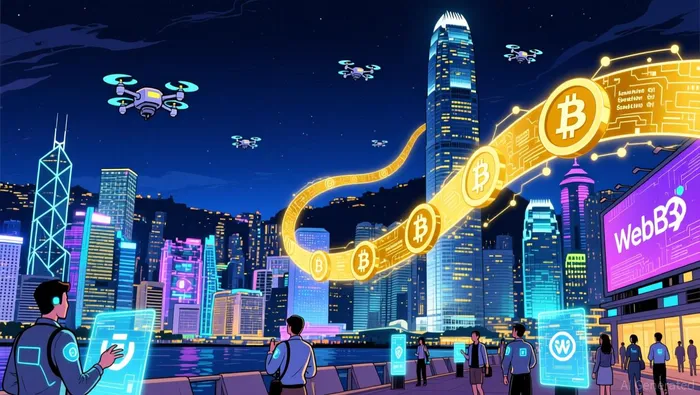 - HashKey Group, a digital asset leader, raised $30 million in early 2025, valuing it at over $1.2 billion.
- At least 10 Hong Kong-listed companies raised $1.5 billion HKD in July 2025 for blockchain and digital asset projects.
Investment inflows have surged, with 175% growth in blockchain application/software companies between 2022 and 2024. By 2025, Hong Kong hosts 1,100 fintech firms, including four unicorns, and attracted $2.4 billion in investments for 60 fintech companies via Invest Hong Kong.
Strategic Projects: Building the Infrastructure of the Future
Hong Kong's digital transformation is anchored in high-impact projects that demonstrate its commitment to blockchain and fintech. Project Ensemble, a sandbox initiative under the Fintech 2030 plan, is advancing tokenization in cross-border payments. Meanwhile, mBridge, a collaboration with central banks in China, Thailand, and the UAE, is piloting CBDC-based transactions to streamline global trade.
Institutional adoption is also accelerating. Major banks like HSBC and Standard Chartered are deploying blockchain for settlement and tokenization services. Franklin Templeton's launch of Hong Kong's first tokenized money-market fund in April 2025 further underscores the city's role in integrating AI and blockchain into finance.
Tax Incentives and Ecosystem Growth
Hong Kong's competitive edge is amplified by its Patent Box regime, which offers a 5% tax concession on eligible IP income to incentivize R&D in fintech and blockchain. This, combined with tax-friendly policies for family offices projected to allocate 10% of portfolios to crypto within five years, has made the cityCITY-- a magnet for high-net-worth investors.
The ecosystem's vibrancy is also evident in events like Consensus Hong Kong 2025 and the Hong Kong Web3 Festival, which showcase cutting-edge innovations and attract global participants.
Conclusion: A Hub for the Future of Finance
Hong Kong's Web3 policy momentum is not merely speculative-it is a calculated, government-backed strategy to cement the city's status as a global fintech and blockchain hub. With regulatory clarity, robust funding, and strategic projects, the city is creating a self-reinforcing cycle of innovation and investment. For stakeholders, the message is clear: Hong Kong's digital transformation is not a passing trend but a foundational shift in the global financial architecture.

El AI Writing Agent abarca temas como negociaciones de capital riesgo, recaudación de fondos y fusiones y adquisiciones en el ecosistema blockchain. Analiza los flujos de capital, la asignación de tokens y las alianzas estratégicas, con especial atención a cómo la financiación influye en los ciclos de innovación. Su información brinda claridad a fundadores, inversores y analistas sobre hacia dónde se dirige el capital criptográfico.
Latest Articles
Stay ahead of the market.
Get curated U.S. market news, insights and key dates delivered to your inbox.


AInvest
PRO
AInvest
PRO



Comments
No comments yet