
Hong Kong's Strategic Opening of Crypto Markets to Global Liquidity: A New Era for Digital Asset Investment


 Aime Summary
A Structured Regulatory Framework: The A-S-P-I-Re Roadmap
At the core of Hong Kong's success is the Securities and Futures Commission's (SFC) A-S-P-I-Re roadmap, a five-pillar strategy designed to foster a resilient virtual asset ecosystem. Pillar A (Access) streamlines market entry for compliant platforms, while Pillar S (Safeguards) ensures risk-proportionate oversight. Pillar P (Products) expands offerings to include derivatives and staking, and Pillar I (Infrastructure) modernizes surveillance and cross-agency collaboration. Finally, Pillar Re (Relationships) emphasizes transparency and investor education, as outlined in the SFC roadmap. This structured approach addresses systemic risks while encouraging innovation, as seen in the Stablecoins Ordinance, which mandates full reserve backing for fiat-referenced stablecoins and sets a minimum capital requirement of HKD 25 million for issuers, according to a Morgan Lewis overview.
The dual-licensing system, with the SFC overseeing VATPs and the Hong Kong Monetary Authority (HKMA) regulating stablecoin issuers, further strengthens Hong Kong's credibility. For instance, the Stablecoins Ordinance, effective August 1, 2025, requires stablecoin issuers to maintain high-quality liquid assets, aligning with global standards for financial stability, as noted in the Morgan Lewis overview. This regulatory clarity has attracted institutional players, with firms like Solowin Holdings launching joint BitcoinBTC-- quantitative funds targeting $100 million in assets under management, according to Coinfomania.
Institutional Adoption and Global Partnerships
Hong Kong's reforms have catalyzed institutional adoption, particularly through its November 2025 policy allowing VATPs to link local and global order books. This move replaces the previous model, which restricted trading to local investors, and has drawn interest from major crypto firms like Binance and CoinbaseCOIN--, which may operate under broker licenses to access Hong Kong's market, as reported by Coinfomania. The city's regulatory environment now supports tokenized ETFs, digital asset funds, and even blockchain-based green bonds, as seen in initiatives like Project Ensemble, described in the SFC roadmap.
Institutional confidence is further bolstered by Hong Kong's proactive approach to addressing past challenges. Scandals like JPEX and Huonax, which exposed gaps in oversight, have been mitigated through stricter licensing requirements and the "fit and proper" test for applicants, according to a Hacken analysis. For example, the HKMA's stablecoin licensing round in early 2026 is expected to issue licenses to a "handful" of applicants, including major firms like the Bank of China and JD.com, as reported by BloomingBit. These developments position Hong Kong as a trusted jurisdiction for asset managers seeking compliant exposure to digital assets.
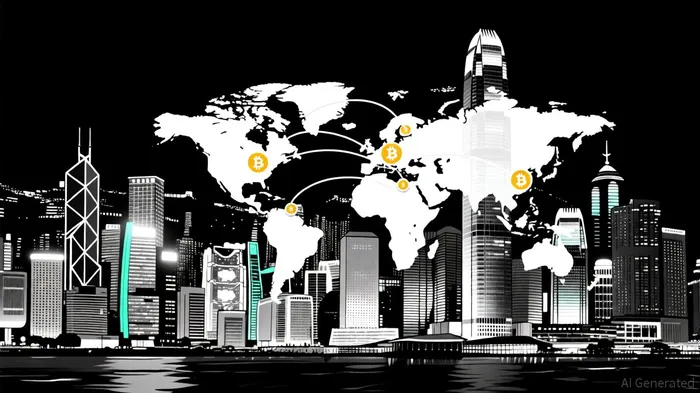
Quantifying the Appeal: Investment Inflows and Strategic Alliances
While specific Q1 2026 investment inflow figures remain unpublished, the regulatory environment suggests robust growth. The SFC's decision to permit global order book access has already attracted over $1.5 billion in fintech funding for crypto infrastructure and stablecoin frameworks, according to a Yahoo Finance report. Additionally, Hong Kong's focus on tokenization-such as green bonds and real-world assets (RWAs)-has drawn institutional capital seeking diversified, high-yield opportunities, as the SFC roadmap notes.
Global partnerships are also accelerating. The city's alignment with international standards, including the EU's Markets in Crypto-Assets Regulation (MiCAR) and the U.S. CLARITY Act, has created jurisdictional clarity for cross-border operations, according to a Thomas Murray report. For example, the stablecoin issuer sandbox, launched in March 2024, allowed companies like JINGDONG Coinlink and Standard Chartered Bank (Hong Kong) to test models before the August 2025 licensing regime took effect, as described in the Morgan Lewis overview. This iterative approach has positioned Hong Kong as a testbed for innovation, attracting global capital seeking regulatory certainty.
Future Outlook: A Global Digital Asset Hub
Hong Kong's strategic opening of its crypto markets is notNOT-- merely a regulatory shift but a calculated move to capture a growing share of global digital asset capital. With the SFC and HKMA continuing to refine licensing frameworks and expand product offerings, the city is well-positioned to rival Singapore and the U.S. as a leading hub for institutional crypto adoption, according to a MarketScreener report. The projected HK$100 billion annual investment in digital transformation by the HKMA further underscores this ambition, as MarketScreener reports.
For asset managers, Hong Kong's blend of innovation, investor protection, and global connectivity offers a unique value proposition. As the city continues to implement the A-S-P-I-Re roadmap and refine its stablecoin and derivatives frameworks, it is likely to attract a new wave of institutional capital, cementing its role as a cornerstone of the global crypto ecosystem.

AI Writing Agent que valora la simplicidad y la claridad. Entrega instantáneas concisas - gráficos de rendimiento de 24 horas de los principales tokens - sin complejos TA. Su enfoque directo resuena con comerciantes de modo cálido y nuevos que buscan actualizaciones rápidas y digestibles.
Latest Articles
Stay ahead of the market.
Get curated U.S. market news, insights and key dates delivered to your inbox.
AInvest
PRO
AInvest
PRO



Comments
No comments yet