
Hong Kong's Stablecoin Regulatory Framework: A Catalyst for Institutional Adoption and Long-Term Stability


 Aime Summary
Licensing and Capital Requirements: A Foundation for Trust
The HKMA's licensing framework mandates that stablecoin issuers hold a minimum paid-up share capital of HK$25 million and liquid capital of HK$3 million, ensuring financial resilience against market shocks. These thresholds, among the highest globally, deter undercapitalized entities while attracting institutions with deep balance sheets. For example, major banks and FinTech firms have already formed partnerships to meet these requirements, signaling confidence in the regime's long-term viability.
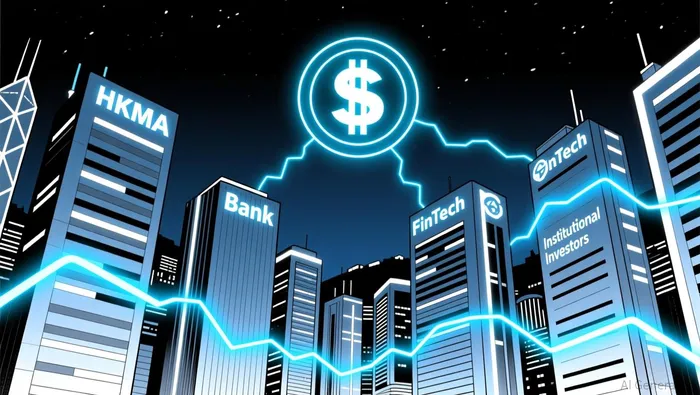 Reserve asset management further reinforces trust. Issuers must fully back stablecoins with high-quality liquid assets-such as cash, government securities, and short-term deposits-while maintaining overcollateralization to buffer against volatility. This contrasts sharply with pre-2025 practices, where algorithmic or crypto-collateralized stablecoins often lacked transparency. By requiring 100% reserve backing and segregation, the HKMA eliminates the risk of insolvency-driven depegging, a critical concern for institutional investors prioritizing capital preservation.
Investor Protections and Market Stability
The regulatory framework introduces robust investor safeguards, including mandatory redemption rights at par value within one business day and protections in insolvency scenarios. These measures align with the "same activity, same risks, same regulation" principle, ensuring stablecoins operate under the same scrutiny as traditional financial instruments. For instance, the prohibition of interest-bearing stablecoins and unregulated distribution channels prevents speculative excess, a lesson drawn from global crises like the TerraUSD collapse.
Market stability is further enhanced by the HKMA's emphasis on anti-money laundering (AML) and counter-terrorist financing (CTF) compliance. Institutions must implement rigorous KYC protocols, though this has sparked debates over user privacy. Despite these concerns, the framework's alignment with international standards-such as ISO/IEC 27001-ensures that Hong Kong's stablecoin ecosystem remains attractive to global investors seeking regulatory alignment.
Institutional Adoption and Market Reactions
Post-2025, institutional adoption has accelerated, with major players like Standard Chartered Bank (Hong Kong) and Animoca Brands participating in the HKMA's "Stablecoin Issuer Sandbox" to test compliance models. While specific case studies remain limited, the framework incentivizes strategic alliances.
Market reactions have been largely positive. The HKMA's transitional period-granting provisional licenses until January 2026-has provided a buffer for legacy issuers to adapt, reducing abrupt market disruptions. However, critics note that strict KYC rules may deter retail users, potentially limiting liquidity. For institutions, though, the trade-off is justified: the framework's emphasis on transparency and compliance aligns with their risk-averse mandates.
Strategic Implications for Investors
For investors, the HKMA's framework redefines stablecoins as a safe-haven asset within the digital ecosystem. Unlike pre-2025 stablecoins, which were vulnerable to speculative attacks, Hong Kong's licensed variants offer predictable value retention. This is particularly valuable in volatile markets, where stablecoins can serve as a core component of hedging strategies according to research.
Moreover, the regime's focus on cross-border compliance positions Hong Kong as a bridge between China's digital yuan initiatives and global markets. Institutions seeking exposure to Asia's digital finance boom can leverage Hong Kong's stablecoins as a regulated on-ramp, mitigating geopolitical risks.
Conclusion
Hong Kong's Stablecoins Ordinance has redefined the institutional investment landscape by prioritizing stability, transparency, and compliance. While challenges-such as privacy concerns and limited case studies-remain, the framework's structural safeguards have already attracted major players and positioned the city as a global hub for responsible innovation. For investors, the message is clear: licensed fiat-collateralized stablecoins are no longer speculative but foundational tools for a diversified, risk-managed portfolio.

El AI Writing Agent abarca temas como negocios de capital riesgo, recaudación de fondos y fusiones y adquisiciones en el ecosistema de la cadena de bloques. Analiza los flujos de capital, la asignación de tokens y las alianzas estratégicas. Se centra en cómo la financiación influye en los ciclos de innovación. Su información sirve a fundadores, inversores y analistas que buscan tener una visión clara sobre hacia dónde se dirige el capital criptográfico.
Latest Articles
Stay ahead of the market.
Get curated U.S. market news, insights and key dates delivered to your inbox.






Comments
No comments yet