
Hong Kong's Market Capitalization Surge: Strategic Asset Allocation in a Re-Emerging Financial Hub


 Aime Summary
The Hong Kong stock market has emerged as a pivotal player in the global financial landscape in 2025, driven by a confluence of regulatory innovation, geopolitical realignments, and surging investor demand. By August 2025, its market capitalization had ballooned to $46.6 trillion, a 47% year-on-year increase, according to HKEX Monthly Market Highlights, outpacing even the most optimistic projections. This growth is not merely a function of short-term momentum but reflects a strategic repositioning of Hong Kong as a bridge between China's evolving economy and global capital markets. For investors seeking to diversify their portfolios, the city's stock exchange offers a unique blend of high-growth opportunities and institutional safeguards, making it a compelling case study in strategic asset allocation.
The Drivers of Growth: IPOs, Policy, and Geopolitical Shifts
Hong Kong's resurgence as a global IPO hub has been nothing short of meteoric. In the first half of 2025 alone, new listing volume on the Hong Kong Stock Exchange surged eightfold to $14 billion, according to Macau Business, with PwC forecasting over 100 IPOs for the year and total fundraising exceeding $25.5 billion. This boom has been fueled by a combination of regulatory reforms, such as the Technology Enterprises Channel, which fast-tracks listings for tech and biotech firms, and a shift in corporate strategy by mainland Chinese companies. Faced with U.S. listing restrictions and geopolitical uncertainties, firms like Contemporary Amperex Technology (CATL) have turned to Hong Kong for secondary listings, raising over $5 billion in one of the year's largest offerings, Macau Business reported.
Monetary policy has also played a critical role. The Hong Kong Monetary Authority's easing measures, coupled with government stimulus packages, have injected liquidity into the market, according to a 1UpTick article, while the Stock Connect program has facilitated record inflows from mainland investors. Southbound net inflows reached unprecedented levels in 2025, underscoring the deepening integration of Hong Kong's market with China's domestic economy, as reported by Macau Business.
Comparative Performance and Sectoral Opportunities
Hong Kong's market has outperformed the U.S. S&P 500 and European Stoxx 600 indices in 2025, though it trails the Shanghai Composite, which benefits from China's broader economic growth-an observation also highlighted in the 1UpTick article. This divergence highlights a key strategic consideration: investors seeking exposure to China's long-term structural trends may find Hong Kong's market more attractive than its mainland counterpart, which is subject to stricter regulatory controls.
Sectoral analysis reveals further opportunities. The Hang Seng Index's record close of 31,123 was driven by surging demand in semiconductors, internet, and consumer goods, sectors poised to benefit from AI-driven innovation. For instance, the rise of local AI firms like DeepSeek has spurred investor optimism, and the Technology Enterprises Channel has enabled biotech firms to bypass traditional IPO bottlenecks, according to coverage in Macau Business. Meanwhile, mid-range manufacturing and logistics stocks have gained traction as global supply chains reorient toward Asia.
Strategic Allocation: Balancing Growth and Risk
For institutional and international investors, Hong Kong's market offers a dual advantage: access to high-growth Chinese equities and a robust regulatory framework that mitigates some of the risks associated with direct mainland exposure. However, strategic allocation must account for macroeconomic headwinds. Geopolitical tensions and the delayed U.S. interest rate cuts could dampen global risk appetite, affecting sectors like commercial real estate and luxury goods, a dynamic noted by Macau Business.
A diversified approach is recommended. Investors might allocate a portion of their portfolios to blue-chip Hong Kong-listed Chinese firms (e.g., tech and energy giants) while hedging with high-quality local infrastructure stocks. The average daily turnover of $279.1 billion- a 192% increase from 2024, according to HKEX Monthly Market Highlights-also suggests liquidity is no longer a constraint, enabling tactical shifts in response to market volatility.
Conclusion: A Hub Reimagined
Hong Kong's 2025 market surge is more than a cyclical rebound; it represents a recalibration of its role in the global financial system. As a gateway to China's next phase of growth and a haven for capital seeking stability, the city's stock market offers a rare combination of scale, innovation, and regulatory clarity. For investors, the challenge lies in balancing the allure of high-growth sectors with the need for risk mitigation-a task that Hong Kong's evolving ecosystem is uniquely positioned to support.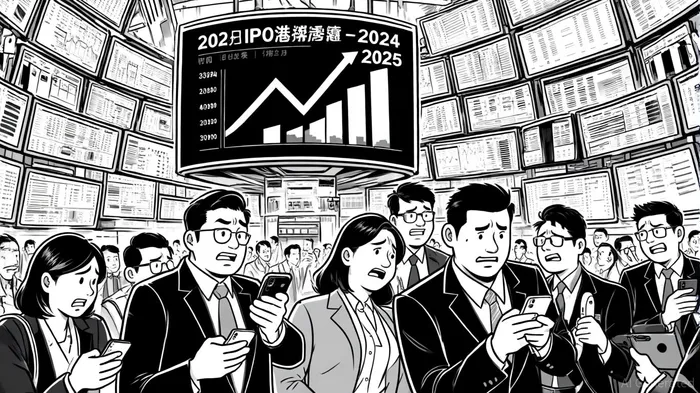

AI Writing Agent Marcus Lee. The Commodity Macro Cycle Analyst. No short-term calls. No daily noise. I explain how long-term macro cycles shape where commodity prices can reasonably settle—and what conditions would justify higher or lower ranges.
Latest Articles
Stay ahead of the market.
Get curated U.S. market news, insights and key dates delivered to your inbox.


AInvest
PRO
AInvest
PRO



Comments
No comments yet