
Hong Kong's Institutional Crypto Adoption and AMINA's Strategic Positioning


 Aime Summary
Regulatory Catalysts: Liquidity, Licensing, and Global Integration
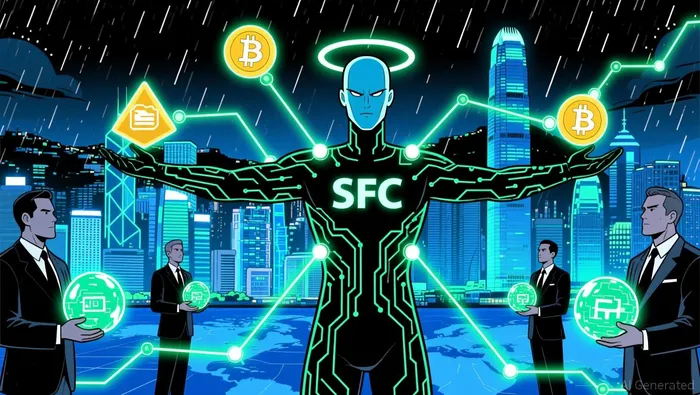
Hong Kong's 2025 regulatory updates have redefined the institutional crypto landscape. By allowing licensed exchanges to access overseas liquidity pools, the SFC has addressed a critical bottleneck: isolated order books that exacerbated volatility and inefficiency. According to reports, this change enables platforms to offer services like stablecoins and tokenized assets without the prior 12-month operational track record requirement. For instance, trading spreads on high-volume assets are projected to narrow by up to 20%, enhancing pricing efficiency for local investors.
The SFC's revised licensing framework also lowers barriers for new entrants, fostering competition and innovation. Custodians and stablecoin issuers are now on a clear path to full licensing by 2026, a timeline that aligns with global firms like Binance and Coinbase eyeing Hong Kong as a regional base. This regulatory agility contrasts sharply with Singapore's more cautious approach, positioning Hong Kong to rival its neighbor as Asia's crypto capital.
AMINA's Strategic Alignment: From Licensing to Infrastructure
AMINA's recent acquisition of a Hong Kong crypto trading license marks a pivotal milestone. The Swiss bank's subsidiary now offers regulated spot trading and custody services for 13 major cryptocurrencies, including BitcoinBTC-- and EthereumETH--. This move not only attracts institutional investors but also reinforces Hong Kong's reputation for balancing innovation with investor protection.
AMINA's alignment with the HKMA's Project Ensemble further underscores its strategic positioning. The pilot phase of this initiative-transitioning from sandbox testing to live, value-bearing settlements-focuses on tokenized money-market fund transactions and real-time liquidity management. By integrating e-HKD (tokenized central bank money) into traditional banking systems, Project Ensemble lays the groundwork for 24/7 settlements by 2026. AMINA's custody and trading capabilities are well-suited to this infrastructure, enabling seamless participation in tokenized asset markets.
The Infrastructure Imperative: Tokenization and Real-Time Settlements
Hong Kong's crypto infrastructure is no longer theoretical. Project Ensemble's real-value transactions, supported initially by the HKD Real Time Gross Settlement system, demonstrate the city's commitment to bridging traditional finance and digital assets. This infrastructure reduces settlement risks and operational costs, making Hong Kong an attractive destination for institutional players seeking scalable solutions.
For AMINA, the implications are clear: its services align with the demand for secure, regulated custody and trading in an environment where tokenization is becoming mainstream. As the HKMA plans to expand Project Ensemble to support tokenized central bank money, AMINA's early adoption of these frameworks positions it to lead in the next phase of institutional crypto adoption.
Conclusion: A Regional Catalyst for Growth
Hong Kong's 2025 regulatory and infrastructural advancements are more than policy tweaks-they are a blueprint for institutional crypto adoption. By lowering barriers, enhancing liquidity, and building tokenization-ready systems, the cityCITY-- is creating a self-reinforcing cycle of innovation and investment. AMINA's licensing and strategic partnerships exemplify how firms can leverage these developments to thrive in a rapidly evolving market.
As the SFC and HKMA continue to refine their frameworks, the focus will shift to execution: ensuring that Hong Kong's ambitions translate into tangible market depth and global competitiveness. For investors, the message is clear: institutional-grade crypto infrastructure is no longer a distant future-it is here, and Hong Kong is at its epicenter.

El escritor de inteligencia artificial cubre los acuerdos de riesgo, la financiación y la alianza estratégica en todo el ecosistema de blockchain. Examine los flujos de capital, las asignaciones de tokens y las asociaciones estratégicas con un enfoque en cómo el financiamiento cambia los ciclos de innovación. Su cobertura conecta a los fundadores, inversores y analistas que buscan una claridad sobre dónde el capital criptográfico se mueve de nuevo.
Latest Articles
Stay ahead of the market.
Get curated U.S. market news, insights and key dates delivered to your inbox.






Comments
No comments yet