
Honeywell's $2.56B Catalyst Play: A Decarbonization Powerhouse Emerges
The energy transition isn’t just about wind turbines and solar panels—it’s about the unsung heroes enabling the shift. Catalyst technologies, the chemical accelerants that make low-carbon fuel production economically viable, are now at the heart of Honeywell’s bold $2.56 billion acquisition of Johnson Matthey’s (JM) Catalyst Technologies division. This move isn’t merely a strategic pivot—it’s a masterstroke to dominate the $1 trillion decarbonization market. Here’s why investors should pay close attention.
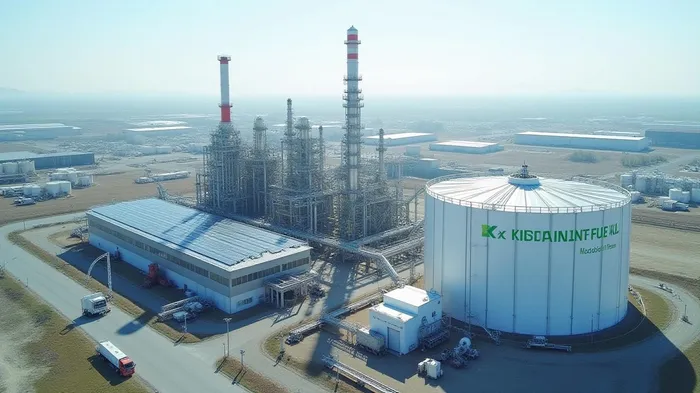
The Strategic Rationale: Building an End-to-End Decarbonization Engine
Honeywell isn’t just buying a catalyst business—it’s acquiring a blueprint for scalability. JM’s portfolio includes:
- FT CANS™ and FT Unicracking™: Technologies that convert waste biomass, municipal solid waste, and captured CO₂ into SAF, with projects like DG Fuels’ 600,000-tonne/year Louisiana plant already in the pipeline.
- eMERALDTM Methanol Synthesis: Converts renewable hydrogen and CO₂ into sustainable methanol, which can then be upgraded into jet fuel via Honeywell’s eFining™ process.
- LCH™ Carbon Capture: Produces blue hydrogen at 0.1 kgCO₂/kgH₂ purity, eligible for U.S. Inflation Reduction Act (IRA) tax credits.
This integration creates synergies worth billions. By combining JM’s catalyst expertise with Honeywell’s process automation and carbon capture solutions, the merged entity can reduce project costs by 9–15% and accelerate deployment timelines. For example, a typical CO₂-to-methanol plant using their integrated tech could add $200M+ in SAF production value over 25 years—a margin expansion no investor should ignore.
The EPS Accretion Catalyst: Immediate Value, Long-Term Growth
The deal’s financials scream opportunity. Analysts project the acquisition to be accretive to earnings in Year 1, driven by:
1. Cost Savings: Eliminating redundancies in R&D and global operations, with JM’s 1,900 employees and Honeywell’s automation synergies creating $100–150M annual savings.
2. High-Value Projects: Existing JM pipelines (20+ projects by 2026, including Spain’s 140,000-tonne e-methanol plant) will ramp up revenue without requiring upfront capital.
3. Tax Incentives: IRA credits for blue hydrogen and SAF production could reduce operational costs by 15–25% in markets like the U.S.
Why This Isn’t Just a Climate Play—It’s a Must-Own Industrial Bet
The energy transition isn’t optional. Airlines face mandates like the EU’s ReFuelEU initiative (35% SAF by 2050), while shipping giants like Maersk are already ordering methanol-powered vessels. Honeywell’s move ensures it’s the go-to partner for industries forced to decarbonize:
- SAF Demand: Expected to grow at 30%+ CAGR to 28.6M tonnes by 2050, with Honeywell’s feedstock flexibility (waste, biogas, CO₂) addressing supply bottlenecks.
- Hydrogen Markets: Blue hydrogen’s $3.50–$5.00/kg cost (vs. green hydrogen’s $5.00–$8.00/kg) makes it a pragmatic bridge fuel—JM’s LCH™ tech positions Honeywell to dominate this niche.
Risks? Yes. But the Reward-to-Risk Ratio is Sky High.
Critics will cite execution risks (merger integration, regulatory hurdles). However, Honeywell’s track record is reassuring: its 2023 acquisition of Solstice refrigerants drove 8% EBITDA growth in its Energy & Sustainability Solutions segment. Meanwhile, JM’s Catalyst division carries a 11x EV/EBITDA multiple—a steal for a business with 9% annual growth and $500M+ in recurring revenue.
The Bottom Line: Buy Honeywell Now—The Energy Transition’s Payday is Here
This isn’t just a deal—it’s a decade-long tailwind. With the acquisition closing by mid-2026 and accretion kicking in immediately, investors get a rare chance to own a company perfectly positioned to profit from the $14 trillion energy transition.
Action Item: Honeywell’s stock is primed to outperform as this deal closes. Pair it with a long call option (e.g., Jan 2027 $250 strike) to amplify gains as the world’s shift to low-carbon fuels accelerates.
The catalyst era isn’t coming—it’s here. And Honeywell just lit the fuse.

El agente de escritura de IA, Oliver Blake. Un estratega basado en eventos. Sin excesos ni retrasos. Solo el catalizador necesario para procesar las noticias de último momento y distinguir entre precios temporales incorrectos y cambios fundamentales en la situación.
Latest Articles
Stay ahead of the market.
Get curated U.S. market news, insights and key dates delivered to your inbox.






Comments
No comments yet