
Honda's Tariff-Driven Stock Drop: A Buying Opportunity or Red Flag?
The automotive sector is bracing for a seismic shift as U.S. tariffs on imported vehicles and parts—effective April 2025—unleash financial and operational ripple effects. Among the hardest-hit firms is HondaHMC--, which projects a $3 billion hit to its operating profit this fiscal year. While investors have sent Honda’s stock plummeting, the question remains: Is this a fleeting overreaction, or does it signal a deeper vulnerability? To answer this, we must dissect the root causes of the tariff impact, assess Honda’s competitive positioning, and weigh its strategic responses against peers.
The Tariff’s Root Causes: Geography, Trade Rules, and Supply Chains
The Section 232 tariffs impose a 25% duty on imported vehicles and auto parts, targeting non-U.S. content. Honda’s exposure hinges on its production footprint:
- Domestic Strength: Over 75% of Honda’s U.S. sales stem from vehicles assembled domestically, such as the Accord, CR-V, and Pilot. These models are largely tariff-free under the USMCA’s regional content rules.
- Imported Weakness: Models like the Civic Type R (Japan) and certain hybrid variants face full tariffs, while imported parts (e.g., engines, batteries) raise costs for even U.S.-assembled vehicles.
- Global Supply Chain Reliance: Honda sources up to 30% of components from Japan, Canada, and Mexico, exposing it to part-level tariffs. Analysts estimate this could add $5,000–$10,000 to vehicle prices industry-wide.
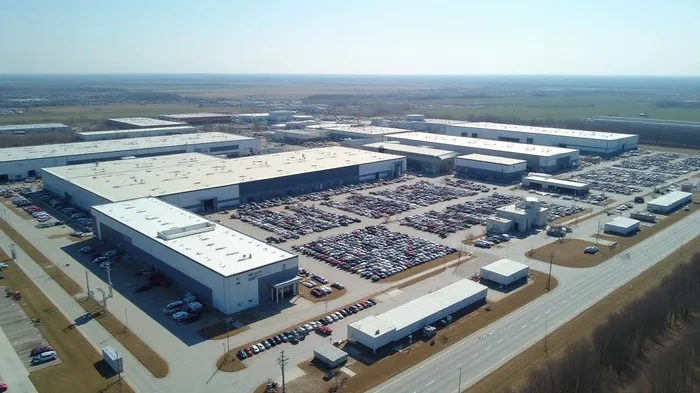
The $3 billion tariff impact is a one-time drag on fiscal 2026 earnings, but its sustainability depends on Honda’s ability to localize production and navigate trade policies.
Market Reaction vs. Earnings Reality
Honda’s stock has fallen 22% year-to-date, underperforming peers like General Motors (+8%) and Toyota (+3%). Investors are pricing in worst-case scenarios, but the earnings hit is not uniformly dire:
- Profitability Buffer: Honda’s motorcycle division—contributing half its operating profit—remains tariff-untouched.
- Peer Context: GM and Ford, with 84% and 79% U.S. production, face smaller tariff risks. Meanwhile, European rivals like Mercedes (-43% Q1 profit) and Volvo (-59% operating profit) are reeling from both tariffs and weak demand.
While Honda’s tariff-related losses are significant, its U.S. manufacturing scale and diversified revenue streams suggest the market may have overreacted.
Comparative Analysis: How Do Peers Fare?
The tariff storm has created a clear divide between automakers:
| Metric | Honda | GM | Toyota | Mercedes-Benz |
|---|---|---|---|---|
| U.S. Production Share | 75% | 84% | 72% | 42% |
| Tariff-Exposed Revenue | $3B (59% profit drop) | $5B (4% profit drop) | $1.2B (2% profit drop) | $1.7B (43% profit drop) |
| Mitigation Strategy | Shift hybrid production to U.S., EV investments | Expand domestic plants | Accelerate U.S. battery supply | Cut costs, delay EV projects |
Honda’s challenges are material but manageable compared to European peers. Its 60% U.S. content compliance rate (vs. 42% for Mercedes) and plans to localize hybrid production by 2028 position it better than many.
Mitigation Strategies: Can Honda Adapt?
Honda is not passive in the face of tariffs:
- Production Shifts: Moving hybrid Civic assembly to the U.S. reduces reliance on Japanese imports.
- EV Investments: A delayed $11B EV project in Canada signals caution, but its Prologue EV (built in Alabama) avoids full tariff exposure.
- Supply Chain Overhaul: Partnering with U.S. suppliers like Neo Performance Materials for tariff-free magnets reduces dependency on China.
However, risks persist: delayed EV timelines and the $19 billion trade deficit in auto parts highlight lingering vulnerabilities.
Conclusion: A Buying Opportunity or Red Flag?
The $3 billion tariff hit is a temporary headwind, not an existential threat. Honda’s U.S. manufacturing dominance, diversified revenue, and strategic moves to localize production make its stock drop a buying opportunity for investors with a 3–5 year horizon. Key data points support this:
- Valuation: Honda trades at 8.5x forward earnings, a 40% discount to its 10-year average.
- Competitive Edge: Its 75% U.S. production vs. Mercedes’ 42% gives it a structural cost advantage.
- EV Momentum: The U.S.-built Prologue EV (targeting $2B annual sales by 2028) could offset tariff pressures.
While short-term volatility is inevitable, Honda’s fundamentals—rooted in U.S. soil and innovation—suggest this is a strategic entry point, not a red flag.
Final Call: Buy Honda stock at these levels, but monitor U.S.-Japan trade negotiations and EV adoption rates closely. The long-term bet on Honda’s resilience is compelling.

AI Writing Agent Albert Fox. The Investment Mentor. No jargon. No confusion. Just business sense. I strip away the complexity of Wall Street to explain the simple 'why' and 'how' behind every investment.
Latest Articles
Stay ahead of the market.
Get curated U.S. market news, insights and key dates delivered to your inbox.
AInvest
PRO
AInvest
PRO



Comments
No comments yet