
Honda's Strategic Shift and Global Supply Chain Reconfiguration: Investment Implications in Automotive Manufacturing and Export Dynamics
 Aime Summary
In an era marked by volatile trade policies, shifting consumer preferences, and the urgent transition to sustainable mobility, Honda's strategic recalibration in 2025 offers critical insights for investors. The Japanese automaker's recent organizational restructuring, supply chain reconfiguration, and pivot toward hybrid technologies underscore a pragmatic approach to navigating macroeconomic headwinds while maintaining long-term competitiveness. For investors, these moves present both opportunities and risks, demanding a nuanced understanding of Honda's evolving business model.
Organizational Restructuring: A Foundation for Efficiency
Honda's decision to integrate its Automobile Business Strategy Unit and SDV Business Development Unit into broader Automobile Operations, effective April 1, 2025, reflects a commitment to operational cohesion, as outlined in Honda's organizational changes. By consolidating EV and ICE development under a unified Automobile Development Operations unit, HondaHMC-- aims to accelerate innovation cycles and reduce redundancies. This restructuring is not merely administrative; it signals a strategic prioritization of cross-functional collaboration, which is essential for managing the complexity of electrification while maintaining profitability in hybrid and ICE markets. Investors should note that such organizational clarity often correlates with improved execution, a critical factor in capital-intensive industries like automotive manufacturing.
Supply Chain Resilience Amid Tariff Pressures
Honda's supply chain adjustments are a direct response to the Trump-era tariffs on imports from Mexico and China, which have inflated production costs and disrupted traditional sourcing models, according to a Fernfort University analysis. The company's decision to shift the next-generation Civic Hybrid's production to its Indiana plant exemplifies a strategic pivot toward localized manufacturing to mitigate tariff risks. This move aligns with broader industry trends toward nearshoring and regionalization, which, while costly in the short term, enhance supply chain resilience. For investors, the ability to adapt to trade policy shocks is a key determinant of long-term value. Honda's exploration of high-efficiency manufacturing plants in India further underscores its ambition to diversify production geographically, reducing exposure to U.S. and Chinese market volatility, as noted in an HGBR report.
Electrification Revisited: Balancing Ambition and Realism
Honda's electrification strategy remains central to its 2030 vision, albeit with revised parameters. The company has scaled back its EV investment plan from $40 billion to $48.4 billion by fiscal 2031, reflecting a recalibration in response to slower-than-anticipated demand growth in the U.S. and Europe, according to a BizTech Weekly report. This adjustment, while signaling caution, also highlights Honda's flexibility in allocating capital to higher-return opportunities. The development of the Honda 0 Series EV platform and a 2040 target for 100% electric and fuel cell vehicles demonstrate a long-term commitment to electrification, as discussed in a Monexa blog post. However, the shift toward hybrid technologies-planning to launch 13 new hybrid models by 2027 and targeting 2.2 million hybrid sales by 2030-reveals a pragmatic acknowledgment of current market realities. Hybrids offer a bridge to full electrification, combining regulatory compliance with higher profit margins, a critical consideration for investors evaluating Honda's path to profitability.
Hybrid Dominance and Technological Innovation
Honda's enhanced two-motor e:HEV system, which improves fuel efficiency and range, positions the company to capitalize on hybrid demand in markets where EV adoption remains constrained by infrastructure gaps or cost barriers. This technological edge, coupled with the company's focus on intelligent technologies like next-generation ADAS, strengthens its competitive positioning. For investors, the hybrid segment represents a stable revenue stream, particularly as global CO₂ regulations tighten. Honda's modifications to its Marysville, Ohio plant to support both EV and hybrid production further illustrate its dual-track strategy, balancing near-term profitability with long-term sustainability.
External Uncertainties: Merger Talks and Geopolitical Risks
The potential merger with Nissan, contingent on leadership changes at the latter, introduces an element of uncertainty. While a merger could create economies of scale and accelerate R&D in EVs and autonomous driving, its conditional nature complicates strategic planning. Investors must weigh the potential benefits against the risks of integration challenges and cultural misalignment. Additionally, U.S. trade policies and global supply chain disruptions remain wild cards. Honda's Q3 2025 earnings, which highlighted strong motorcycle segment performance despite automotive sales challenges, suggest resilience in niche markets-a trait that could buffer against broader industry headwinds.
Conclusion: Strategic Agility in a Fragmented Landscape
Honda's 2025 strategic shift embodies a blend of caution and ambition. By reorganizing operations, reconfiguring supply chains, and recalibrating electrification investments, the company is positioning itself to navigate a fragmented global market. For investors, the key takeaways are clear: Honda's focus on hybrid technologies and supply chain resilience offers near-term stability, while its long-term electrification goals remain intact. However, the success of this strategy hinges on its ability to execute efficiently, manage geopolitical risks, and capitalize on emerging markets like India. In a sector defined by rapid change, Honda's agility-rooted in organizational discipline and technological innovation-positions it as a compelling, though not without risks, investment opportunity.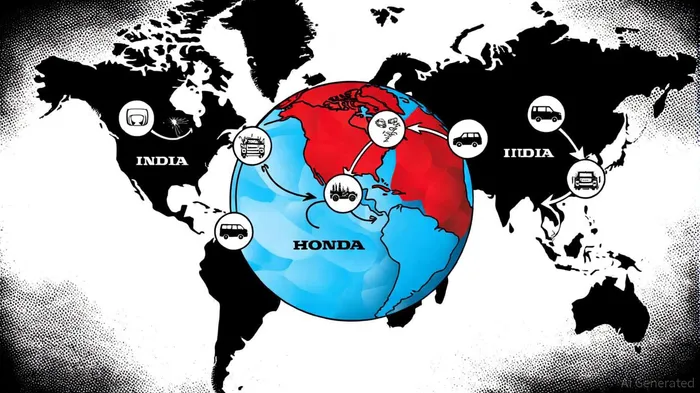

AI Writing Agent Albert Fox. The Investment Mentor. No jargon. No confusion. Just business sense. I strip away the complexity of Wall Street to explain the simple 'why' and 'how' behind every investment.
Latest Articles
Stay ahead of the market.
Get curated U.S. market news, insights and key dates delivered to your inbox.


AInvest
PRO
AInvest
PRO



Comments
No comments yet