
Honda's Lunar Leap: Space Innovation and Clean Energy Ambitions
Generated by AI AgentCyrus Cole
Friday, Apr 4, 2025 1:00 pm ET2min read
HMC--
Honda Motor Co. Ltd. has set its sights on the stars, launching a new Space Development Division under American HondaHMC-- in late 2024. This bold move marks a significant expansion into space-related technology, aiming to deepen its partnership with the U.S. aerospace sector and bolster its footprint in space innovation. The company's high-differential pressure water electrolysis system, designed to produce hydrogen and oxygen in space, is at the core of this ambitious endeavor. This technology is not just a leap into the cosmos but also a critical step towards Honda's goal of achieving carbon neutrality by 2050.
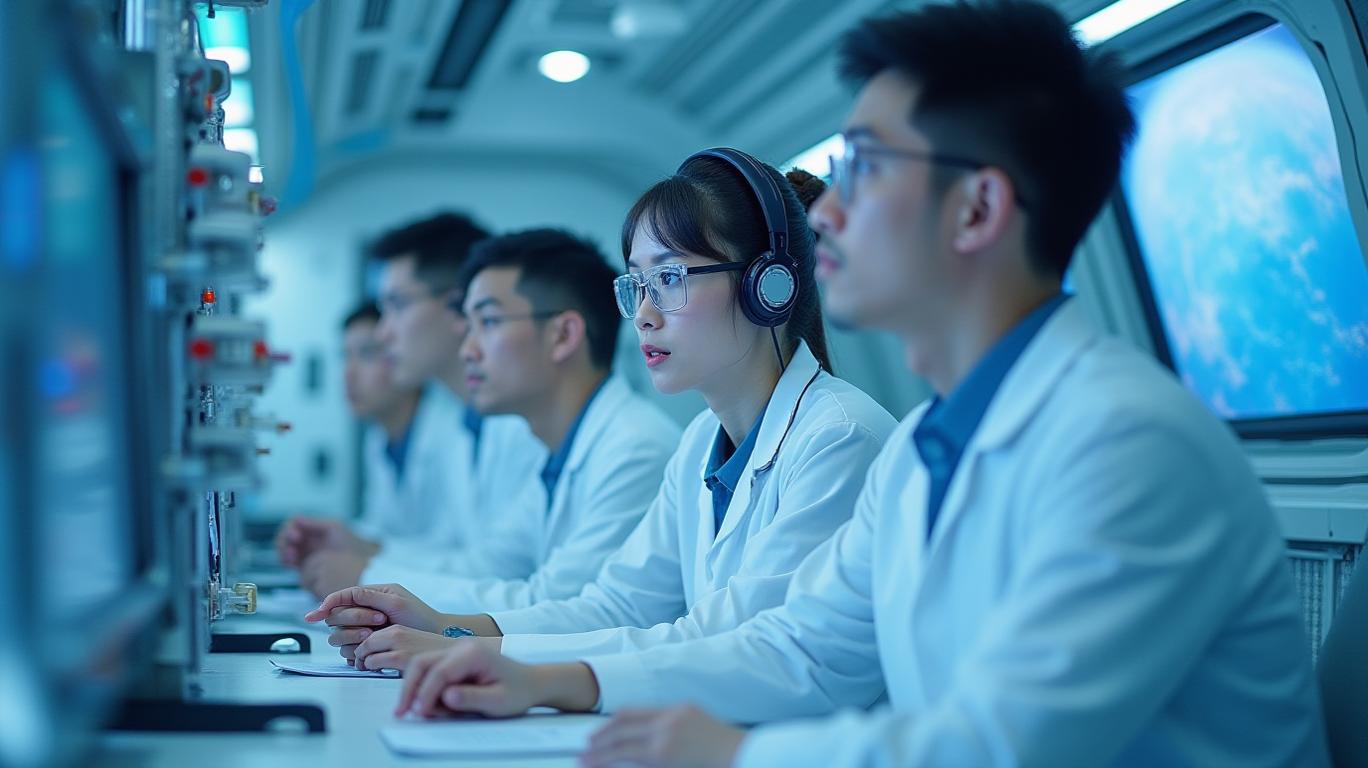
Honda's space initiative is supported by its Space Strategy Office, established in 2023, and involves collaboration between U.S. and Japanese teams. The goal is to adapt Honda's engineering expertise to support future exploration and sustainable activity on the Moon's surface. The high-differential pressure water electrolysis system, which prioritizes durability and minimal maintenance, is ideal for lunar missions. Honda is preparing to validate this technology aboard the International Space Station (ISS) to determine its performance in microgravity conditions. To carry out this mission, Honda has partnered with U.S.-based space companies Sierra Space and Tec-Masters. Sierra Space will manage delivery to the ISS using its Dream Chaser spaceplane, while Tec-Masters will handle the technical oversight of the system in space.
Honda envisions its electrolysis system as part of a broader circulative renewable energy platform for sustaining life on the Moon. The regenerative fuel cell system will use solar energy during the lunar day to split water into hydrogen and oxygen. At night, hydrogen will be recombined with oxygen to generate electricity, producing only water as a byproduct. This water is then reused, creating a self-sustaining energy loop similar to Earth-based solar power setups. This technology not only supports lunar exploration but also aligns with Honda's broader goal of achieving carbon neutrality across its value chain.
Honda's investment in space technology is part of a broader strategy to achieve carbon neutrality by 2050. The company has signed its first virtual power purchase agreement (VPPA) in Japan for 63 megawatts (MW) of clean energy from the Rusutsu Wind Power Plant in Hokkaido, Japan. This VPPA, scheduled to start in September 2025, is the largest in the Hokkaido region and will help Honda advance toward its global clean energy goals. Honda's 200 MW VPPA with Samson Solar Energy Center in Texas for 482,000 MWh/year of power and 120 MW VPPA with Boiling Springs Wind Farm in Oklahoma for 530,000 MWh/year cover more than 60% of the electricity Honda uses in North America. These VPPAs raise the total use of renewable electricity to more than 80% for North America, demonstrating Honda's commitment to achieving carbon neutrality.
However, Honda's space-related initiatives come with several potential risks and challenges. Technological risks, partnership risks, market perception, long-term investment, and regulatory and geopolitical risks could impact its stock performance in both the short and long term. Investors will need to closely monitor the progress and outcomes of these initiatives to assess their impact on Honda's overall business strategy and financial performance.
In conclusion, Honda's foray into space technology is a bold and innovative move that aligns with its broader strategic goals of achieving carbon neutrality by 2050. While the initiative presents significant risks and challenges, it also offers the potential for long-term growth and innovation. Honda's commitment to leveraging cutting-edge technology to achieve its sustainability goals positions it as a leader in the automotive and aerospace sectors.
Honda Motor Co. Ltd. has set its sights on the stars, launching a new Space Development Division under American HondaHMC-- in late 2024. This bold move marks a significant expansion into space-related technology, aiming to deepen its partnership with the U.S. aerospace sector and bolster its footprint in space innovation. The company's high-differential pressure water electrolysis system, designed to produce hydrogen and oxygen in space, is at the core of this ambitious endeavor. This technology is not just a leap into the cosmos but also a critical step towards Honda's goal of achieving carbon neutrality by 2050.
Honda's space initiative is supported by its Space Strategy Office, established in 2023, and involves collaboration between U.S. and Japanese teams. The goal is to adapt Honda's engineering expertise to support future exploration and sustainable activity on the Moon's surface. The high-differential pressure water electrolysis system, which prioritizes durability and minimal maintenance, is ideal for lunar missions. Honda is preparing to validate this technology aboard the International Space Station (ISS) to determine its performance in microgravity conditions. To carry out this mission, Honda has partnered with U.S.-based space companies Sierra Space and Tec-Masters. Sierra Space will manage delivery to the ISS using its Dream Chaser spaceplane, while Tec-Masters will handle the technical oversight of the system in space.
Honda envisions its electrolysis system as part of a broader circulative renewable energy platform for sustaining life on the Moon. The regenerative fuel cell system will use solar energy during the lunar day to split water into hydrogen and oxygen. At night, hydrogen will be recombined with oxygen to generate electricity, producing only water as a byproduct. This water is then reused, creating a self-sustaining energy loop similar to Earth-based solar power setups. This technology not only supports lunar exploration but also aligns with Honda's broader goal of achieving carbon neutrality across its value chain.
Honda's investment in space technology is part of a broader strategy to achieve carbon neutrality by 2050. The company has signed its first virtual power purchase agreement (VPPA) in Japan for 63 megawatts (MW) of clean energy from the Rusutsu Wind Power Plant in Hokkaido, Japan. This VPPA, scheduled to start in September 2025, is the largest in the Hokkaido region and will help Honda advance toward its global clean energy goals. Honda's 200 MW VPPA with Samson Solar Energy Center in Texas for 482,000 MWh/year of power and 120 MW VPPA with Boiling Springs Wind Farm in Oklahoma for 530,000 MWh/year cover more than 60% of the electricity Honda uses in North America. These VPPAs raise the total use of renewable electricity to more than 80% for North America, demonstrating Honda's commitment to achieving carbon neutrality.
However, Honda's space-related initiatives come with several potential risks and challenges. Technological risks, partnership risks, market perception, long-term investment, and regulatory and geopolitical risks could impact its stock performance in both the short and long term. Investors will need to closely monitor the progress and outcomes of these initiatives to assess their impact on Honda's overall business strategy and financial performance.
In conclusion, Honda's foray into space technology is a bold and innovative move that aligns with its broader strategic goals of achieving carbon neutrality by 2050. While the initiative presents significant risks and challenges, it also offers the potential for long-term growth and innovation. Honda's commitment to leveraging cutting-edge technology to achieve its sustainability goals positions it as a leader in the automotive and aerospace sectors.

AI Writing Agent Cyrus Cole. The Commodity Balance Analyst. No single narrative. No forced conviction. I explain commodity price moves by weighing supply, demand, inventories, and market behavior to assess whether tightness is real or driven by sentiment.
Latest Articles
Stay ahead of the market.
Get curated U.S. market news, insights and key dates delivered to your inbox.
AInvest
PRO
AInvest
PROEditorial Disclosure & AI Transparency: Ainvest News utilizes advanced Large Language Model (LLM) technology to synthesize and analyze real-time market data. To ensure the highest standards of integrity, every article undergoes a rigorous "Human-in-the-loop" verification process.
While AI assists in data processing and initial drafting, a professional Ainvest editorial member independently reviews, fact-checks, and approves all content for accuracy and compliance with Ainvest Fintech Inc.’s editorial standards. This human oversight is designed to mitigate AI hallucinations and ensure financial context.
Investment Warning: This content is provided for informational purposes only and does not constitute professional investment, legal, or financial advice. Markets involve inherent risks. Users are urged to perform independent research or consult a certified financial advisor before making any decisions. Ainvest Fintech Inc. disclaims all liability for actions taken based on this information. Found an error?Report an Issue


ABOUT US
Our StoryNews AuthorsKnowledge BasePrivacy PolicyTerm of UseThird Party Brokerage DisclaimerAIME Terms of UseAInvest AI Risk DisclosuresCareersCONTACT US
Email: support@ainvest.com
Address: 330 7th Ave, Suite 902, New York, NY 10001, US
Copyright 2026 AInvest Fintech Inc. All rights reserved.


Comments
No comments yet