
Honda Launches First Electric Kei Car in Japan: A Step Towards Sustainable Mobility
ByAinvest
Thursday, Sep 11, 2025 3:50 am ET2min read
HMC--
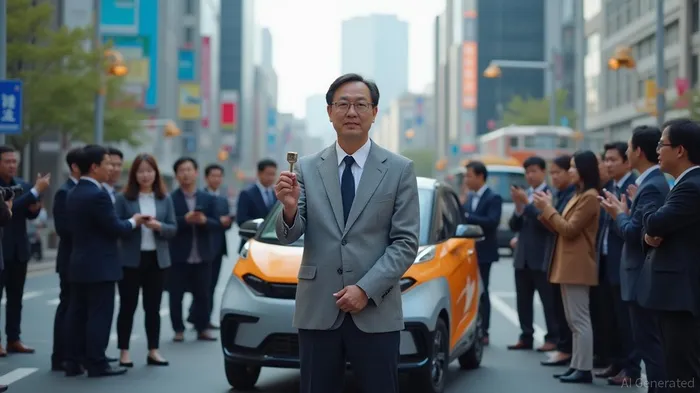
The N-ONE e: will be available for ¥2.7 million ($18,300) starting from September 12, 2025. It boasts a range of 295 kilometers (183 miles) on a single charge, outperforming Nissan Motor Co.'s Sakura, the current market leader in the EV kei car segment [1]. This initiative underscores Honda's strategy to leverage familiar vehicle types to promote electric vehicles (EVs) in Japan, where EV adoption remains relatively low, with projections indicating that EVs will account for just 3.4% of new vehicle sales in 2025 [1].
Honda's foray into kei EVs is part of its broader strategy to expand its electric vehicle offerings and reduce its carbon footprint. The company aims to electrify its entire lineup by the mid-2020s, positioning itself as a key player in the global EV market. This launch coincides with similar efforts by other automakers, including Suzuki Motor Corp., Toyota Motor Corp., and China's BYD Co., which plans to introduce a battery-powered kei car in Japan next year [1].
In addition to the N-ONE e:, Honda is also involved in a strategic acquisition that could further bolster its position in the automotive parts market. The company's subsidiary, Yutaka Giken, is the target of a proposed acquisition by Samvardhana Motherson International Limited (SAMIL) through its wholly-owned subsidiary, Motherson Global Investments BV (MGI BV). This deal, valued at around USD184 million, would see MGI BV acquire an 81% stake in Yutaka Giken, a Tokyo Stock Exchange-listed subsidiary of Honda Motor [2].
The acquisition of Yutaka Giken is part of a multi-jurisdictional deal that involves nine manufacturing locations across Japan, China, the US, Thailand, Brazil, India, Indonesia, Mexico, and the Philippines. The deal is subject to merger control approvals in multiple jurisdictions and a tender offer process. This strategic move highlights Honda's commitment to expanding its global footprint and strengthening its brand in the EV market.
As Honda continues to invest in electric vehicles and strategic acquisitions, it positions itself as a leader in the transition towards cleaner transportation, both in Japan and globally. The launch of the N-ONE e: and the acquisition of Yutaka Giken are significant steps in achieving Honda's long-term goals of sustainability and market dominance.
Honda Motor Co. has launched its first electric kei car in Japan. The company operates through four business segments: motorcycle, automobile, financial services, and power products and other business. The kei car, which is a small vehicle with limited power, is part of Honda's efforts to increase its electric vehicle offerings and reduce its carbon footprint. The launch marks a significant step towards Honda's goal of electrifying its entire lineup by the mid-2020s.
Honda Motor Co. has made a significant move in the Japanese market by debuting its first electric kei car, the N-ONE e:. This new model is designed to cater to the Japanese market's preference for small, fuel-efficient vehicles, known as kei cars, which account for approximately a third of the country's automobile market [1].The N-ONE e: will be available for ¥2.7 million ($18,300) starting from September 12, 2025. It boasts a range of 295 kilometers (183 miles) on a single charge, outperforming Nissan Motor Co.'s Sakura, the current market leader in the EV kei car segment [1]. This initiative underscores Honda's strategy to leverage familiar vehicle types to promote electric vehicles (EVs) in Japan, where EV adoption remains relatively low, with projections indicating that EVs will account for just 3.4% of new vehicle sales in 2025 [1].
Honda's foray into kei EVs is part of its broader strategy to expand its electric vehicle offerings and reduce its carbon footprint. The company aims to electrify its entire lineup by the mid-2020s, positioning itself as a key player in the global EV market. This launch coincides with similar efforts by other automakers, including Suzuki Motor Corp., Toyota Motor Corp., and China's BYD Co., which plans to introduce a battery-powered kei car in Japan next year [1].
In addition to the N-ONE e:, Honda is also involved in a strategic acquisition that could further bolster its position in the automotive parts market. The company's subsidiary, Yutaka Giken, is the target of a proposed acquisition by Samvardhana Motherson International Limited (SAMIL) through its wholly-owned subsidiary, Motherson Global Investments BV (MGI BV). This deal, valued at around USD184 million, would see MGI BV acquire an 81% stake in Yutaka Giken, a Tokyo Stock Exchange-listed subsidiary of Honda Motor [2].
The acquisition of Yutaka Giken is part of a multi-jurisdictional deal that involves nine manufacturing locations across Japan, China, the US, Thailand, Brazil, India, Indonesia, Mexico, and the Philippines. The deal is subject to merger control approvals in multiple jurisdictions and a tender offer process. This strategic move highlights Honda's commitment to expanding its global footprint and strengthening its brand in the EV market.
As Honda continues to invest in electric vehicles and strategic acquisitions, it positions itself as a leader in the transition towards cleaner transportation, both in Japan and globally. The launch of the N-ONE e: and the acquisition of Yutaka Giken are significant steps in achieving Honda's long-term goals of sustainability and market dominance.
Stay ahead of the market.
Get curated U.S. market news, insights and key dates delivered to your inbox.
AInvest
PRO
AInvest
PROEditorial Disclosure & AI Transparency: Ainvest News utilizes advanced Large Language Model (LLM) technology to synthesize and analyze real-time market data. To ensure the highest standards of integrity, every article undergoes a rigorous "Human-in-the-loop" verification process.
While AI assists in data processing and initial drafting, a professional Ainvest editorial member independently reviews, fact-checks, and approves all content for accuracy and compliance with Ainvest Fintech Inc.’s editorial standards. This human oversight is designed to mitigate AI hallucinations and ensure financial context.
Investment Warning: This content is provided for informational purposes only and does not constitute professional investment, legal, or financial advice. Markets involve inherent risks. Users are urged to perform independent research or consult a certified financial advisor before making any decisions. Ainvest Fintech Inc. disclaims all liability for actions taken based on this information. Found an error?Report an Issue


ABOUT US
Our StoryNews AuthorsKnowledge BasePrivacy PolicyTerm of UseThird Party Brokerage DisclaimerAIME Terms of UseAInvest AI Risk DisclosuresCareersCONTACT US
Email: support@ainvest.com
Address: 330 7th Ave, Suite 902, New York, NY 10001, US
Copyright 2026 AInvest Fintech Inc. All rights reserved.


Comments
No comments yet