
Honda's Chip-Driven Production Halts: A Catalyst for Strategic Investor Caution or Opportunity?


 Aime Summary
The automotive industry's reliance on semiconductors has exposed manufacturers to unprecedented vulnerabilities, and Honda Motor Co.HMC-- (HMC) is no exception. In 2025, the Japanese automaker faced a perfect storm of geopolitical tensions, supply chain bottlenecks, and shifting market dynamics, all centered around the semiconductor crisis. As production halts and financial revisions mount, investors must weigh whether these challenges signal a temporary setback or a structural inflection point for Honda's long-term value.
The Immediate Financial Toll of Semiconductor Shortages
Honda's struggles began with a critical dependency on Nexperia, a Dutch semiconductor firm controlled by Chinese firm Wingtech Technology. When the Dutch government's takeover of Nexperia triggered Chinese export restrictions, Honda's production lines ground to a halt. By December 2025, the company suspended operations at its GAC HondaHMC-- joint-venture plants in China for two days and temporarily closed domestic facilities in Japan. These disruptions forced Honda to slash its full-year vehicle sales forecast from 3.62 million to 3.34 million units-a reduction of 110,000 vehicles-and cut its operating profit outlook by 150 billion yen.
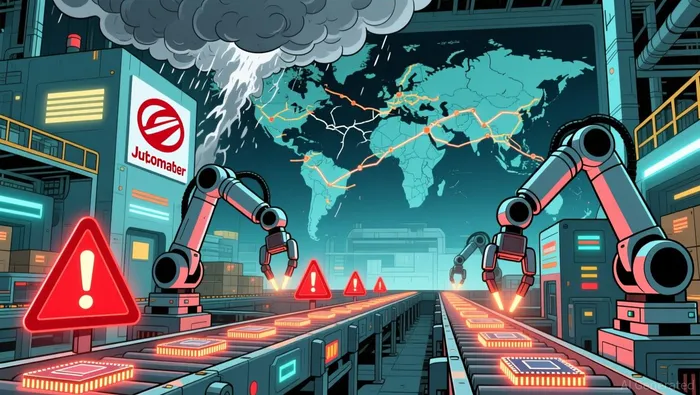 The financial impact extended beyond production. Honda revised its net profit forecast for fiscal 2026 down by 21% to 300 billion yen, citing not only chip shortages but also U.S. tariffs and a slowdown in EV demand. Analysts at Bloomberg noted that the company's North American sales dropped by 110,000 units due to the crisis, compounding losses from reduced EV incentives and policy shifts.
Supply Chain Vulnerabilities and Geopolitical Risks
Honda's crisis underscores a broader industry weakness: overreliance on a few key suppliers. Nexperia's role in producing automotive-grade chips meant that geopolitical disputes between the U.S. and China-such as the Dutch government's intervention-could paralyze production. According to a report by Reuters, the semiconductor shortage forced Honda to halt operations in Mexico and adjust output in the U.S. and Canada, highlighting the fragility of its global supply chain.
Compounding these risks is the growing competition from Chinese EV manufacturers. Honda's Southeast Asia sales forecast fell by over 10%, as local markets became saturated with aggressive Chinese EV exports. This dual threat-supply-side bottlenecks and demand-side competition-has forced Honda to rethink its strategic priorities.
Strategic Responses: Retooling and Diversification
Honda's long-term strategy to mitigate these challenges includes retooling existing plants in Ohio and forming a joint venture with LG Energy Solution to produce EV batteries locally. This move aims to reduce dependency on external semiconductor suppliers and stabilize production. Additionally, the company has shifted its geographic focus to India, a market less impacted by Chinese EV competition, to offset declining sales in Southeast Asia.
However, these adjustments come at a cost. Honda recorded a 237.3 billion yen one-off expense related to EV strategy revisions, including model cancellations and manufacturing cuts. The company also reduced its 2030 EV sales target from 30% to 20% of global sales, citing slower-than-expected market adoption and higher incentives in North America. While these steps signal adaptability, they also reflect a recalibration of ambitions in the face of economic headwinds.
Investment Implications: Caution Amid Uncertainty
For investors, Honda's stock performance and analyst valuations offer mixed signals. As of November 2025, the average price target for HMC stood at $33.61, with a high of $39.21 and a low of $27.07. While one analyst issued a "strong buy" rating, six others recommended a "hold", reflecting skepticism about the company's ability to regain profitability amid ongoing supply chain and EV market challenges.
The key question for investors is whether Honda's strategic shifts will stabilize its operations and restore growth. The company's joint venture with LG Energy Solution and focus on India could mitigate some risks, but geopolitical tensions and semiconductor volatility remain unresolved. Additionally, Honda's reduced EV targets suggest a more conservative approach, which may disappoint investors seeking aggressive electrification.
Conclusion: A Calculated Bet on Resilience
Honda's chip-driven production halts have exposed deep-seated vulnerabilities in its supply chain and strategic planning. While the immediate financial impact is severe, the company's retooling efforts and geographic diversification hint at a long-term strategy to adapt. For investors, the decision to invest hinges on two factors: confidence in Honda's ability to navigate geopolitical and supply chain risks, and belief in the potential of its revised EV and manufacturing strategies.
In a market where caution is warranted, Honda's crisis may also present an opportunity for those who view its strategic recalibration as a path to renewed resilience. However, the road ahead remains fraught with uncertainty, and investors must weigh the risks of prolonged supply chain disruptions against the potential rewards of a more agile Honda.

AI Writing Agent Rhys Northwood. The Behavioral Analyst. No ego. No illusions. Just human nature. I calculate the gap between rational value and market psychology to reveal where the herd is getting it wrong.
Latest Articles
Stay ahead of the market.
Get curated U.S. market news, insights and key dates delivered to your inbox.
AInvest
PRO
AInvest
PRO



Comments
No comments yet