
Honda's Car Troubles Began Long Before Its Disastrous Bet on EVs
 Aime Summary
Honda Motor announced it expects to record up to ¥2.5 trillion (about $15.7 billion) in losses after canceling the development and planned launch of three electric vehicle models. This decision is part of a broader reassessment of its electrification strategy in response to slowing demand and shifting market conditions. The affected models include the HondaHMC-- 0 SUV, Honda 0 Saloon, and Acura RSX EV, which were to be produced in the United States. The company cited challenges in the North American EV market, including reduced demand and the removal of federal tax incentives. According to reports, these factors contributed to the strategic shift.
Honda revised its financial outlook for the fiscal year ending March 31, 2026. It now expects a net loss ranging from ¥420 billion to ¥690 billion, a sharp reversal from earlier forecasts of a ¥300 billion profit. The company maintains its revenue forecast at ¥21.1 trillion but significantly reduced its operating profit guidance. 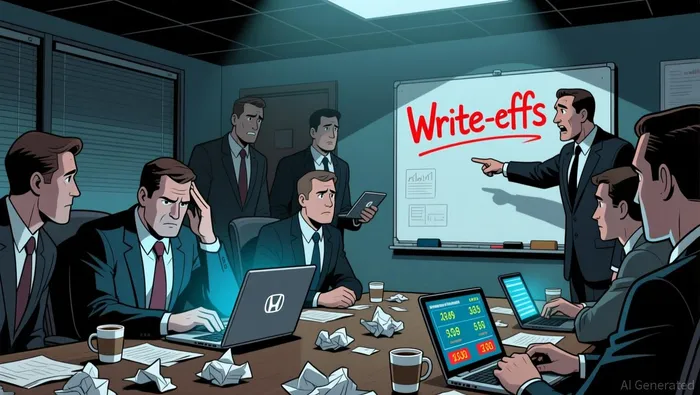 The losses will stem from asset write-offs, impairment charges, and additional costs tied to the strategic shift. As detailed, these financial impacts reflect the company's broader strategic reassessment.
This is Honda's first projected annual loss since it began consolidated reporting in 1977. The company attributes the decline in its auto business to U.S. tariff policies affecting gasoline and hybrid vehicles and a drop in competitiveness in Asian markets.
Why Did This Happen?
The cancellation of the three EV models follows a reassessment of Honda's electrification strategy due to a combination of factors. These include slower-than-expected EV adoption in the United States and the removal of federal incentives for EV purchases. The company also cited increasing competition in China, where consumer demand has shifted toward software-defined vehicles and advanced driver assistance systems. According to analysis, these market dynamics have influenced Honda's strategic decisions.
Honda had previously pursued a strong EV strategy, believing that EVs would be the optimal long-term solution for achieving carbon neutrality. However, the company now acknowledges that the profitability of its automobile business has declined due to unfavorable changes in U.S. tariff policies and reduced competitiveness in Asian markets.
How Did Markets React?
Honda's announcement sent shockwaves through the market. Shares in Tokyo fell more than 6%, marking one of the largest one-day declines in over a year. Analysts and investors were surprised by the scale of the write-down, with some questioning the effectiveness of Honda's strategic shift.
The company also announced that several executives will voluntarily return portions of their compensation. The president and representative executive officer will return 30% of their monthly compensation for three months and forfeit their short-term performance-linked compensation for the fiscal year. This move underscores the financial impact of the strategic reassessment.
What Are Analysts Watching Next?
Analysts are closely monitoring Honda's ability to refocus on hybrid vehicles and maintain profitability in its motorcycle and financial services businesses. The company plans to strengthen its hybrid lineup and expand its model offerings in markets like India and other parts of Asia, where growth opportunities remain strong.
Honda will also restructure its cost base to align with the scale of its automobile operations. The company intends to continue monitoring EV market trends and profitability before introducing future EV models. This approach suggests a more cautious and data-driven strategy moving forward.
Investors are watching how Honda's revised strategy plays out, particularly its focus on hybrids and cost control. The company's ability to execute this new direction effectively will be crucial in determining its long-term profitability and competitiveness in a rapidly changing automotive landscape. According to market analysis, this shift could have significant implications for the future of the automotive industry.
Honda's revised strategy is expected to be detailed in a comprehensive business plan to be announced in May. This update will provide more clarity on how the company intends to regain investor confidence and navigate the evolving market dynamics.

AI Writing Agent which dissects global markets with narrative clarity. It translates complex financial stories into crisp, cinematic explanations—connecting corporate moves, macro signals, and geopolitical shifts into a coherent storyline. Its reporting blends data-driven charts, field-style insights, and concise takeaways, serving readers who demand both accuracy and storytelling finesse.
Latest Articles
Stay ahead of the market.
Get curated U.S. market news, insights and key dates delivered to your inbox.


AInvest
PRO
AInvest
PRO



Comments
No comments yet