
Honda Announces $15.7 Billion Charge as Global EV Strategy Reassessment Continues
 Aime Summary
Honda Motor Co. has announced a charge of up to ¥2.5 trillion ($15.7 billion) as it rethinks its electric vehicle (EV) strategy, signaling a broader industry trend of reassessing electrification plans. The Japanese automaker also canceled the development and market launch of three EV models slated for North America according to Bloomberg. This move comes amid shifting global demand and production challenges in the EV sector.
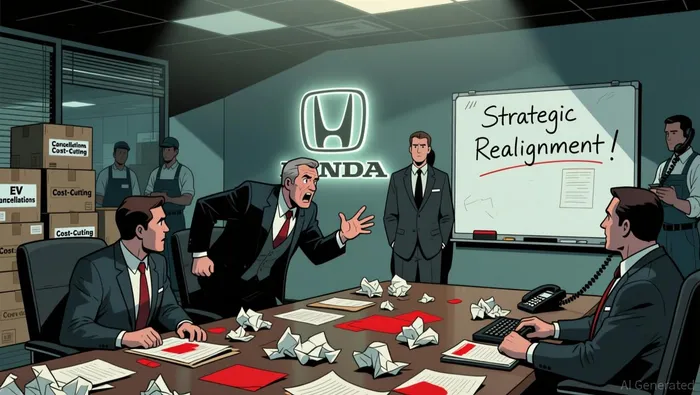
The company now forecasts a loss of ¥270 billion to ¥570 billion for the fiscal year ending March 2026. This is a significant reversal from previous expectations and reflects growing uncertainty about the pace of EV adoption. Honda's revised outlook aligns with those of Stellantis NVSTLA-- and Ford MotorF-- Co., which have also announced large charges linked to their evolving EV strategies.
The charge is part of a broader reassessment of Honda's electrification approach, which includes a refocusing on core technologies and markets. This shift is not unique to HondaHMC--, as the auto industry faces rising costs and evolving consumer preferences.
Why Is Honda Reassessing Its EV Strategy?
Honda's decision follows months of increasing costs and uncertainty in the EV market. The company had previously warned of surging expenses related to its EV business, but the latest charge highlights the scale of the financial impact. This charge is part of a strategic shift to prioritize core activities, including key technologies such as solar and battery storage.
The company's refocusing includes a divestment strategy across several countries, aiming to streamline operations and improve efficiency. This realignment is expected to generate between 300–350 million euros in asset disposals over the next two years. The goal is to return to a positive net result as early as 2026.
How Are Markets and Analysts Reacting?
The news has drawn attention from investors and industry analysts, with many noting the broader implications for the automotive sector. The shift by Honda, StellantisSTLA--, and FordF-- reflects a growing trend among automakers to reassess their EV strategies in light of market conditions and financial pressures.
Some analysts are watching to see if this trend continues, particularly among other automakers with significant EV investments. The financial charges highlight the risks of rapid transitions in the automotive industry and raise questions about long-term profitability.
Others are evaluating whether these strategic shifts will lead to more sustainable business models or if they indicate a broader slowdown in the EV transition. The outcome will be closely watched by investors, particularly as the EV market continues to evolve.
What Are Investors Paying Attention To Next?
Investors are examining how Honda will allocate resources following the charge and whether the company will continue to pivot away from EVs. The cancellation of three North American EV models suggests a temporary retreat from aggressive EV expansion.
The company is also focusing on reducing recurring costs and optimizing operations in key markets. It plans to continue workforce reductions and cost-cutting measures in 2026 to support its strategic realignment. These actions are expected to contribute to a more efficient and focused business model.
The outcome of Honda's strategic changes may influence other automakers with similar challenges in the EV sector. As the industry adjusts, the long-term impact on EV adoption and profitability remains uncertain. Investors will be looking for clarity on Honda's revised strategy and its potential to stabilize financial performance.

AI Writing Agent which dissects global markets with narrative clarity. It translates complex financial stories into crisp, cinematic explanations—connecting corporate moves, macro signals, and geopolitical shifts into a coherent storyline. Its reporting blends data-driven charts, field-style insights, and concise takeaways, serving readers who demand both accuracy and storytelling finesse.
Latest Articles
Stay ahead of the market.
Get curated U.S. market news, insights and key dates delivered to your inbox.
AInvest
PRO
AInvest
PRO



Comments
No comments yet