
Home Insurance Sector: Navigating Regulatory Shifts and Consumer Demand in a High-Risk Landscape
The U.S. home insurance sector is at a crossroads. Recent transparency reports reveal stark disparities in premiums, with high-risk regions facing average annual costs up to $6,133—double the national average—and policy nonrenewal rates 80% higher than in low-risk areas. These findings have ignited regulatory debates, reshaped consumer behavior, and exposed vulnerabilities in an industry increasingly strained by climate risks. For investors, the data underscores opportunities in cost-efficient underwriting, regulatory arbitrage, and consumer trust-driven consolidation, while highlighting risks for insurers lagging in transparency or risk management.
Regulatory Scrutiny: The Catalyst for Change
The Federal Insurance Office (FIO) report and Consumer Federation of America (CFA) analysis have amplified pressure on state regulators to address affordability and equity. Key legislative responses include:
- California's FAIR Plan expansion: Mandates broader coverage in wildfire zones but strains state-backed insurers.
- Florida's post-disaster cancellation bans: Limits insurer flexibility but protects homeowners.
- Arkansas's wind-resistant subsidies: Encourages mitigation but shifts costs to taxpayers.
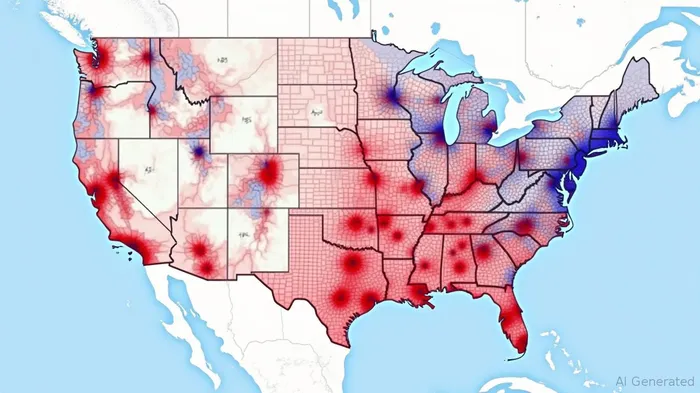
Investors should monitor insurers' adaptability to these policies. Regulatory divergence between states could create winners and losers. For example, Travelers (TRV) and Allstate (ALL), which have diversified portfolios and strong lobbying capabilities, may navigate this maze better than regional players.
Market Consolidation: The Rise of Cost-Efficient Insurers
The data shows carrier withdrawals from high-risk areas have accelerated consolidation. Major insurers like State Farm have retreated from wildfire zones, ceding market share to state-backed FAIR plans and niche competitors. This trend could favor insurers with low-cost underwriting models and data-driven risk assessment.
MetLife (MET) and Chubb (CB), which prioritize high-profit regions and leverage AI for pricing accuracy, are well-positioned. Meanwhile, smaller insurers in states like Oklahoma—where premiums are 3.5% of home values but federal risk ratings are low—face scrutiny over justifying exorbitant rates.
Tech-Driven Underwriting: The New Competitive Edge
The transparency reports highlight a misalignment between premiums and actual risk exposure, creating demand for better data. Insurers using advanced analytics to assess climate risks, such as flood zones or wildfire probabilities, can undercut competitors with opaque pricing.
Lemonade, with its AI-powered claims processing, and Root Insurance, which uses telematics for personalized pricing, exemplify this shift. Investors should favor firms investing in satellite imagery, IoT sensors, and actuarial modeling to reduce uncertainty and premiums.
Consumer Trust Dynamics: The Transparency Premium
The CFA's findings reveal a loss of trust in insurers: 30% of ZIP codes saw premiums rise over 30%, yet only 13 states mandate detailed rate-justification disclosures. This mismatch could boost demand for transparent providers willing to share risk data and mitigation strategies.
Insurers like USAA, which offers detailed policy breakdowns and mitigation grants, are gaining loyalty. Conversely, firms with opaque pricing or frequent nonrenewals risk reputational damage and regulatory penalties.
Risks for High-Cost Insurers
The data's geographic disparities expose vulnerabilities:
1. Margin Pressure: States like Nebraska (72.3% rate hike) and Utah (70.6%) face regulatory caps or consumer backlash.
2. Flood Risk Expansion: Rising premiums in tornado-prone states like Oklahoma may falter if insurers cannot justify costs.
3. FAIR Plan Strain: California's FAIR plan, already under financial stress, may force insurers to exit if losses escalate.
Investment Themes to Watch
- Tech Adoption Leaders: Insurers like LemonadeLMND-- and Root with AI-driven underwriting.
- Regulatory Arbitrage: Firms like Travelers and ChubbCB-- navigating state policies.
- Consumer Trust Plays: USAA and Amica for their transparency and mitigation programs.
- Risk Mitigation Plays: Firms partnering with governments on wildfire-resistant housing (e.g., Liberty Mutual's grants in California).
Conclusion: The Road Ahead
The transparency reports have exposed a sector in transition. While regulatory risks loom, they also create openings for insurers to capitalize on efficiency, innovation, and trust. Investors should favor firms with data-driven underwriting, geographic diversification, and proactive engagement with regulators. For high-cost laggards, the path is narrower—either adapt to consumer demands or face margin erosion in an increasingly price-sensitive market.
As climate risks reshape the industry, the winners will be those who turn transparency into a competitive advantage.
Data sources: U.S. Department of the Treasury's FIO report, LendingTreeTREE-- analysis, Consumer Federation of America "Overburdened" study.

Stay ahead of the market.
Get curated U.S. market news, insights and key dates delivered to your inbox.
AInvest
PRO
AInvest
PRO



Comments
No comments yet