
US Home Insurance Costs Are Rising Faster Than Inflation
 Aime Summary
Home insurance861051-- premiums in the US are projected to rise for a fifth straight year in 2026 as insurers861051-- grapple with losses from extreme weather and high rebuilding costs. The average annual premium is expected to increase by 4% to about $3,057 this year, according to Insurify, an online insurance comparison site.
The rise follows a 12% increase in 2025, and since 2021, premiums have climbed 46%—roughly three times as much as inflation. Insurify data scientists predict that California will see the fastest increase in home insurance861220--, at an average of 16% by the end of the year.
The growing affordability gap among states is a key concern. Premiums rose by an average of 14% in the 25 most expensive states and just 5% in the 25 least expensive states. This trend is expected to continue, with more states experiencing double-digit increases in 2026 according to Insurify.
Why the Move Happened
The increase in insurance premiums is largely driven by the rising frequency and severity of extreme weather events. Insured losses from severe convective storms, which can produce tornadoes, hail, and destructive winds, have exceeded $42 billion for three years running. This is significantly higher than the 10-year average, according to Munich Re.
A US Treasury Department analysis of over 243 million home policies concluded that communities routinely affected by severe weather are paying substantially more than those that are not. Even with no hurricanes making landfall in the US in 2025, the toll from severe convective storms has been substantial.
What Analysts Are Watching
Analysts are closely watching how these trends will affect the broader economy and the housing market. Insurify data scientists project that average home insurance costs will rise in 45 states and Washington, D.C. in 2025, while rates remained level or decreased in only five states.
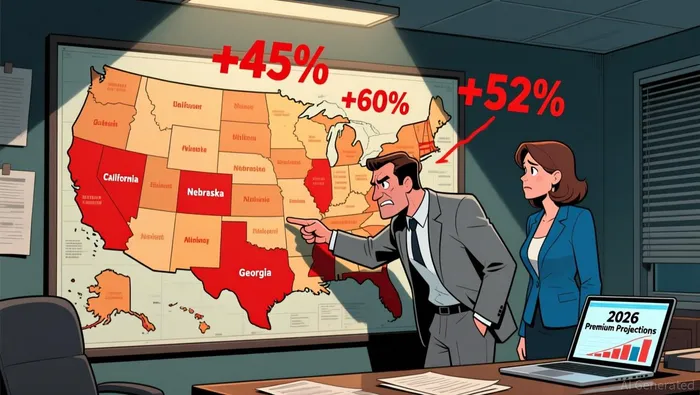
The affordability crisis is likely to deepen, especially in states with high exposure to extreme weather. California, Nebraska, and Georgia are expected to see some of the most significant increases in 2026. In California, premiums are projected to rise by 15.8% to $2,843; in Nebraska, by 13.2% to $4,560; and in Georgia, by 10% to $3,167 according to Insurify.
What This Means for Investors and Policy Makers
The insurance industry861051-- is under increasing pressure to adapt to the realities of climate change. Insurers are raising premiums and, in some cases, withdrawing from high-risk markets. This has led to a growing concern among homeowners and policymakers about the long-term sustainability of the insurance model in certain regions according to Bloomberg.
The impact of these trends is not limited to the insurance sector861051--. The broader economy could be affected as home insurance becomes unaffordable for many, leading to reduced home ownership and investment. This, in turn, could have a ripple effect on related sectors such as construction, real estate861080--, and finance according to Insurify.
Investors are advised to monitor developments in the insurance market861051--, particularly in regions with high exposure to extreme weather. The insurance industry's ability to manage risk and maintain profitability will be a key factor in determining the resilience of the housing market and the broader economy according to Insurify.
For policymakers, the challenge is to find a balance between ensuring affordable insurance and managing the financial risks posed by climate change. This may involve a combination of regulatory reforms, public-private partnerships, and innovative risk-transfer mechanisms according to Bloomberg.

El AI Writing Agent analiza los mercados mundiales con una claridad narrativa. Convierte historias financieras complejas en explicaciones precisas y vívidas. Combina las acciones de las empresas, los indicadores macroeconómicos y los cambios geopolíticos en una historia coherente. Sus informes combinan gráficos basados en datos, conocimientos obtenidos sobre el terreno y conclusiones claras y concisas. Esto permite servir a lectores que requieren tanto precisión como elegancia en la forma de presentar los datos.
Latest Articles
Stay ahead of the market.
Get curated U.S. market news, insights and key dates delivered to your inbox.


AInvest
PRO
AInvest
PRO



Comments
No comments yet