
At Home's Downfall: A Blueprint for Retail Recovery and Investment Opportunities
The collapse of At Home, the once-vibrant home goods retailer, marks a pivotal moment in the evolving retail landscape. Its June 2025 Chapter 11 filing, driven by tariff pressures, inflation, and shifting consumer habits, has exposed vulnerabilities in traditional brick-and-mortar models. Yet, beneath the surface of its restructuring lies a treasure trove of opportunities—from undervalued competitors poised to capture market share to discounted commercial real estate primed for strategic investment. For investors attuned to cycles of disruption and renewal, this is a moment to act.
The Retail Restructuring Cycle: A Pattern of Renewal
Retail bankruptcies are rarely isolated events. They are symptomatic of broader industry shifts, and At Home's plight mirrors a trend that has already claimed giants like Party City, JCPenney, and Bed Bath & Beyond. Historically, such collapses have preceded rebounds in sectors that adapt swiftly. Consider the 2008 crisis: retailers like Staples and Best Buy emerged stronger by pivoting to omnichannel strategies, while Home Depot capitalized on post-recession construction booms.
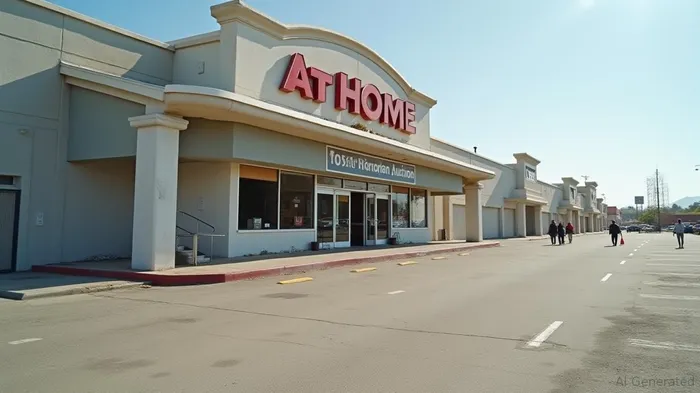
Today, the cycle continues. At Home's liquidation of 26 underperforming stores (spanning New York, California, Florida, and Texas) creates two distinct opportunities: retail consolidation and real estate arbitrage.
Winners in the Retail Shakeout: E-commerce Powerhouses and Experience-Driven Brands
The retailers best positioned to capitalize on At Home's retreat are those already thriving in the post-pandemic era. Wayfair (W) stands out as a clear beneficiary. Its stock has surged 40% since 2023, leveraging its tech-driven platform to offer personalized design tools and same-day delivery—a stark contrast to At Home's outdated store layouts.
Similarly, IKEA is redefining physical retail by transforming stores into experiential hubs, offering workshops and immersive design spaces. Its ability to blend e-commerce convenience with in-person engagement positions it to capture a premium segment of the market. Meanwhile, West Elm, owned by Target, is another contender, having already expanded its online presence and sustainability-focused collections.
Undervalued plays:
- RH (Restoration Hardware): A luxury home goods brand with strong margins and a niche market position.
- Lowe's (LOW): Leveraging its DIY customer base and e-commerce integration to expand beyond traditional home improvement.
Real Estate Plays: Discounted Assets in Prime Locations
The closure of 26 At Home stores—primarily in high-traffic suburban and urban areas—creates a rare opportunity for real estate investors. These properties, often in desirable markets like California and Texas, are now available at distressed pricing.
Historically, commercial real estate following retail bankruptcies has rebounded sharply. For example, after Toys “R” Us's 2018 liquidation, investors who acquired its prime locations saw 25%+ returns within three years as the spaces were repurposed for fitness centers, self-storage, and modern retailers.
Strategic moves for investors:
1. Target anchor stores: Focus on At Home locations in high-traffic malls or standalone sites with strong foot traffic. These are prime for repurposing as mixed-use developments.
2. Partner with developers: Collaborate with firms like Prologis or Tishman Speyer to reposition properties for emerging sectors (e.g., last-mile logistics, micro-warehouses).
3. Look for secondary markets: Smaller cities with growing populations (e.g., Austin, Nashville) may offer higher upside as these areas attract tech and remote workers.
Cyclical Rebound: Why Now Is the Time to Bet on Home Decor
The home decor sector is cyclical, and At Home's struggles are not unique. Tariff volatility and inflation have created a short-term headwind, but these pressures are easing. The Biden administration's recent rollback of Chinese tariffs to 30% from 145%—a move At Home's bankruptcy filing may have accelerated—reduces cost burdens for importers.
Historical data shows that home decor spending typically rebounds strongly after recessions. Post-2008, IKEA's U.S. sales grew at a 6% annual clip for a decade. Today's environment, with younger generations prioritizing “home as a lifestyle statement,” suggests a similar trajectory.
Risks and Considerations
- Execution risk: Retailers like Wayfair face competition from Amazon's growing home division.
- Real estate timing: Overbuilding in certain markets (e.g., over-saturated malls) could delay returns.
- Debt overhang: At Home's restructuring may take longer than expected, delaying asset sales.
Conclusion: Positioning for the Next Cycle
At Home's bankruptcy is not an endpoint but a catalyst. Investors should:
1. Buy into e-commerce winners: Wayfair, IKEA, and RH offer scalable growth in a consolidating sector.
2. Acquire discounted real estate: Target prime locations with repurposing potential.
3. Monitor macro trends: Track tariff policies and housing market recovery signs (e.g., rising permit approvals).
The retail landscape is in flux, but history shows that disruption breeds opportunity. For those willing to act decisively, the ashes of At Home's bankruptcy could fuel the next wave of growth.
John Gapper's analysis combines decades of experience covering global business cycles with a focus on identifying inflection points in industries undergoing transformation.

Stay ahead of the market.
Get curated U.S. market news, insights and key dates delivered to your inbox.


AInvest
PRO
AInvest
PRO



Comments
No comments yet