
Home Depot's Strategic M&A: Capturing Market Share and Building Loyalty in the Home Improvement Sector


 Aime Summary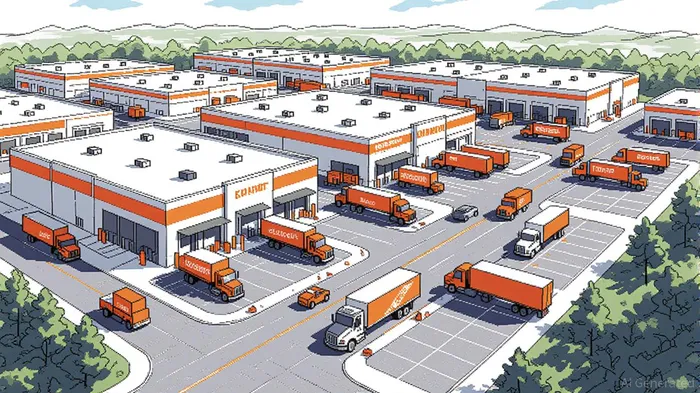
The home improvement sector has long been a battleground for market dominance, with Home DepotHD-- and Lowe's vying for supremacy. However, as consumer spending shifts and DIY trends evolve, the industry faces a critical challenge: how to retain market share in a landscape where traditional retail models are losing ground. . in September 2025 offers a compelling case study in how strategic mergers and acquisitions (M&A) can reshape the sector. .
The Strategic Logic of the GMS Acquisition
GMS, a leading distributor of specialty building products like drywall, ceilings, and steel framing, operates over 300 distribution centers and nearly 100 tool rental centers across North America. . , enabling faster delivery times and expanded product availability for professional contractors. This integration addresses a key pain point for Pros: the need for reliable, just-in-time supply chains.
The acquisition's strategic value lies in its ability to bridge the gap between big-box retail and specialized distribution. While Home Depot's DIY-focused retail stores remain a cornerstone of its business, . By acquiring GMS, Home Depot gains access to GMS's established relationships with contractors, many of whom previously relied on independent distributors. This move not only secures a larger share of the Pro market but also insulates the company from macroeconomic headwinds like rising interest rates, which have dampened consumer spending.
Capturing Lost Market Share Through Operational Synergy
. , competitors like Lowe's and Menard have gained ground. The GMS acquisition is a calculated response to this competitive pressure. By integrating GMS's infrastructure with SRS's existing network, .
This operational efficiency is critical in an industry where logistics costs can erode profitability. GMS's Canadian cold-chain infrastructure, for instance, complements Home Depot's U.S. operations, enabling cross-border seasonal product advantages. The combined logistics network also reduces delivery times, a key differentiator in a market where contractors demand speed and reliability. Analysts at note that these synergiesTAOX-- position Home Depot to outperform industry trends, even as broader economic conditions remain uncertain.
Building Long-Term Customer Loyalty
Customer loyalty in the Pro segment hinges on trust and service quality. GMS's reputation for personalized service and just-in-time delivery has long been a draw for contractors. By integrating GMS into its ecosystem, Home Depot is enhancing its ability to meet these expectations. The company's investment in AI-driven logistics and digital ordering systems further streamlines the customer experience, reducing friction in the procurement process.
Home Depot's selective pricing strategy also plays a role in retaining Pro customers. While the company avoids broad-based price hikes, it implements targeted adjustments in categories where the market can absorb them—such as imported goods facing tariffs. This approach preserves gross margins without alienating customers, a delicate balance in a sector where price sensitivity is high. Additionally, Home Depot's trade credit programs and expanded fulfillment options (e.g., next-day delivery) deepen contractor relationships, fostering long-term loyalty.
Investment Implications and Risks
For investors, Home Depot's M&A strategy represents a high-conviction bet on the Pro market's growth potential. , with the Pro segment accounting for a third of that. , supported by cross-selling opportunities and operational efficiencies.
However, risks remain. Regulatory scrutiny of large-scale M&A in the home improvement sector could delay future deals, and integration challenges—such as aligning GMS's regional brands with Home Depot's national strategy—may test management's execution. Additionally, while the Pro segment offers stability, it is not immune to economic downturns. A slowdown in construction activity could dampen demand for specialty materials.
Conclusion: A Model for Sector Resilience
Home Depot's acquisition of GMS underscores the power of strategic M&A in reshaping the home improvement sector. By targeting the Pro market, the company is not only capturing lost retail market share but also building a moat of customer loyalty through enhanced service and operational excellence. For investors, this move signals a commitment to long-term growth in a sector where differentiation is key. As the housing market ages and demand for remodeling persists, Home Depot's ability to serve both DIY enthusiasts and professional contractors positions it as a leader in an evolving industry.

Delivering real-time insights and analysis on emerging financial trends and market movements.
Latest Articles
Stay ahead of the market.
Get curated U.S. market news, insights and key dates delivered to your inbox.
AInvest
PRO
AInvest
PRO



Comments
No comments yet