
Home Depot's Store Closure Strategy: A Masterclass in Retail Reinvention
The retail sector is in turmoil. Over 7,300 U.S. stores closed in 2024—marking the highest annual closure rate since the pandemic—and analysts predict 15,000 more will shut in 2025. Yet amid this carnage, Home Depot (HD) is thriving. While rivals like JCPenney, Rite Aid, and Dollar Tree slash costs by shuttering stores, Home DepotHD-- is executing a bold strategy: closing select underperforming stores while reinvesting in high-traffic locations and e-commerce infrastructure. This move isn't just about survival—it's a calculated play to dominate the future of retail. Here's why investors should pay attention.
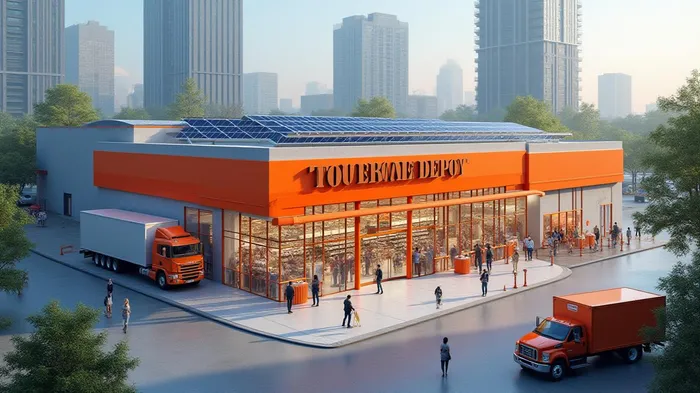
The Retail Apocalypse? Not for Home Depot.
While competitors like Lowe's have slashed 406 stores since 2017 to cut costs, Home Depot has taken a different path. Since 2023, it has opened 20+ new stores—including 13 in 2025—while strategically closing underperforming locations to focus on high-traffic areas. This isn't a retreat; it's a retail optimization play. By exiting low-margin markets and doubling down on prime locations, Home Depot is reducing operational inefficiencies while boosting its ability to serve both retail shoppers and its booming professional (pro) customer base.
E-Commerce Integration: The Hidden Profit Engine
The closures are also fueling Home Depot's e-commerce renaissance. Each closed store frees capital to invest in digital tools like AI-driven inventory management, same-day delivery hubs, and job-site delivery services for pros. For example:
- E-commerce sales grew 9% in Q4 2024, driven by personalized pro accounts and bulk-ordering tools.
- Stores now serve as logistics hubs, with 2,350 locations nationwide enabling 98% of Americans to reach a Home Depot within 10 miles—a critical edge over Amazon's slower home goods delivery.
This hybrid model—physical stores as fulfillment centers and tech platforms—is why analysts project a 33.4% gross margin in 2025, despite inflationary pressures.
Why Closing Stores Boosts Profitability
Closing underperforming stores isn't just about cost-cutting; it's about asset reallocation. Consider the math:
- A single store generates $10.1 million in annual online sales by serving as a regional e-commerce hub.
- Closing a store with a 2% profit margin and reallocating funds to a high-traffic location or a logistics center can boost returns to 8% or higher.
Meanwhile, competitors like Lowe's, which slashed stores to cut costs, have seen comparable sales fall 0.3% in Q1 2025—proving that indiscriminate closures hurt long-term growth.
The Long Game: Reinventing Retail Real Estate
Home Depot's strategy isn't just about today's profits—it's about owning the future of retail. By:
1. Acquiring prime urban locations: Expanding in cities like New York and Seattle to tap into high-income homeowners.
2. Building automated warehouses: Replacing 10% of underperforming suburban stores with robotic fulfillment centers by 2026, cutting delivery times to same-day in 90% of markets.
3. Leveraging data analytics: Using AI to predict demand and stock stores optimally, reducing markdowns and waste.
These moves are already paying off. Despite a 0.3% dip in Q1 2025 sales, Home Depot's adjusted EPS guidance for 2025 remains 2% higher than 2024, with $39.9 billion in FY2025 sales projected.
Why Investors Should Act Now
The market is underestimating Home Depot's reinvention. While its stock dipped 8% after initial closure announcements, it rebounded 12% as investors recognized the long-term value. Here's why this is a buy:
- Undervalued compared to peers: Home Depot trades at a 14.5 P/E ratio, below Lowe's (16.8) and Amazon (35.2).
- Moat-widening investments: Its omnichannel model and logistics network create barriers to entry for e-commerce giants like Amazon, which can't replicate its local inventory advantage.
- Sustainable growth: With 470,000 employees and 2,350 stores, Home Depot's scale ensures it can out-invest smaller rivals while maintaining profitability.
Final Call: Buy Home Depot Before the Rally
Home Depot's store closure strategy isn't a retreat—it's a strategic pivot to dominate the $500 billion home improvement market. By optimizing its real estate portfolio and doubling down on e-commerce, it's positioning itself to thrive as retail's “click-and-mortar” future unfolds.
Investors who act now can capitalize on a stock that's primed to outperform in 2025 and beyond. This is a buy—before the market catches up.
For institutional investors: Consider pairing a long position in HD with a short on LOW to exploit the divergence in strategic execution.

Stay ahead of the market.
Get curated U.S. market news, insights and key dates delivered to your inbox.




Comments
No comments yet