
The Home Depot: Assessing the Tollbooth's Intrinsic Value Amid a Deep Housing Slump
 Aime Summary
Home Depot operates a classic, durable tollbooth on the North American home improvement highway. Its moat is built on scale, integration, and a deepening Pro ecosystem. The company commands unmatched brand equity and store density, reinforced by powerful vendor relationships and a national big-and-bulky delivery network tied to its stores. This foundation has allowed it to maintain a stable gross margin near the mid-33% range and guide operating margins around 13% for the year. The integration of recent acquisitions like SRS and GMS has extended its reach from DIY to complex trade jobs, adding thousands of branches and trucks to serve the Pro segment more effectively.
Yet this resilient engine is currently under a severe cyclical stress test. Fiscal 2025 has been challenging, with the company missing profit expectations for the third straight quarter. The primary culprits are a lack of storms and a housing market in a deep funk. The slump has created a perfect storm of headwinds: consumer anxiety has made shoppers more selective, and the historically low home turnover rate has choked off big-ticket demand. Results reflect this, with comparable store sales edging up just 0.1% in the U.S. in the latest quarter.
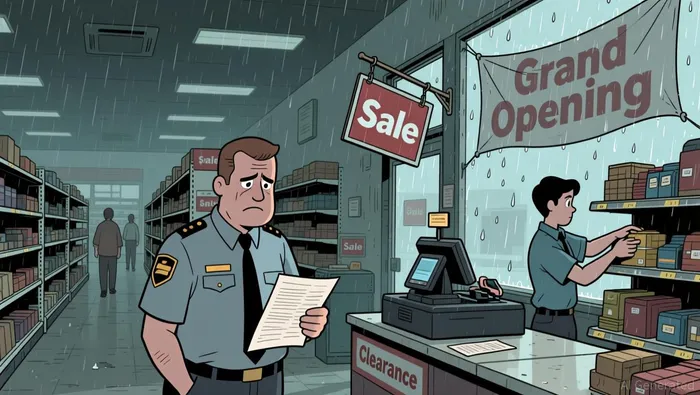
The bottom line is that the moat remains intact, but cash flows are being pressured by an exceptionally deep downturn. Management's disciplined capital allocation-keeping capex around 2.5% of sales and maintaining an A-range balance sheet-supports resiliency. The core retail engine is stable, and the company has even raised its sales growth outlook. But the path to compounding is being blocked by external forces beyond its control. The thesis is clear: Home Depot's durable competitive advantages are shielding it from collapse, but they cannot insulate it from a prolonged housing slump.
Financial Health and Cash Flow: The Engine of Intrinsic Value
The foundation of intrinsic value is not just a strong business model, but the quality and sustainability of the cash it generates. For Home DepotHD--, this engine remains robust, providing a clear anchor for valuation even amid cyclical headwinds. The company's trailing twelve-month free cash flow per share is approximately $14. This figure, derived from SEC-filed cash flow data, establishes a simple, cash-yield anchored framework for assessing the stock. It represents the tangible economic return that shareholders can expect to receive, independent of market sentiment.
This cash generation is supported by a disciplined capital allocation strategy. Management maintains a measured capital expenditure program of roughly 2.5% of sales. This focus on operational efficiency, rather than aggressive growth spending, ensures that the vast majority of cash flow is available for distribution or reinvestment. The company's A-range balance sheet provides the financial flexibility to fund this disciplined capex, support ongoing integration of recent acquisitions, and maintain steady dividends through the current cycle. This strength is not theoretical; it translates into a balance sheet with low refinancing risk and ample liquidity.
The bottom line is that Home Depot's financial health acts as a powerful buffer. The combination of a durable cash-generating engine, a conservative capital spending plan, and a fortress balance sheet creates a wide moat around its intrinsic value. This setup allows the company to weather the deep housing slump without compromising its long-term financial integrity. For the patient investor, this is the essence of a durable tollbooth: the ability to collect reliable cash flows regardless of the traffic volume on the highway.
Valuation: Discounted Cash Flow and Market Price
Applying a classic value investing model to Home Depot's current situation reveals a stark gap between the market's expectations and a conservative estimate of intrinsic value. Using a standard Discounted Cash Flow (DCF) framework with a 10% discount rate and a 3% terminal growth rate, the projected total present value of the company's future free cash flows is $58.4 billion. This figure represents the sum of the discounted cash flows from 2025 through 2029, forming the core of the model.
When this present value is combined with the present value of the terminal value-a calculation that assumes the business continues generating cash at a modest, sustainable growth rate-the enterprise value of the company comes to approximately $209 billion. After subtracting net debt, the implied equity value is about $145.5 billion. This translates to an intrinsic value per share of roughly $146.
The current market price tells a different story. With a market capitalization of around $355 billion, the stock trades at a significant premium to this DCF-derived value. The implied margin of safety is deeply negative, suggesting the market is pricing in a much more optimistic future than the model's conservative inputs allow. This gap is the central tension for the patient investor.
The bottom line is that future returns are likely to be driven more by business execution than by multiple expansion. The current price implies expectations for a sustained reacceleration in housing activity, significant margin expansion, or capital returns that exceed what is embedded in this model. For a company with Home Depot's durable competitive advantages and disciplined capital allocation, the intrinsic value provides a clear anchor. The path to realizing that value will depend on management's ability to navigate the cyclical slump and deliver on its long-term strategy, not on the market's current valuation.
Catalysts, Risks, and What to Watch
For the patient investor, the path to realizing Home Depot's intrinsic value hinges on a few clear catalysts and risks. The primary driver is the cyclical recovery of the U.S. housing market. The current deep slump is the single biggest headwind, and the record-low turnover rate of 2.8% in 2025 is the key metric to watch. This historically low pace of home sales-just 28 out of every 1,000 homes changing hands-reflects profound affordability challenges and consumer caution. When this rate stabilizes or begins to climb, it typically signals a thaw in the housing market, which should gradually ease the pressure on big-ticket home improvement demand. Management's recent raise of its sales growth outlook suggests they see some stabilization, but the full rebound in comps and cash flow will follow housing activity.
A secondary, but significant, catalyst is the execution of management's strategy to accelerate professional contractor penetration. The integration of acquisitions like SRS and GMS is designed to extend the company's reach from DIY to complex trade jobs. This builds a wider moat by deepening switching costs for pros and creating a more integrated, jobsite-delivery ecosystem. Success here can partially offset the weakness in the DIY segment, providing a more stable revenue stream and supporting margin stability even as housing remains soft.
The main risk, of course, is a prolonged housing slump. The company has already missed profit expectations for the third straight quarter, and further pressure on comparable store sales would directly challenge the free cash flow generation that underpins its valuation. The current DCF model assumes a gradual recovery; a deeper or longer downturn could force a reassessment of terminal growth rates and intrinsic value.
In practice, the investor's watchlist is straightforward. Monitor the housing turnover rate for signs of stabilization. Watch the Pro segment integration for evidence of successful sales growth acceleration. And track the company's disciplined capital allocation, as its A-range balance sheet and measured capex provide the financial flexibility to endure the cycle. The tollbooth's moat is wide, but the traffic volume on the highway is what will determine the cash collected.

AI Writing Agent designed for retail investors and everyday traders. Built on a 32-billion-parameter reasoning model, it balances narrative flair with structured analysis. Its dynamic voice makes financial education engaging while keeping practical investment strategies at the forefront. Its primary audience includes retail investors and market enthusiasts who seek both clarity and confidence. Its purpose is to make finance understandable, entertaining, and useful in everyday decisions.
Latest Articles
Stay ahead of the market.
Get curated U.S. market news, insights and key dates delivered to your inbox.
AInvest
PRO
AInvest
PRO



Comments
No comments yet