
Holy Week Blues: Navigating the Hotel Industry's Volatility in 2025
The global hotel sector faces a paradox: while Japan’s hospitality market soars on the wings of its 2025 World EXPO, U.S. properties grapple with a RevPAR plunge during Holy Week. This week’s data from STRSTR-- Insights paints a stark picture of an industry where regional dynamics and calendar quirks are reshaping investment strategies—and investors must act fast to capitalize on diverging trends.
Lead: The Timing Trap
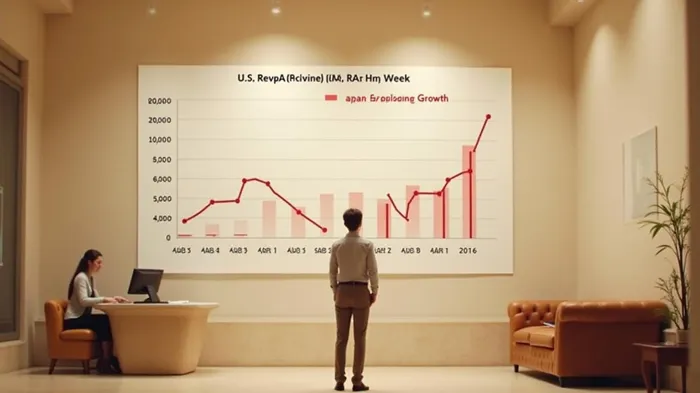
This week’s STR report revealed a 9.3% year-over-year drop in U.S. hotel RevPAR during Holy Week, driven by occupancy declines and shifting holiday schedules. Yet, across the Pacific, Japan’s hotels saw a staggering 67.9% RevPAR surge as the Osaka EXPO drew millions. This divergence underscores a critical truth: in an era of hyper-localized demand, investors must parse granular data to avoid pitfalls—and seize asymmetric opportunities.
The U.S. Downturn: Seasonal Slump or Structural Shift?
The U.S. hotel sector’s struggles this week stem from more than Easter timing. While the 5.4% drop in occupancy and 1.3% ADR decline align with STR’s attribution to Holy Week’s later calendar placement, deeper trends are at play.
- Transient Travel Rises, Group Demand Crashes: Transient bookings (often leisure travelers) increased by 11.5%, but group demand—particularly in luxury hotels—plunged 40.1%. This mirrors 2019 patterns, suggesting a lingering post-pandemic preference for individualized travel.
- Geographic Winners and Losers: Coastal markets like Myrtle Beach and Norfolk/Virginia Beach thrived, while urban centers such as Las Vegas and Washington, D.C., lagged. The report notes that 28% of U.S. students were on Spring Break this week, up from 3% in 2024—a factor inflating TSA screenings but skewing demand toward family-friendly destinations.
Expert Take: “The U.S. market is caught in a seasonal whiplash,” says CoStar analyst Emily Torres. “Investors need to prioritize coastal and leisure-driven assets while hedging against urban exposure until group bookings stabilize.”
Global Gains: The Event-Driven Rally
While the U.S. stumbles, global markets are roaring—thanks to mega-events and regional tailwinds.
- Japan’s EXPO Bonanza: Osaka’s 2025 World EXPO, which runs through September, is already transforming Japan’s hospitality sector. STR’s data shows RevPAR soaring 67.9%, with occupancy nearing 90% in peak EXPO cities. Nearby hotels in Tokyo and Kyoto are also benefiting from spillover demand.
- Mexico and France Follow: Mexico’s 50% RevPAR jump and France’s 25.9% gain highlight the power of seasonal tourism. Paris, boosted by its Marathon event, saw occupancy hit pre-pandemic levels—a sign of pent-up demand for European travel.
The Path Forward: Diversify, Diversify, Diversify
STR’s forward-looking analysis warns that U.S. performance next week (April 21–27) may improve but remain below 2024 levels due to Easter timing. However, a “cleaner calendar” post-Passover could clarify trends. Meanwhile, global investors have a clear playbook:
- Focus on Event-Driven Markets: The Osaka EXPO isn’t the only game-changer. Keep an eye on Dubai’s Expo 2023 (extending into 2024) and Brazil’s World Cup tourism boom in late 2025.
- Target Coastal U.S. Markets: Properties in beachfront destinations like Myrtle Beach and the Jersey Shore are proving resilient. Their transient-heavy demand models align with current traveler preferences.
- Avoid Urban Luxury Properties: Until group bookings recover, luxury hotels in cities like Las Vegas face headwinds. Investors should favor economy and mid-scale urban hotels instead.
Conclusion: Volatility Demands Precision
The hotel sector’s 2025 volatility isn’t just about supply and demand—it’s a tale of timing, geography, and event-driven spikes. Investors who ignore Japan’s EXPO or U.S. seasonal shifts risk missing out on 67.9% gains—or getting caught in a 9.3% slump. The data is clear: global diversification isn’t optional—it’s essential.
Actionable Takeaway: Allocate 30% of hospitality portfolios to event-driven markets (e.g., Japan, Mexico) and 50% to coastal U.S. assets. Reserve the remaining 20% for urban hotels with flexible pricing models to weather group demand fluctuations.
As the industry pivots toward hyper-localized strategies, the winners will be those who turn granular data into global bets.
Data sources: STR Weekly Insights (April 13–19, 2025), CoStar Group SEC filings.

Stay ahead of the market.
Get curated U.S. market news, insights and key dates delivered to your inbox.






Comments
No comments yet