
Hitachi Energy: Pioneering the Renewable Grid Revolution and Its Implications for Global Green Tech Leadership
The global energy transition is no longer a distant ambition—it is an urgent, market-driven imperative. As nations race to decarbonize their economies and industries grapple with the electrification of everything from data centers to transportation, the demand for resilient, renewable-ready grid infrastructure has exploded. Enter Hitachi Energy, the power systems subsidiary of Hitachi Ltd., which has positioned itself as a linchpin in this transformation. Its $6 billion strategic pivot to renewable energy infrastructure—bolstered by cutting-edge technology, global manufacturing scale, and strategic partnerships—offers investors a rare opportunity to capitalize on the twinTWIN-- forces of climate action and technological disruption. Here's why this shift matters for green tech adoption and long-term equity valuation.
Manufacturing at Scale: The Foundation of Grid Resilience
Hitachi Energy's most immediate advantage lies in its $6 billion investment blitz through 2027, which is reshaping the global grid landscape. Key highlights include:
- A $330 million expansion of its Ludvika factory in Sweden, adding 30,000 sqm of space for large transformer production and creating 2,000 jobs.
- A $250 million pledge to address the global transformer shortage, with new facilities in the U.S., India, and Europe.
- A $1.8 billion Global Technology and Innovation Center in India, employing 4,000 staff to support 40+ countries.
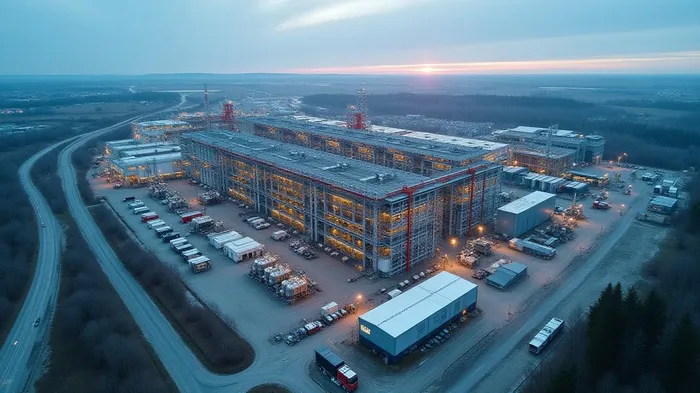
These investments directly tackle a critical bottleneck: the transformer shortage, which threatens to slow renewable energy deployment and grid modernization. With AI-driven data centers, electric vehicles, and solar/wind farms all demanding more power, Hitachi's ability to scale production ensures it will profit handsomely from surging demand. The company is also future-proofing its operations—its Swedish and Indian facilities are designed to reduce carbon emissions, aligning with its 2030 carbon neutrality goal, a key ESG differentiator.
Digital Solutions: Where AI Meets the Grid
While hardware is foundational, Hitachi's real edge lies in its cloud-based digital tools, which are redefining grid management. Consider its Hitachi Vegetation Manager, an AI-powered system that uses satellite data and weather patterns to predict outages caused by tree growth—a problem responsible for 20% of U.S. grid disruptions. By cutting maintenance costs and downtime, this technology reduces barriers to renewable integration, as solar and wind farms require reliable grid connections to be viable.
Hitachi's partnership with Amazon Web Services (AWS) further amplifies its reach. Their collaboration has slashed deployment times for grid software from 18 to 6 months, and Hitachi's solutions are now available on AWS Marketplace. This synergy positions the company to dominate the $80 billion smart grid software market, which is expected to grow at 12% annually through 2030.
Strategic Alliances: Building the Global Grid of Tomorrow
Hitachi's partnerships with utilities and governments underscore its role as a system integrator for large-scale projects. Framework agreements with RTE (France), RWE (Germany), and Marinus Link (Australia) are enabling HVDC (High-Voltage Direct Current) grids—critical for connecting remote renewable projects to urban centers. The Sa.Co.I.3 interconnector between Italy and France, for instance, relies on Hitachi's multi-terminal grid expertise, a capability few rivals can match.
These projects aren't just about profit—they're about shaping the energy systems of the future. As countries like the U.S. and EU pour trillions into grid modernization, Hitachi's early-mover advantage in digital grids and interconnections could lock in decades of recurring revenue.
Why Investors Should Act Now
The case for Hitachi Energy hinges on three unstoppable trends:
1. Climate Policy: Governments are mandating grid upgrades to meet emissions targets. The International Energy Agency warns that grid capacity must double by 2030 to keep pace with renewable energy adoption.
2. Technological Necessity: AI and cloud-based grid management aren't optional—they're essential for handling decentralized energy systems. Hitachi's tools are already outperforming legacy competitors.
3. Supply Chain Security: With geopolitical tensions disrupting critical minerals and manufacturing, Hitachi's diversified production hubs (Europe, Asia, the U.S.) mitigate risks better than regionally concentrated peers.
For investors, the valuation opportunity is clear: Hitachi's investments are creating a moat in a sector where cost overruns and delays often plague competitors. Its ESG alignment and recurring revenue streams from software-as-a-service (SaaS) models could drive steady profit growth, even as commodity prices fluctuate.
The Bottom Line: A Green Grid Leader with Legs
Hitachi Energy is not merely a supplier of transformers—it is a full-stack enabler of the renewable energy economy. Its blend of manufacturing muscle, digital innovation, and global partnerships places it at the intersection of two megatrends: decarbonization and digitization. For investors seeking to capitalize on the energy transition, this is a rare chance to back a company that's not just adapting to change, but defining it.
The question isn't whether grids will modernize—it's who will profit most from it. Hitachi's moves through 2025 suggest it will be among the first to collect.
Act now—or risk missing the next green tech revolution.

Stay ahead of the market.
Get curated U.S. market news, insights and key dates delivered to your inbox.


AInvest
PRO
AInvest
PRO



Comments
No comments yet