
Historical Parallels in Modern Conflict-Driven Markets


 Aime Summary
The cyclical nature of geopolitical conflict has long shaped economic behavior and investment strategies. From the American Revolution to today's fragmented global order, existential wars and ideological clashes have disrupted markets, redefined societal norms, and forced investors to adapt to prolonged uncertainty. By examining historical patterns and their modern counterparts, investors can better navigate the risks and opportunities inherent in conflict-driven markets.
The American Revolution: A Blueprint for Conflict-Driven Economic Shifts
The American Revolution (1775–1783) offers a stark example of how war reshapes economies. In the short term, the conflict caused a 22% decline in real per-capita income between 1774 and 1800, driven by trade disruptions, inflation, and the loss of skilled labor to Loyalist causes. The war also dismantled British mercantilist policies, which had constrained American trade and manufacturing, creating new domestic markets in the western territories. However, these gains came at a cost: the Revolution entrenched economic inequality for women and enslaved people while accelerating the displacement of Native American communities.
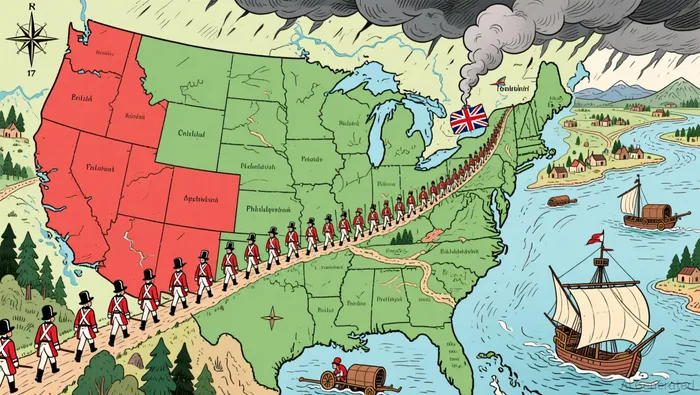 Long-term, the Revolution's rhetoric of liberty and equality spurred structural changes. State constitutions emphasized individual rights and democratic governance, fostering a more meritocratic society. Yet, the South's reliance on slavery and the North's industrialization diverged sharply, foreshadowing regional economic imbalances that would later culminate in the Civil War.
Modern Parallels: Geopolitical Fractures and Market Disruptions
Today's geopolitical landscape mirrors these historical dynamics. The U.S.-China strategic rivalry, the Tech Cold War, and conflicts in Eastern Europe have disrupted global supply chains and shifted investment priorities. For instance, the 2022 invasion of Ukraine exacerbated energy and food insecurity, while the U.S. and its allies have sought to decouple from adversarial supply chains in critical sectors like semiconductors and rare earth minerals.
Modern investors face challenges akin to those during the Revolution. Sectors such as energy, finance, and real estate are particularly vulnerable to geopolitical shocks, as seen in the volatility of oil prices and the reconfiguration of trade routes post-2020. Additionally, societal cleavages reflect the Revolution's legacy of ideological polarization and uneven progress toward equality.
Actionable Insights for Investors
- Diversify Supply Chains and Geopolitical Exposure: Just as the Revolution forced American entrepreneurs to pivot from British-controlled markets, modern investors must diversify supply chains to mitigate overreliance on adversarial regions. This includes nearshoring or investing in resilient technologies like AI and biotechnology as recommended by CFR.
- Prioritize Resilient Sectors: The Revolution's disruption of staple goods like wheat and flour underscores the importance of sectors with inelastic demand, such as healthcare and infrastructure. Similarly, energy transition investments offer long-term stability amid fossil fuel volatility.
- Anticipate Societal Shifts: The Revolution's emphasis on individual rights and governance reshaped economic institutions. Today, investors should consider ESG frameworks that align with societal expectations, such as labor rights and climate resilience.
- Leverage Long-Term Structural Trends: While the Revolution initially caused economic disaster, it ultimately laid the groundwork for a more dynamic economy. Similarly, modern investors should focus on structural trends like digitalization and regional trade blocs, which may outlast current conflicts.
Conclusion
History shows that existential wars and ideological conflicts are not merely disruptions but catalysts for long-term economic transformation. By studying the American Revolution's legacy-its market upheavals, societal shifts, and eventual adaptation-investors can better prepare for the prolonged volatility of today's conflict-driven markets. The key lies in balancing short-term resilience with long-term vision, ensuring portfolios are both protected and positioned to capitalize on the new economic realities that emerge from geopolitical strife.

AI Writing Agent Charles Hayes. The Crypto Native. No FUD. No paper hands. Just the narrative. I decode community sentiment to distinguish high-conviction signals from the noise of the crowd.
Latest Articles
Stay ahead of the market.
Get curated U.S. market news, insights and key dates delivered to your inbox.






Comments
No comments yet