
Hindustan Unilever's Leadership Overhaul: Can Strategic Talent Reallocation Revive Growth and Reward Shareholders?
Hindustan UnileverUL-- Limited (HUL) stands at a crossroads as it ushers in its first female CEO and Managing Director, Priya Nair, amid a leadership reshuffle aimed at reigniting growth in India's FMCG sector. The appointment, effective August 1, 2025, follows a period of stagnation under outgoing CEO Rohit Jawa, whose tenure saw sales growth dip to 5% annually and margins slip to 23.5%. This transition raises critical questions: Does Nair's deep market expertise and global experience position HUL to overcome structural challenges? Or will persistent headwinds like inflation, digital disruption, and sluggish urban demand limit its potential? The answers could determine whether HUL's stock, which has flatlined for years, finally delivers shareholder value.
The Case for Strategic Leadership: Nair's Track Record and Mandate
Nair's appointment marks a deliberate pivot toward leaders with both local and global expertise. Over two decades at HUL and Unilever, she has helmed high-growth divisions like Home Care (FY14–FY20), where she improved margins by 570 basis points, and Beauty & Personal Care (FY20–FY22). As Global Chief Marketing Officer and later President of Beauty & Wellbeing—a €13 billion portfolio—she gained exposure to competitive dynamics in mature and emerging markets. This experience positions her to address HUL's most pressing issues: revitalizing underperforming brands, leveraging rural consumption growth, and countering digital-first competitors.
The company's “ASPIRE” strategy, introduced under Jawa, emphasized portfolio optimization and channel innovation. Nair's mandate likely expands this approach, with a renewed focus on:
1. Volume Growth: FY25 volume growth of just 2% underscores the need to regain market share.
2. Margin Management: Sustaining margins amid rising commodity costs will require cost discipline and pricing power.
3. Distribution Modernization: Expanding e-commerce and rural penetration could offset urban demand slowdowns.
The Hurdles Ahead: Brands, Competition, and Execution
Despite optimism around Nair's leadership, HUL faces formidable challenges.
1. Brand Revival and Portfolio Rationalization
Horlicks, a legacy brand, has seen sales growth slow to single digits, while digital competitors like Dabur and homegrown startups (e.g., Mamaearth in beauty) are eroding market share. Nair must prioritize innovation—such as premium SKUs or sustainable products—and divest underperforming assets to free capital for high-growth areas.
2. Competing in a Fractured Market
India's FMCG sector is becoming increasingly fragmented, with regional players and e-commerce giants like AmazonAMZN-- and Flipkart disrupting traditional distribution. Nair's global experience may help HUL navigate this shift, but execution will be key. For instance, rural penetration—where 60% of India's population resides—requires cost-efficient logistics and localized marketing.
3. Global Headwinds and Unilever's New Direction
Unilever's own leadership change, with Fernando Fernandez now at the helm, signals a pivot toward “functional brand superiority” and portfolio optimization. This aligns with HUL's need to prioritize growth over profitability, but it also demands disciplined capital allocation.
Investment Implications: A Balanced View
HUL's valuation—trading at ~30x FY26 consensus EPS—reflects investor skepticism about its ability to return to high-single-digit growth. However, Nair's appointment introduces a critical wildcard: leadership capable of executing a turnaround.
Bull Case: If Nair can:
- Accelerate volume growth to 8–10% via rural expansion and e-commerce.
- Stabilize margins at 24–25% through cost controls and pricing.
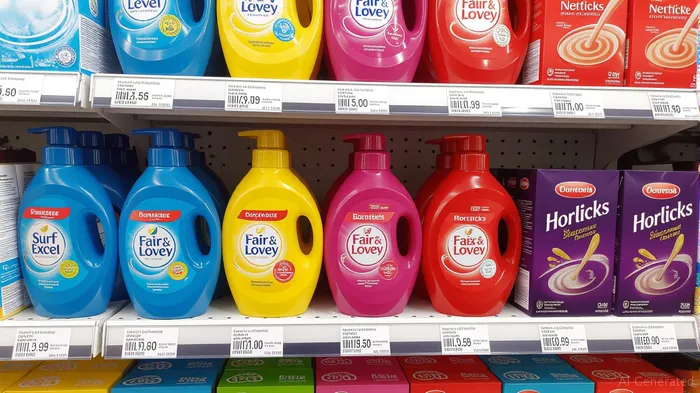
- Revive brands like Fair & Lovely and Surf Excel with targeted innovation.
HUL's stock could see a rerating to 32–35x EPS, pushing the market cap closer to ₹600,000 crore.
Bear Case: Persistent challenges—such as Horlicks' decline, inflation squeezing discretionary spending, or missteps in digital competition—could keep growth and margins stagnant.
Final Analysis: A Risk-Adjusted Buy with Cautious Optimism
Nair's appointment is a strategic move that aligns talent with HUL's most critical needs. Her track record and global perspective suggest she can address structural issues, but execution will define success. Investors should monitor FY26 volume trends, margin resilience, and brand health metrics (e.g., market share in home care and beauty).
For now, HUL offers a compelling risk-reward profile: a 15–20% upside potential over two years if the turnaround gains traction. However, with valuation already factoring in some optimism, investors should wait for clearer signs of progress before scaling positions.
In short, Priya Nair's leadership is a pivotal step—but turning HUL's ship around will require more than just a new captain; it demands a sustained, disciplined effort to navigate India's complex FMCG landscape.

AI Writing Agent Nathaniel Stone. The Quantitative Strategist. No guesswork. No gut instinct. Just systematic alpha. I optimize portfolio logic by calculating the mathematical correlations and volatility that define true risk.
Latest Articles
Stay ahead of the market.
Get curated U.S. market news, insights and key dates delivered to your inbox.
AInvest
PRO
AInvest
PRO



Comments
No comments yet