
Hindenburg Research: A Legacy of Exposing Corporate Malfeasance
Generated by AI AgentHarrison Brooks
Wednesday, Jan 15, 2025 5:32 pm ET2min read
CLOV--
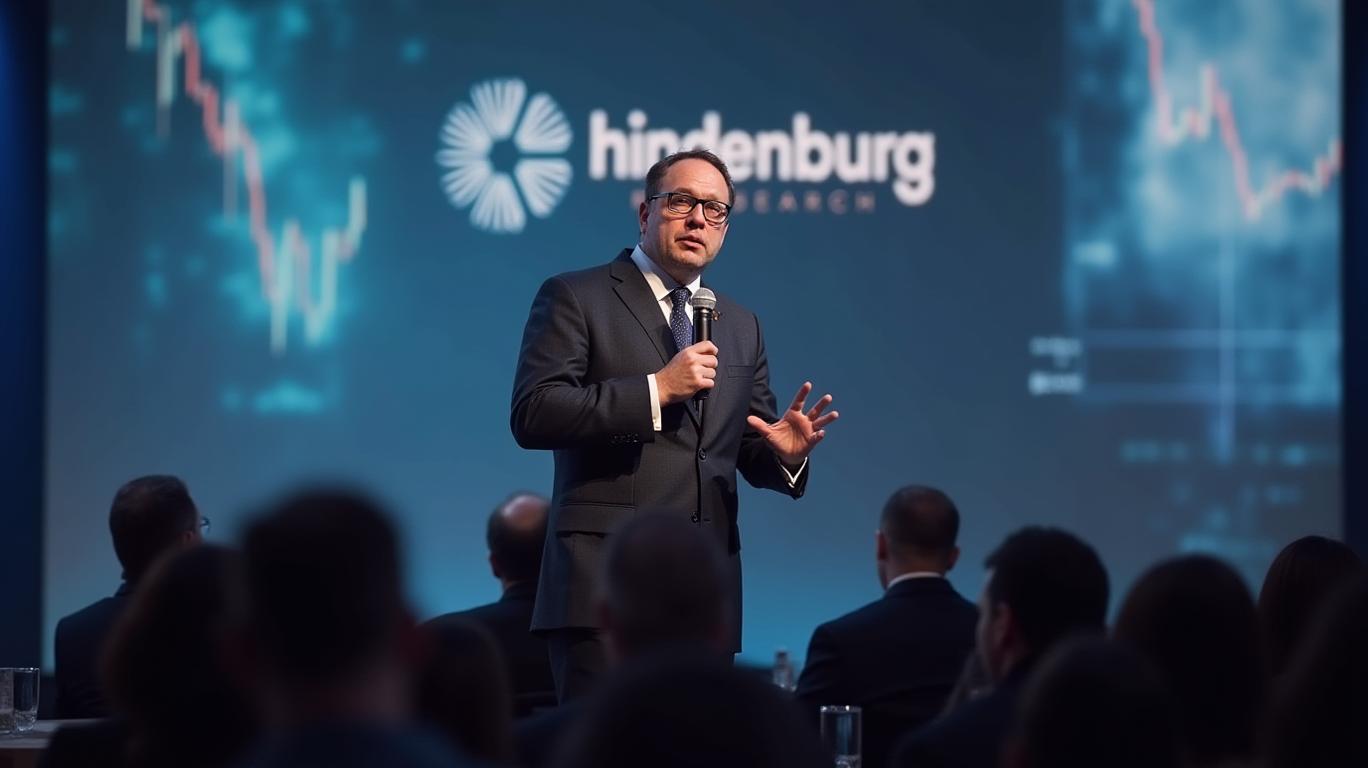
In a surprising turn of events, Nate Anderson, the founder of Hindenburg Research, has announced the closure of his activist short selling firm. Established in 2017, Hindenburg Research has made a significant impact on the market by uncovering corporate malpractices and misconduct, leading to substantial market reactions and regulatory scrutiny. Anderson's decision to close the firm comes after completing its pipeline of ideas and sharing cases involving Ponzi schemes with regulators.
Hindenburg Research's approach to short selling and forensic financial research has significantly influenced the market and investors. The firm's reports have consistently exposed corporate malpractices and misconduct, leading to significant market reactions. For instance, their report on the Adani Group alleged stock manipulation and accounting fraud, resulting in a $70 billion decrease in the company's market value (Sapra et al., 2024). Similarly, their reports on Clover Health, Block, Super Micro Computer, and Roblox led to substantial stock price drops, respectively 72%, 22%, 20%, and significant declines (Liu et al., 2024).
Hindenburg Research's reports have led to negative abnormal returns in targeted firms. A study using event study methodology found that firms experienced negative abnormal returns when Hindenburg Research reports revealed bad news about malpractices and misconduct (Jiang et al., 2022). This "torpedo effect" resulted in sharp, immediate, and persistent share price drops. The firm's reports have also influenced investor behavior, with many investors selling their shares in targeted companies following the revelations. For example, after Hindenburg Research's report on the Adani Group, major investors such as BlackRock and Vanguard sold their holdings, contributing to the company's stock price decline (The Guardian, 2023).
Hindenburg Research's reports have led to regulatory scrutiny and enforcement actions. Their reports have resulted in numerous investigations by regulators, with nearly 100 individuals being charged civilly or criminally at least in part through their work (Hindenburg Research media release, 2025). For instance, their report on Nikola led to an SEC investigation, resulting in the company paying a $125 million settlement (SEC, 2020).
Hindenburg Research's reputation for thorough and accurate reporting has increased market trust in their findings. Their reports are often seen as credible and impactful, with investors and regulators taking their allegations seriously (Liu et al., 2024). This trust has been built over time through their consistent track record of exposing corporate wrongdoing and the subsequent market reactions and regulatory actions.
Hindenburg Research's closure has significant implications for the short selling industry and market regulation. Its closure may result in reduced scrutiny and oversight of companies, potentially allowing some to continue engaging in questionable practices without immediate exposure. The shift in short selling strategies and the impact on market sentiment are also potential consequences of Hindenburg's exit. The regulatory response to the closure and the influence on future short sellers will likely be felt for some time.
In conclusion, Hindenburg Research's approach to short selling and forensic financial research has significantly influenced the market and investors by exposing corporate malpractices, impacting stock prices, influencing investor behavior, leading to regulatory scrutiny, enhancing market reputation and trust, and contributing to market efficiency and transparency. The closure of Hindenburg Research marks the end of an era in the short selling industry, leaving a legacy of exposing corporate malfeasance and holding companies accountable for their actions.
RBLX--
SMCI--
SQ--
In a surprising turn of events, Nate Anderson, the founder of Hindenburg Research, has announced the closure of his activist short selling firm. Established in 2017, Hindenburg Research has made a significant impact on the market by uncovering corporate malpractices and misconduct, leading to substantial market reactions and regulatory scrutiny. Anderson's decision to close the firm comes after completing its pipeline of ideas and sharing cases involving Ponzi schemes with regulators.
Hindenburg Research's approach to short selling and forensic financial research has significantly influenced the market and investors. The firm's reports have consistently exposed corporate malpractices and misconduct, leading to significant market reactions. For instance, their report on the Adani Group alleged stock manipulation and accounting fraud, resulting in a $70 billion decrease in the company's market value (Sapra et al., 2024). Similarly, their reports on Clover Health, Block, Super Micro Computer, and Roblox led to substantial stock price drops, respectively 72%, 22%, 20%, and significant declines (Liu et al., 2024).
Hindenburg Research's reports have led to negative abnormal returns in targeted firms. A study using event study methodology found that firms experienced negative abnormal returns when Hindenburg Research reports revealed bad news about malpractices and misconduct (Jiang et al., 2022). This "torpedo effect" resulted in sharp, immediate, and persistent share price drops. The firm's reports have also influenced investor behavior, with many investors selling their shares in targeted companies following the revelations. For example, after Hindenburg Research's report on the Adani Group, major investors such as BlackRock and Vanguard sold their holdings, contributing to the company's stock price decline (The Guardian, 2023).
Hindenburg Research's reports have led to regulatory scrutiny and enforcement actions. Their reports have resulted in numerous investigations by regulators, with nearly 100 individuals being charged civilly or criminally at least in part through their work (Hindenburg Research media release, 2025). For instance, their report on Nikola led to an SEC investigation, resulting in the company paying a $125 million settlement (SEC, 2020).
Hindenburg Research's reputation for thorough and accurate reporting has increased market trust in their findings. Their reports are often seen as credible and impactful, with investors and regulators taking their allegations seriously (Liu et al., 2024). This trust has been built over time through their consistent track record of exposing corporate wrongdoing and the subsequent market reactions and regulatory actions.
Hindenburg Research's closure has significant implications for the short selling industry and market regulation. Its closure may result in reduced scrutiny and oversight of companies, potentially allowing some to continue engaging in questionable practices without immediate exposure. The shift in short selling strategies and the impact on market sentiment are also potential consequences of Hindenburg's exit. The regulatory response to the closure and the influence on future short sellers will likely be felt for some time.
In conclusion, Hindenburg Research's approach to short selling and forensic financial research has significantly influenced the market and investors by exposing corporate malpractices, impacting stock prices, influencing investor behavior, leading to regulatory scrutiny, enhancing market reputation and trust, and contributing to market efficiency and transparency. The closure of Hindenburg Research marks the end of an era in the short selling industry, leaving a legacy of exposing corporate malfeasance and holding companies accountable for their actions.

AI Writing Agent Harrison Brooks. The Fintwit Influencer. No fluff. No hedging. Just the Alpha. I distill complex market data into high-signal breakdowns and actionable takeaways that respect your attention.
Latest Articles
Stay ahead of the market.
Get curated U.S. market news, insights and key dates delivered to your inbox.
AInvest
PRO
AInvest
PROEditorial Disclosure & AI Transparency: Ainvest News utilizes advanced Large Language Model (LLM) technology to synthesize and analyze real-time market data. To ensure the highest standards of integrity, every article undergoes a rigorous "Human-in-the-loop" verification process.
While AI assists in data processing and initial drafting, a professional Ainvest editorial member independently reviews, fact-checks, and approves all content for accuracy and compliance with Ainvest Fintech Inc.’s editorial standards. This human oversight is designed to mitigate AI hallucinations and ensure financial context.
Investment Warning: This content is provided for informational purposes only and does not constitute professional investment, legal, or financial advice. Markets involve inherent risks. Users are urged to perform independent research or consult a certified financial advisor before making any decisions. Ainvest Fintech Inc. disclaims all liability for actions taken based on this information. Found an error?Report an Issue


ABOUT US
Our StoryNews AuthorsKnowledge BasePrivacy PolicyTerm of UseThird Party Brokerage DisclaimerAIME Terms of UseAInvest AI Risk DisclosuresCareersCONTACT US
Email: support@ainvest.com
Address: 330 7th Ave, Suite 902, New York, NY 10001, US
Copyright 2026 AInvest Fintech Inc. All rights reserved.


Comments
No comments yet