
Hims & Hers Health: The Perils of Telehealth's Drug Dependency
The abrupt termination of HimsHIMS-- & Hers Health's partnership with Novo NordiskNVO-- over Wegovy, a blockbuster weight-loss drug, has thrown the telehealth company's business model into stark relief. Shares of Hims plummeted 23% on June 23, 2025, after NovoNVO-- accused the company of illegally distributing knock-off versions of Wegovy using compounded semaglutide—a practice Novo claims violates federal drug safety regulations. The fallout raises critical questions: Can telehealth firms built around third-party drug collaborations survive regulatory and competitive headwinds? Is Hims' stock a buying opportunity now, or a trap?
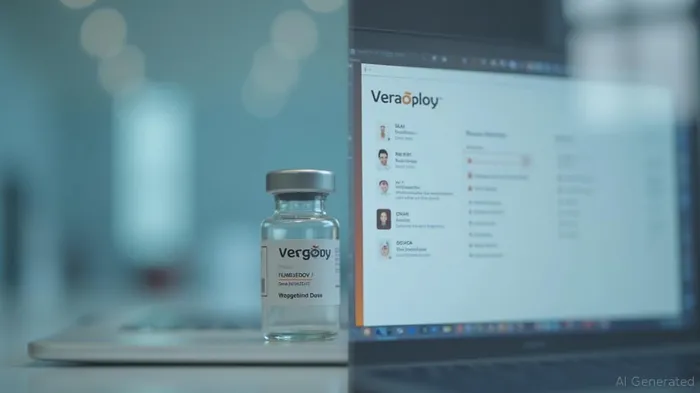
The Strategic Risk of Blockbuster Dependency
Hims' fateFATE-- hinges on its reliance on high-margin drugs like Wegovy, which accounted for a disproportionate share of its $586 million in Q1 2025 revenue (up 111% year-over-year). The company's strategy—using telehealth to distribute prescription medications—has been a double-edged sword. While it drove growth, it also created vulnerability to supply chain disruptions and regulatory shifts. Novo's exit highlights the peril of depending on a single pharmaceutical partner.
The FDA's April 2025 removal of semaglutide from its drug shortage list was a turning point. This allowed compounding pharmacies to produce cheaper, unapproved versions of Wegovy—precisely what Hims allegedly did. But the FDA's move was conditional: 503A compounding rules permit personalized medications, not mass distribution. Hims' defiance of these limits, as Novo alleges, has now exposed the company to lawsuits and reputational damage.
Diversification: A Work in Progress
Hims' defense rests on its diversification efforts. The company offers telehealth services for dermatology, mental health, and sexual wellness, alongside its weight-loss focus. Yet these segments remain overshadowed by Wegovy's prominence. Its planned acquisition of ZAVADAVA--, a European telemedicine platform, aims to reduce geographic concentration, but the Wegovy controversy could delay regulatory approvals or dilute synergies.
Financial metrics underscore the challenge. While revenue growth is robust, Hims' net loss widened to $86 million in Q1 2025, reflecting high marketing and operational costs. Its trailing P/E ratio, already elevated at 50x pre-termination, now faces downward pressure unless profitability improves.
Regulatory Crossroads
The FDA's stance is critical. If it tightens oversight of compounded drugs—a likelihood given the public health risks—Hims' core strategy could be invalidated. Compounding pharmacies, which supply 50% of Hims' offerings, may face stricter scrutiny. Meanwhile, rivals like Roman and Ro have deeper ties to drugmakers like Eli Lilly (LYV), which markets its own Wegovy competitor, Mounjaro.
Legal risks loom large. Novo's allegations of “deceptive marketing” and use of unapproved Chinese APIs could trigger FDA warnings or fines. A shareholder lawsuit is already brewing.
Is This a Buying Opportunity?
At $47.76 post-termination, Hims' market cap has been slashed to $6.56 billion—a 30% discount from its May 2025 peak. Value investors may see merit in a company with 1.2 million subscribers and a 28% gross margin. However, the risks are asymmetric:
- Bull Case: The partnership termination proves temporary. Hims pivots to legal drug distribution channels, ZAVA's acquisition boosts European revenue, and its telehealth services retain customer loyalty.
- Bear Case: Regulatory fines, lost customers, and competition erode growth. The stock could halve again.
Analysts are skeptical. Needham's downgrade to “Hold” reflects caution. Even bulls like Piper Sandler (which rates the stock “Overweight”) acknowledge the need for “clear regulatory clarity” first.
Conclusion: Proceed with Caution
Hims' decline is a cautionary tale for telehealth firms betting on third-party drugs. While its diversification efforts are commendable, they remain unproven. Investors must weigh the discounted valuation against existential risks. For now, the stock is best avoided unless one can stomach high uncertainty. The path to recovery demands more than a rebound in Wegovy sales—it requires a fundamental shift toward sustainable, regulation-proof growth.
In the words of the FDA: “Telemedicine's promise lies in convenience, not corner-cutting.” Until Hims proves it can deliver both, this stock remains a gamble.

Stay ahead of the market.
Get curated U.S. market news, insights and key dates delivered to your inbox.
AInvest
PRO
AInvest
PRO



Comments
No comments yet